
About This Book
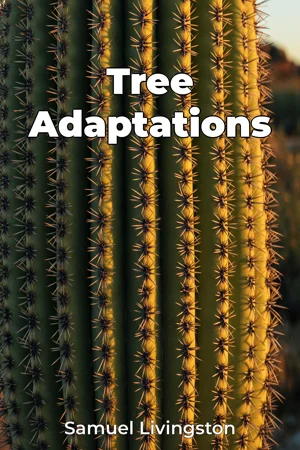
How do trees, seemingly static organisms, thrive in environments that would challenge even the most adaptable animals? "Tree Adaptations" delves into the remarkable strategies trees employ to survive and flourish in Earth’s most extreme habitats, from arid deserts and waterlogged swamps to frozen tundras. This book explores the core principles of plant physiology, ecological adaptation, and evolutionary biology, providing a comprehensive look at how trees have conquered nearly every terrestrial environment. Understanding these adaptations is crucial, particularly in an era of rapid climate change, as it offers insights into ecosystem resilience and conservation strategies. This book is structured to provide a robust overview of tree survival mechanisms. It begins by laying the groundwork with an introduction to basic tree biology, including cellular structure, photosynthesis, and water transport. Essential knowledge for readers unfamiliar with plant physiology. The book then moves through a series of case studies, examining how trees have adapted to specific challenging environments. The book highlights key adaptive strategies: water conservation in deserts, flood tolerance in swamps, and cold resistance in tundras. We will explore the physiological and morphological adaptations that allow trees to thrive where others cannot. For example, the saguaro cactus, technically a tree, has developed extensive root systems and water storage capabilities to survive in the arid desert. Mangrove trees possess specialized root systems (pneumatophores) that allow them to breathe in oxygen-depleted swamp soils. Coniferous trees in the tundra have evolved needle-like leaves coated with wax to minimize water loss and withstand freezing temperatures. The argument is that the diverse adaptations of trees demonstrate the power of natural selection in shaping life. Trees showcase evolution's capacity to create specialized solutions to environmental challenges. This understanding is vital for conservation efforts, as it allows us to predict how different tree species will respond to climate change and other environmental stressors. The book progresses systematically. First, it introduces the fundamental concepts of plant physiology and ecology. Second, it explores specific adaptations in several key environments. Each chapter includes detailed examples of particular species and the scientific research that supports our understanding of their adaptations. The final section of the book explores the implications of these adaptations for conservation and forest management, particularly in the face of global climate change. The evidence presented comes from a range of scientific disciplines including plant physiology, ecology, and genetics. The book draws on published research, field studies, and experimental data. It also references primary research articles and synthesizes findings from various ecological surveys and experimental studies. "Tree Adaptations" connects several interdisciplinary fields. First, evolutionary biology explains the genetic basis of adaptation. Second, ecology provides the context for understanding how trees interact with their environment. Third, climate science informs the discussion of how changing environmental conditions are affecting tree populations and forest ecosystems. These connections enrich our understanding of the complex interplay between trees and their surroundings. The approach taken in the book is to present the information in an accessible yet scientifically rigorous manner. It avoids jargon where possible and explains complex concepts clearly. The writing style aims to engage a broad audience, from students and nature enthusiasts to environmental professionals. Target Audience: undergraduate students studying biology, forestry, or environmental science. Professionals working in conservation, forestry, or environmental management will also find value in the book. Nature enthusiasts with an interest in plant life and ecology. As a work in the genre of biology and life sciences, "Tree Adaptations" combines detailed scientific information with real-world examples. It aligns with the expectations of non-fiction science writing, which emphasizes accuracy, clarity, and evidence-based arguments. The scope of the book is limited to the adaptations of trees to terrestrial environments. While it touches on the effects of climate change, it does not delve deeply into specific climate models or policy recommendations. The information in this book has several real-world applications. It can inform conservation strategies, guide forest management practices, and help us understand how to mitigate the impacts of climate change on forests. The knowledge of tree adaptation can assist in selecting appropriate tree species for reforestation projects in degraded landscapes. The book addresses the ongoing debate about the best strategies for conserving forests in a changing climate. It presents different perspectives on the role of assisted migration, genetic engineering, and other interventions in helping trees adapt to new environmental conditions.
How do trees, seemingly static organisms, thrive in environments that would challenge even the most adaptable animals? "Tree Adaptations" delves into the remarkable strategies trees employ to survive and flourish in Earth’s most extreme habitats, from arid deserts and waterlogged swamps to frozen tundras. This book explores the core principles of plant physiology, ecological adaptation, and evolutionary biology, providing a comprehensive look at how trees have conquered nearly every terrestrial environment. Understanding these adaptations is crucial, particularly in an era of rapid climate change, as it offers insights into ecosystem resilience and conservation strategies. This book is structured to provide a robust overview of tree survival mechanisms. It begins by laying the groundwork with an introduction to basic tree biology, including cellular structure, photosynthesis, and water transport. Essential knowledge for readers unfamiliar with plant physiology. The book then moves through a series of case studies, examining how trees have adapted to specific challenging environments. The book highlights key adaptive strategies: water conservation in deserts, flood tolerance in swamps, and cold resistance in tundras. We will explore the physiological and morphological adaptations that allow trees to thrive where others cannot. For example, the saguaro cactus, technically a tree, has developed extensive root systems and water storage capabilities to survive in the arid desert. Mangrove trees possess specialized root systems (pneumatophores) that allow them to breathe in oxygen-depleted swamp soils. Coniferous trees in the tundra have evolved needle-like leaves coated with wax to minimize water loss and withstand freezing temperatures. The argument is that the diverse adaptations of trees demonstrate the power of natural selection in shaping life. Trees showcase evolution's capacity to create specialized solutions to environmental challenges. This understanding is vital for conservation efforts, as it allows us to predict how different tree species will respond to climate change and other environmental stressors. The book progresses systematically. First, it introduces the fundamental concepts of plant physiology and ecology. Second, it explores specific adaptations in several key environments. Each chapter includes detailed examples of particular species and the scientific research that supports our understanding of their adaptations. The final section of the book explores the implications of these adaptations for conservation and forest management, particularly in the face of global climate change. The evidence presented comes from a range of scientific disciplines including plant physiology, ecology, and genetics. The book draws on published research, field studies, and experimental data. It also references primary research articles and synthesizes findings from various ecological surveys and experimental studies. "Tree Adaptations" connects several interdisciplinary fields. First, evolutionary biology explains the genetic basis of adaptation. Second, ecology provides the context for understanding how trees interact with their environment. Third, climate science informs the discussion of how changing environmental conditions are affecting tree populations and forest ecosystems. These connections enrich our understanding of the complex interplay between trees and their surroundings. The approach taken in the book is to present the information in an accessible yet scientifically rigorous manner. It avoids jargon where possible and explains complex concepts clearly. The writing style aims to engage a broad audience, from students and nature enthusiasts to environmental professionals. Target Audience: undergraduate students studying biology, forestry, or environmental science. Professionals working in conservation, forestry, or environmental management will also find value in the book. Nature enthusiasts with an interest in plant life and ecology. As a work in the genre of biology and life sciences, "Tree Adaptations" combines detailed scientific information with real-world examples. It aligns with the expectations of non-fiction science writing, which emphasizes accuracy, clarity, and evidence-based arguments. The scope of the book is limited to the adaptations of trees to terrestrial environments. While it touches on the effects of climate change, it does not delve deeply into specific climate models or policy recommendations. The information in this book has several real-world applications. It can inform conservation strategies, guide forest management practices, and help us understand how to mitigate the impacts of climate change on forests. The knowledge of tree adaptation can assist in selecting appropriate tree species for reforestation projects in degraded landscapes. The book addresses the ongoing debate about the best strategies for conserving forests in a changing climate. It presents different perspectives on the role of assisted migration, genetic engineering, and other interventions in helping trees adapt to new environmental conditions.
"Tree Adaptations" explores the fascinating survival strategies of trees, highlighting how these seemingly static organisms thrive in diverse and challenging environments. From arid deserts to waterlogged swamps and frozen tundras, trees have evolved remarkable adaptations. For example, desert trees like the saguaro cactus conserve water through extensive root systems, while mangrove trees in swamps use specialized roots to breathe in oxygen-poor soils. The book delves into plant physiology, ecological adaptation, and evolutionary biology to explain these adaptations, showing how natural selection shapes tree life. It begins with basic tree biology and then progresses through case studies of trees in specific challenging environments. This approach provides insights into ecosystem resilience and informs conservation strategies, especially crucial in the face of climate change. Understanding tree adaptations is not just academic; it has real-world applications in forest management and conservation efforts.
Book Details
ISBN
9788233974749
Publisher
Publifye AS
Your Licenses
You don't own any licenses for this book
Purchase a license below to unlock this book and download the EPUB.
Purchase License
Select a tier to unlock this book
Need bulk licensing?
Contact us for enterprise agreements.