
About This Book
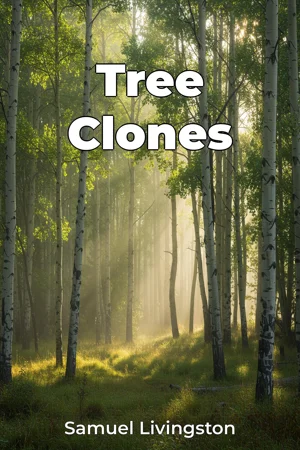
Have you ever walked through a forest and realized that what appears to be a collection of individual trees is, in reality, a single, massive organism? "Tree Clones" delves into the fascinating world of clonal tree colonies, where entire forests arise not from seeds, but from the root systems of single "mother" trees. This book explores the biological mechanisms, ecological significance, and evolutionary implications of this remarkable form of vegetative reproduction in the plant kingdom. We will investigate two primary themes: the biology of clonal reproduction in trees and the ecological impact of these clonal forests. Understanding how trees propagate through rhizomes, root suckers, and layering is crucial for appreciating their resilience, longevity, and capacity to dominate landscapes. Furthermore, this book emphasizes the ecological role of these forests, their contributions to biodiversity, carbon sequestration, and response to environmental changes. Throughout history, forests have been viewed as collections of individual organisms. The scientific community has only recently recognized the prevalence of these clonal tree colonies and their importance in global ecosystems. The investigation presented draws upon recent research in plant physiology, forest ecology, and genetics. Some prior knowledge of basic biology will be helpful, but the book is structured to be accessible to a broad readership. "Tree Clones" argues that clonal tree colonies represent a fundamental evolutionary adaptation, allowing trees to persist and thrive in challenging environments. We demonstrate this by examining specific examples and highlighting the advantages of clonal propagation in terms of resource sharing, disease resistance, and long-term survival. The book is structured into three parts. Part One introduces the concept of clonal reproduction in trees, defining key terms and describing the various mechanisms by which trees clone themselves. Part Two explores the ecological characteristics of clonal forests, examining their biodiversity, roles in nutrient cycling, and responses to disturbances such as fire and climate change. Part Three examines the evolutionary history of tree cloning. The findings presented are supported by a synthesis of scientific literature, field observations, and genetic analyses. Data from long-term studies of clonal tree colonies provide insights into their growth rates, mortality patterns, and genetic diversity. "Tree Clones" connects to various disciplines, including ecology, genetics, and environmental science. The ecological perspective highlights the role of clonal forests in maintaining ecosystem stability. The genetic perspective provides insights into the diversity and evolutionary potential of clonal populations. The environmental science perspective addresses the implications of clonal forests for carbon sequestration and climate change mitigation. This book adopts a scientific approach, presenting complex information in an understandable way. The text is enriched with case studies, photographs, and illustrations to enhance comprehension. The target audience includes students, researchers, nature enthusiasts, and anyone interested in learning more about the hidden lives of trees. The book is intended to be a resource for those seeking to understand the science behind clonal tree colonies and their importance in the natural world. As a work of science, "Tree Clones" adheres to the conventions of presenting objective evidence and rigorous analysis. While the book explores many types of cloning trees, the book focusses only on those creating forests, excluding single tree instances. The information presented has practical implications for forest management and conservation. Understanding the dynamics of clonal forests can inform strategies for sustainable harvesting, restoration of degraded lands, and protection of biodiversity. The understanding of clonal tree colonies is continually developing, and areas of active debate remain. One area of contention involves the role of sexual reproduction in clonal populations and the relative importance of genetic diversity for long-term adaptation.
Have you ever walked through a forest and realized that what appears to be a collection of individual trees is, in reality, a single, massive organism? "Tree Clones" delves into the fascinating world of clonal tree colonies, where entire forests arise not from seeds, but from the root systems of single "mother" trees. This book explores the biological mechanisms, ecological significance, and evolutionary implications of this remarkable form of vegetative reproduction in the plant kingdom. We will investigate two primary themes: the biology of clonal reproduction in trees and the ecological impact of these clonal forests. Understanding how trees propagate through rhizomes, root suckers, and layering is crucial for appreciating their resilience, longevity, and capacity to dominate landscapes. Furthermore, this book emphasizes the ecological role of these forests, their contributions to biodiversity, carbon sequestration, and response to environmental changes. Throughout history, forests have been viewed as collections of individual organisms. The scientific community has only recently recognized the prevalence of these clonal tree colonies and their importance in global ecosystems. The investigation presented draws upon recent research in plant physiology, forest ecology, and genetics. Some prior knowledge of basic biology will be helpful, but the book is structured to be accessible to a broad readership. "Tree Clones" argues that clonal tree colonies represent a fundamental evolutionary adaptation, allowing trees to persist and thrive in challenging environments. We demonstrate this by examining specific examples and highlighting the advantages of clonal propagation in terms of resource sharing, disease resistance, and long-term survival. The book is structured into three parts. Part One introduces the concept of clonal reproduction in trees, defining key terms and describing the various mechanisms by which trees clone themselves. Part Two explores the ecological characteristics of clonal forests, examining their biodiversity, roles in nutrient cycling, and responses to disturbances such as fire and climate change. Part Three examines the evolutionary history of tree cloning. The findings presented are supported by a synthesis of scientific literature, field observations, and genetic analyses. Data from long-term studies of clonal tree colonies provide insights into their growth rates, mortality patterns, and genetic diversity. "Tree Clones" connects to various disciplines, including ecology, genetics, and environmental science. The ecological perspective highlights the role of clonal forests in maintaining ecosystem stability. The genetic perspective provides insights into the diversity and evolutionary potential of clonal populations. The environmental science perspective addresses the implications of clonal forests for carbon sequestration and climate change mitigation. This book adopts a scientific approach, presenting complex information in an understandable way. The text is enriched with case studies, photographs, and illustrations to enhance comprehension. The target audience includes students, researchers, nature enthusiasts, and anyone interested in learning more about the hidden lives of trees. The book is intended to be a resource for those seeking to understand the science behind clonal tree colonies and their importance in the natural world. As a work of science, "Tree Clones" adheres to the conventions of presenting objective evidence and rigorous analysis. While the book explores many types of cloning trees, the book focusses only on those creating forests, excluding single tree instances. The information presented has practical implications for forest management and conservation. Understanding the dynamics of clonal forests can inform strategies for sustainable harvesting, restoration of degraded lands, and protection of biodiversity. The understanding of clonal tree colonies is continually developing, and areas of active debate remain. One area of contention involves the role of sexual reproduction in clonal populations and the relative importance of genetic diversity for long-term adaptation.
"Tree Clones" uncovers the hidden world of clonal tree colonies, where entire forests originate from single trees through vegetative reproduction, like rhizomes and root suckers, challenging the traditional view of forests as collections of individual organisms. This fascinating realm of plant physiology reveals how trees clone themselves, emphasizing the ecological importance of these clonal forests. These forests play unique roles in bolstering biodiversity, carbon sequestration, and resilience to environmental changes. The book explores the biological mechanisms behind clonal reproduction and the ecological impact of clonal forests, highlighting their evolutionary adaptation for thriving in challenging environments. You'll discover how resource sharing and disease resistance contribute to the long-term survival of these clonal populations. Structured in three parts, the book introduces clonal reproduction, delves into the ecological characteristics of clonal forests, and examines the evolutionary history of tree cloning, providing a scientific perspective enriched with case studies and illustrations.
Book Details
ISBN
9788233974732
Publisher
Publifye AS
Your Licenses
You don't own any licenses for this book
Purchase a license below to unlock this book and download the EPUB.
Purchase License
Select a tier to unlock this book
Need bulk licensing?
Contact us for enterprise agreements.