
About This Book
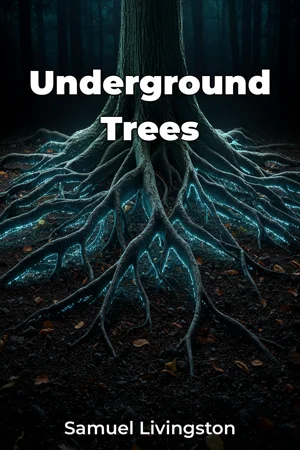
Did you know that beneath our feet lies a world as complex and interconnected as the forests above? "Underground Trees" unveils the largely unexplored realm of subterranean ecosystems, focusing on tree species that utilize underground root systems to form extensive, hidden networks. This book delves into the biology of these networks, their significance in forest ecology, and the broader implications for our understanding of plant life. We will examine how certain tree species have evolved to propagate not only through seeds but also through vegetative spread via rhizomes and root suckering. These subterranean connections allow trees to share resources, communicate chemically, and even act as a collective organism. Understanding these networks is crucial because they influence forest resilience, nutrient cycling, and the overall health of terrestrial ecosystems. The book will provide necessary context by exploring the history of research into mycorrhizal networks and the more recent discoveries regarding the extent and complexity of tree root systems. No prior botanical expertise is required; we will build from foundational biological principles. The central argument is that these underground tree networks are far more prevalent and ecologically significant than previously recognized, necessitating a paradigm shift in how we view and manage forests. The book's structure flows logically, first introducing the basic concepts of plant propagation and mycorrhizal associations. It then develops the core ideas in three major sections. The first explores the diverse strategies trees use for underground propagation, detailing specific examples of species known for extensive root networks. The second investigates the functional roles of these networks in resource sharing, defense against pathogens, and inter-tree communication. The third examines the broader ecological implications, including the role of these networks in forest regeneration and response to environmental change. The book culminates by considering practical applications, such as incorporating knowledge of underground networks into sustainable forestry practices. Evidence will be presented from diverse sources, including field studies that use isotopic tracing to track resource movement between trees, genetic analyses to map clonal relationships within forests, and chemical analyses to identify signaling compounds transmitted through root systems. We will also present data from controlled experiments that manipulate network connections to assess their impact on tree growth and survival. "Underground Trees" bridges the gap between plant physiology, ecology, and soil science. It connects to other disciplines by drawing parallels with social network theory to understand the architecture and dynamics of these subterranean systems. This interdisciplinary approach provides a richer and more nuanced understanding of forest ecosystems. A unique aspect of this book is that it integrates cutting-edge research with accessible explanations, making complex scientific concepts understandable to a broad audience. The tone is informative and engaging, avoiding jargon while maintaining scientific rigor. The target audience includes students and researchers in ecology, botany, and forestry, as well as anyone with a general interest in nature and biology. This book is valuable because it offers a fresh perspective on familiar landscapes, revealing the hidden interconnectedness that sustains them. As a work of non-fiction, "Underground Trees" adheres to the principles of accuracy and objectivity. The book acknowledges that there are ongoing debates about the extent and function of underground networks, particularly regarding the role of mycorrhizal fungi versus direct root connections in resource transfer. The scope of the book is primarily focused on temperate and boreal forests where extensive research has been already conducted, with some discussion of relevant examples from tropical regions. The book aims for a real-world application approach so readers can apply its information to practices such as tree selection for reforestation projects. It also explores the ongoing debate in the scientific community regarding the appropriate management strategies for forests in light of new findings about underground networks. We will address conflicting viewpoints by presenting evidence from multiple studies and highlighting areas where further research is needed.
Did you know that beneath our feet lies a world as complex and interconnected as the forests above? "Underground Trees" unveils the largely unexplored realm of subterranean ecosystems, focusing on tree species that utilize underground root systems to form extensive, hidden networks. This book delves into the biology of these networks, their significance in forest ecology, and the broader implications for our understanding of plant life. We will examine how certain tree species have evolved to propagate not only through seeds but also through vegetative spread via rhizomes and root suckering. These subterranean connections allow trees to share resources, communicate chemically, and even act as a collective organism. Understanding these networks is crucial because they influence forest resilience, nutrient cycling, and the overall health of terrestrial ecosystems. The book will provide necessary context by exploring the history of research into mycorrhizal networks and the more recent discoveries regarding the extent and complexity of tree root systems. No prior botanical expertise is required; we will build from foundational biological principles. The central argument is that these underground tree networks are far more prevalent and ecologically significant than previously recognized, necessitating a paradigm shift in how we view and manage forests. The book's structure flows logically, first introducing the basic concepts of plant propagation and mycorrhizal associations. It then develops the core ideas in three major sections. The first explores the diverse strategies trees use for underground propagation, detailing specific examples of species known for extensive root networks. The second investigates the functional roles of these networks in resource sharing, defense against pathogens, and inter-tree communication. The third examines the broader ecological implications, including the role of these networks in forest regeneration and response to environmental change. The book culminates by considering practical applications, such as incorporating knowledge of underground networks into sustainable forestry practices. Evidence will be presented from diverse sources, including field studies that use isotopic tracing to track resource movement between trees, genetic analyses to map clonal relationships within forests, and chemical analyses to identify signaling compounds transmitted through root systems. We will also present data from controlled experiments that manipulate network connections to assess their impact on tree growth and survival. "Underground Trees" bridges the gap between plant physiology, ecology, and soil science. It connects to other disciplines by drawing parallels with social network theory to understand the architecture and dynamics of these subterranean systems. This interdisciplinary approach provides a richer and more nuanced understanding of forest ecosystems. A unique aspect of this book is that it integrates cutting-edge research with accessible explanations, making complex scientific concepts understandable to a broad audience. The tone is informative and engaging, avoiding jargon while maintaining scientific rigor. The target audience includes students and researchers in ecology, botany, and forestry, as well as anyone with a general interest in nature and biology. This book is valuable because it offers a fresh perspective on familiar landscapes, revealing the hidden interconnectedness that sustains them. As a work of non-fiction, "Underground Trees" adheres to the principles of accuracy and objectivity. The book acknowledges that there are ongoing debates about the extent and function of underground networks, particularly regarding the role of mycorrhizal fungi versus direct root connections in resource transfer. The scope of the book is primarily focused on temperate and boreal forests where extensive research has been already conducted, with some discussion of relevant examples from tropical regions. The book aims for a real-world application approach so readers can apply its information to practices such as tree selection for reforestation projects. It also explores the ongoing debate in the scientific community regarding the appropriate management strategies for forests in light of new findings about underground networks. We will address conflicting viewpoints by presenting evidence from multiple studies and highlighting areas where further research is needed.
"Underground Trees" reveals the hidden world beneath our feet, exploring the complex root networks that connect trees in surprising ways. These subterranean ecosystems play a vital role in forest ecology, allowing trees to share resources and even communicate. Did you know that some tree species propagate through rhizomes and root suckering, creating extensive clonal colonies? Or that trees can transmit chemical signals through these networks, potentially warning each other of danger? This book delves into the biology of these underground connections, examining how they contribute to forest resilience and nutrient cycling. It presents evidence from field studies, genetic analyses, and controlled experiments to illustrate the extent and function of tree root networks. By bridging plant physiology, ecology, and soil science, "Underground Trees" offers a new perspective on familiar landscapes. The book progresses logically, starting with basic concepts of plant propagation and mycorrhizal associations, then exploring the diverse strategies trees use for underground propagation, the functional roles of these networks, and their broader ecological implications. It emphasizes the importance of incorporating knowledge of underground networks into sustainable forestry practices, making it a valuable resource for anyone interested in nature, biology, and the interconnectedness of life.
Book Details
ISBN
9788233974725
Publisher
Publifye AS
Your Licenses
You don't own any licenses for this book
Purchase a license below to unlock this book and download the EPUB.
Purchase License
Select a tier to unlock this book
Need bulk licensing?
Contact us for enterprise agreements.