
About This Book
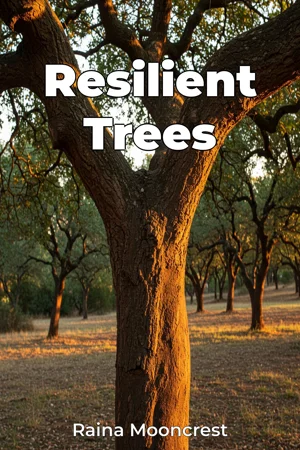
In an era defined by escalating climate challenges, what if the key to ecological stability lies within the genetic code of specific tree species? *Resilient Trees: Exploring Species That Withstand Wildfires, Floods, and Extreme Temperatures* delves into the fascinating world of arboreal adaptation, offering a comprehensive analysis of trees that demonstrate remarkable survival capabilities in the face of environmental adversities. This book is important because understanding the mechanisms behind such resilience is crucial for conservation efforts, sustainable forestry, and mitigating the impact of climate change on global ecosystems. The core of this book revolves around three interconnected themes: wildfire-resistant species, flood-tolerant varieties, and trees capable of thriving in extreme temperatures. We provide the scientific context necessary for understanding these adaptations, including an overview of plant physiology, genetics, and ecological interactions. While basic knowledge of biology will be beneficial, we guide the reader through complex concepts with clear explanations and illustrative examples. Our central argument is that the inherent genetic diversity within and between certain tree species holds the blueprint for ecological resilience in a rapidly changing world. By studying these trees, we can unlock valuable insights for reforestation strategies, genetic conservation, and potentially even develop new methods for enhancing the resilience of other plant species. The book’s structure begins with an introduction to the challenges faced by forests globally due to climate change. It then explores wildfire-resistant trees, focusing on species like the cork oak (Quercus suber) and ponderosa pine (Pinus ponderosa), detailing their unique bark structures, self-pruning mechanisms, and resprouting capabilities. Next, we examine flood-tolerant trees such as the bald cypress (Taxodium distichum) and various mangrove species, highlighting their adaptations for anaerobic soil conditions, including specialized root structures and metabolic pathways. The third major section focuses on trees found in extreme temperature environments, such as the bristlecone pine (Pinus aristata) in high-altitude regions and desert-adapted acacias, investigating their physiological adaptations for water conservation, heat resistance, and cold hardiness. The book culminates in a discussion of practical applications, including using resilient species in reforestation projects, assisted migration, and the potential for genetic engineering to enhance the resilience of other tree species. The evidence presented in *Resilient Trees* is drawn from a wide range of sources, including peer-reviewed scientific literature, field studies, and genomic analyses. We present data from ecological experiments, physiological measurements, and genetic sequencing to support our arguments. We also incorporate observations from forestry management practices and conservation projects. This book connects to several interdisciplinary fields, including climate science, genetics, and forestry. Understanding the impact of climate change on tree populations requires insights from climate models and projections. Genetic analysis helps us unravel the mechanisms underlying resilience. Forestry practices are crucial for implementing conservation and reforestation strategies. These connections strengthen the argument for a holistic approach to understanding and promoting forest resilience. *Resilient Trees* adopts a scientific yet accessible tone, aiming to bridge the gap between academic research and practical application. The writing style is clear and concise, avoiding jargon where possible and providing explanations for technical terms. The book is targeted towards a diverse audience, including ecologists, foresters, conservationists, policymakers, and anyone interested in the intersection of biology and climate change. By providing a deep dive into specific species and the science behind their survival mechanisms, this book provides valuable knowledge and insights into the expectations within ecological studies. The scope of this book is limited to the investigation of inherent resilience mechanisms within select tree species. While we acknowledge the importance of other factors, such as forest management practices and ecosystem-level interactions, our focus is on the genetic and physiological adaptations that enable certain trees to withstand environmental stressors. The information in this book can be applied in several practical ways. Foresters can use our findings to select appropriate species for reforestation projects in areas prone to wildfires, floods, or extreme temperatures. Conservationists can prioritize the protection of genetically diverse populations of resilient species. Policymakers can use our research to inform decisions about forest management and climate change adaptation. The field of forest resilience is not without its debates. One ongoing discussion revolves around the ethics and effectiveness of assisted migration, the practice of moving species to new areas that may be more suitable for their survival. Another debate concerns the potential risks and benefits of using genetic engineering to enhance the resilience of trees. *Resilient Trees* acknowledges these debates and presents different perspectives, encouraging readers to critically evaluate the evidence and form their own informed opinions.
In an era defined by escalating climate challenges, what if the key to ecological stability lies within the genetic code of specific tree species? *Resilient Trees: Exploring Species That Withstand Wildfires, Floods, and Extreme Temperatures* delves into the fascinating world of arboreal adaptation, offering a comprehensive analysis of trees that demonstrate remarkable survival capabilities in the face of environmental adversities. This book is important because understanding the mechanisms behind such resilience is crucial for conservation efforts, sustainable forestry, and mitigating the impact of climate change on global ecosystems. The core of this book revolves around three interconnected themes: wildfire-resistant species, flood-tolerant varieties, and trees capable of thriving in extreme temperatures. We provide the scientific context necessary for understanding these adaptations, including an overview of plant physiology, genetics, and ecological interactions. While basic knowledge of biology will be beneficial, we guide the reader through complex concepts with clear explanations and illustrative examples. Our central argument is that the inherent genetic diversity within and between certain tree species holds the blueprint for ecological resilience in a rapidly changing world. By studying these trees, we can unlock valuable insights for reforestation strategies, genetic conservation, and potentially even develop new methods for enhancing the resilience of other plant species. The book’s structure begins with an introduction to the challenges faced by forests globally due to climate change. It then explores wildfire-resistant trees, focusing on species like the cork oak (Quercus suber) and ponderosa pine (Pinus ponderosa), detailing their unique bark structures, self-pruning mechanisms, and resprouting capabilities. Next, we examine flood-tolerant trees such as the bald cypress (Taxodium distichum) and various mangrove species, highlighting their adaptations for anaerobic soil conditions, including specialized root structures and metabolic pathways. The third major section focuses on trees found in extreme temperature environments, such as the bristlecone pine (Pinus aristata) in high-altitude regions and desert-adapted acacias, investigating their physiological adaptations for water conservation, heat resistance, and cold hardiness. The book culminates in a discussion of practical applications, including using resilient species in reforestation projects, assisted migration, and the potential for genetic engineering to enhance the resilience of other tree species. The evidence presented in *Resilient Trees* is drawn from a wide range of sources, including peer-reviewed scientific literature, field studies, and genomic analyses. We present data from ecological experiments, physiological measurements, and genetic sequencing to support our arguments. We also incorporate observations from forestry management practices and conservation projects. This book connects to several interdisciplinary fields, including climate science, genetics, and forestry. Understanding the impact of climate change on tree populations requires insights from climate models and projections. Genetic analysis helps us unravel the mechanisms underlying resilience. Forestry practices are crucial for implementing conservation and reforestation strategies. These connections strengthen the argument for a holistic approach to understanding and promoting forest resilience. *Resilient Trees* adopts a scientific yet accessible tone, aiming to bridge the gap between academic research and practical application. The writing style is clear and concise, avoiding jargon where possible and providing explanations for technical terms. The book is targeted towards a diverse audience, including ecologists, foresters, conservationists, policymakers, and anyone interested in the intersection of biology and climate change. By providing a deep dive into specific species and the science behind their survival mechanisms, this book provides valuable knowledge and insights into the expectations within ecological studies. The scope of this book is limited to the investigation of inherent resilience mechanisms within select tree species. While we acknowledge the importance of other factors, such as forest management practices and ecosystem-level interactions, our focus is on the genetic and physiological adaptations that enable certain trees to withstand environmental stressors. The information in this book can be applied in several practical ways. Foresters can use our findings to select appropriate species for reforestation projects in areas prone to wildfires, floods, or extreme temperatures. Conservationists can prioritize the protection of genetically diverse populations of resilient species. Policymakers can use our research to inform decisions about forest management and climate change adaptation. The field of forest resilience is not without its debates. One ongoing discussion revolves around the ethics and effectiveness of assisted migration, the practice of moving species to new areas that may be more suitable for their survival. Another debate concerns the potential risks and benefits of using genetic engineering to enhance the resilience of trees. *Resilient Trees* acknowledges these debates and presents different perspectives, encouraging readers to critically evaluate the evidence and form their own informed opinions.
In an era of intensifying climate change, *Resilient Trees* explores the remarkable survival strategies of specific tree species facing wildfires, floods, and extreme temperatures. The book highlights how understanding the genetic and physiological adaptations of these trees is vital for conservation and sustainable forestry. It reveals intriguing facts, such as the cork oak's fire-resistant bark and the bald cypress's ability to thrive in waterlogged soils, illustrating nature's ingenious solutions to environmental challenges. The book provides a comprehensive analysis of wildfire-resistant, flood-tolerant, and extreme-temperature-thriving trees. Beginning with an overview of global forest challenges, it progresses through detailed examinations of species like the ponderosa pine, mangrove trees, and bristlecone pine, showcasing their unique adaptations. The evidence presented is drawn from scientific literature, field studies, and genomic analyses. This approach bridges academic research with practical applications, making it a valuable resource for ecologists, foresters, and anyone interested in the intersection of biology and climate change.
Book Details
ISBN
9788233974619
Publisher
Publifye AS
Your Licenses
You don't own any licenses for this book
Purchase a license below to unlock this book and download the EPUB.
Purchase License
Select a tier to unlock this book
Need bulk licensing?
Contact us for enterprise agreements.