
About This Book
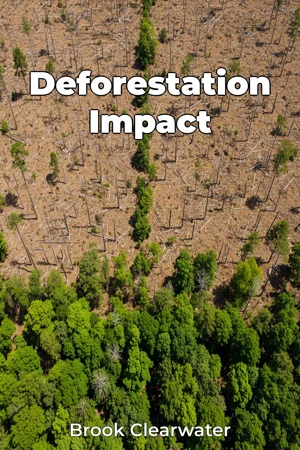
Can the world afford to lose its forests? *Deforestation Impact* delves into the multifaceted consequences of forest loss, presenting a comprehensive analysis of its effects on biodiversity, climate regulation, and global ecosystems. This book is crucial because deforestation is not merely an environmental issue; it’s a global crisis with far-reaching implications for economic stability, human health, and the future of our planet. This book examines three primary areas of impact. First, the inextricable link between deforestation and biodiversity loss is explored, detailing how the destruction of forests leads to habitat fragmentation, species extinction, and the unraveling of intricate ecological webs. Second, the vital role of forests in climate regulation is analyzed, providing a scientific breakdown of how deforestation contributes to increased greenhouse gas emissions, altered rainfall patterns, and intensified global warming. Finally, the broader consequences for global ecosystems are investigated, highlighting the impact on soil erosion, water cycles, and the overall health of the biosphere. *Deforestation Impact* provides essential historical and scientific context, tracing the history of deforestation from early agricultural practices to modern industrial logging. It examines the underlying social and economic drivers of deforestation, including poverty, land tenure issues, and the demand for timber and agricultural land. Readers will gain a foundational understanding of forest ecology, carbon cycles, and the principles of conservation biology. The central argument of this book is that deforestation represents a systemic threat to the stability of Earth's ecosystems and human well-being, demanding urgent and coordinated action. This argument is critical because it challenges the prevailing short-sighted approaches to resource management and advocates for a holistic, sustainable vision of forest conservation. The book is structured to first introduce the fundamental concepts of forest ecology and the drivers of deforestation. It then systematically explores the three major areas of impact, providing detailed case studies and scientific evidence: (1) Biodiversity Loss: examining the impact on specific species and ecosystems, such as the Amazon rainforest and Southeast Asian tropical forests; (2) Climate Change: presenting data on carbon emissions, deforestation rates, and climate models to illustrate the connection; and (3) Ecosystem Disruption: analyzing the effects on soil erosion, water resources, and the spread of diseases. The culmination of the book synthesizes the findings, offering practical strategies for mitigating deforestation and promoting sustainable forest management. The book’s arguments are supported by a wide range of scientific data, including satellite imagery analysis of deforestation rates, ecological surveys of biodiversity hotspots, and climate modeling projections. It will also incorporate case studies from around the world, drawing on field research and expert interviews to illustrate the real-world consequences of deforestation. *Deforestation Impact* is inherently interdisciplinary. It connects environmental science with economics, examining the economic incentives that drive deforestation and the potential for market-based solutions like carbon credits and sustainable forestry certifications. It also intersects with political science and sociology, exploring the role of governance, land rights, and social equity in addressing deforestation. Furthermore, it links to public health, investigating the correlation between deforestation, biodiversity loss, and the emergence of infectious diseases. This book distinguishes itself by adopting a systems-thinking approach, emphasizing the interconnectedness of ecological, social, and economic factors in driving and addressing deforestation. It offers a pragmatic perspective, evaluating the effectiveness of different conservation strategies and highlighting the complexities of balancing economic development with environmental protection. Written in a clear and accessible style, *Deforestation Impact* is aimed at a broad audience, including students, researchers, policymakers, environmental professionals, and concerned citizens. It will be a valuable resource for anyone seeking a comprehensive understanding of the causes and consequences of deforestation and a guide to effective solutions. As a contribution to the fields of Environment, Earth Sciences, and Geography, this book adheres to the conventions of scientific rigor, unbiased analysis, and evidence-based arguments. It strives to present a balanced perspective, acknowledging the uncertainties and complexities inherent in the study of environmental issues. While covering a broad range of topics related to deforestation, the book focuses primarily on the ecological and climatic consequences, with a secondary emphasis on economic and social dimensions. It does not delve deeply into specific policy debates beyond a general overview of strategies for mitigation and sustainable management. The knowledge presented has direct real-world applications, informing conservation efforts, policy decisions, and individual actions aimed at reducing deforestation. Readers will gain insights into how they can support sustainable products, advocate for responsible land-use policies, and contribute to reforestation initiatives. *Deforestation Impact* addresses several ongoing debates in the field, including the relative importance of different drivers of deforestation, the effectiveness of various conservation strategies, and the role of indigenous communities in forest management. By presenting a balanced analysis of these debates, the book encourages critical thinking and informed decision-making.
Can the world afford to lose its forests? *Deforestation Impact* delves into the multifaceted consequences of forest loss, presenting a comprehensive analysis of its effects on biodiversity, climate regulation, and global ecosystems. This book is crucial because deforestation is not merely an environmental issue; it’s a global crisis with far-reaching implications for economic stability, human health, and the future of our planet. This book examines three primary areas of impact. First, the inextricable link between deforestation and biodiversity loss is explored, detailing how the destruction of forests leads to habitat fragmentation, species extinction, and the unraveling of intricate ecological webs. Second, the vital role of forests in climate regulation is analyzed, providing a scientific breakdown of how deforestation contributes to increased greenhouse gas emissions, altered rainfall patterns, and intensified global warming. Finally, the broader consequences for global ecosystems are investigated, highlighting the impact on soil erosion, water cycles, and the overall health of the biosphere. *Deforestation Impact* provides essential historical and scientific context, tracing the history of deforestation from early agricultural practices to modern industrial logging. It examines the underlying social and economic drivers of deforestation, including poverty, land tenure issues, and the demand for timber and agricultural land. Readers will gain a foundational understanding of forest ecology, carbon cycles, and the principles of conservation biology. The central argument of this book is that deforestation represents a systemic threat to the stability of Earth's ecosystems and human well-being, demanding urgent and coordinated action. This argument is critical because it challenges the prevailing short-sighted approaches to resource management and advocates for a holistic, sustainable vision of forest conservation. The book is structured to first introduce the fundamental concepts of forest ecology and the drivers of deforestation. It then systematically explores the three major areas of impact, providing detailed case studies and scientific evidence: (1) Biodiversity Loss: examining the impact on specific species and ecosystems, such as the Amazon rainforest and Southeast Asian tropical forests; (2) Climate Change: presenting data on carbon emissions, deforestation rates, and climate models to illustrate the connection; and (3) Ecosystem Disruption: analyzing the effects on soil erosion, water resources, and the spread of diseases. The culmination of the book synthesizes the findings, offering practical strategies for mitigating deforestation and promoting sustainable forest management. The book’s arguments are supported by a wide range of scientific data, including satellite imagery analysis of deforestation rates, ecological surveys of biodiversity hotspots, and climate modeling projections. It will also incorporate case studies from around the world, drawing on field research and expert interviews to illustrate the real-world consequences of deforestation. *Deforestation Impact* is inherently interdisciplinary. It connects environmental science with economics, examining the economic incentives that drive deforestation and the potential for market-based solutions like carbon credits and sustainable forestry certifications. It also intersects with political science and sociology, exploring the role of governance, land rights, and social equity in addressing deforestation. Furthermore, it links to public health, investigating the correlation between deforestation, biodiversity loss, and the emergence of infectious diseases. This book distinguishes itself by adopting a systems-thinking approach, emphasizing the interconnectedness of ecological, social, and economic factors in driving and addressing deforestation. It offers a pragmatic perspective, evaluating the effectiveness of different conservation strategies and highlighting the complexities of balancing economic development with environmental protection. Written in a clear and accessible style, *Deforestation Impact* is aimed at a broad audience, including students, researchers, policymakers, environmental professionals, and concerned citizens. It will be a valuable resource for anyone seeking a comprehensive understanding of the causes and consequences of deforestation and a guide to effective solutions. As a contribution to the fields of Environment, Earth Sciences, and Geography, this book adheres to the conventions of scientific rigor, unbiased analysis, and evidence-based arguments. It strives to present a balanced perspective, acknowledging the uncertainties and complexities inherent in the study of environmental issues. While covering a broad range of topics related to deforestation, the book focuses primarily on the ecological and climatic consequences, with a secondary emphasis on economic and social dimensions. It does not delve deeply into specific policy debates beyond a general overview of strategies for mitigation and sustainable management. The knowledge presented has direct real-world applications, informing conservation efforts, policy decisions, and individual actions aimed at reducing deforestation. Readers will gain insights into how they can support sustainable products, advocate for responsible land-use policies, and contribute to reforestation initiatives. *Deforestation Impact* addresses several ongoing debates in the field, including the relative importance of different drivers of deforestation, the effectiveness of various conservation strategies, and the role of indigenous communities in forest management. By presenting a balanced analysis of these debates, the book encourages critical thinking and informed decision-making.
Deforestation is a global crisis, and "Deforestation Impact" comprehensively analyzes its wide-ranging consequences on biodiversity, climate regulation, and global ecosystems. The book highlights how forest destruction leads to habitat fragmentation and species extinction, unraveling ecological webs. It also examines the critical role forests play in climate regulation, illustrating how deforestation increases greenhouse gas emissions and intensifies global warming by disrupting carbon cycles. The book traces the history of deforestation and examines its underlying social and economic drivers. Structured to first introduce forest ecology and the drivers of deforestation, it systematically explores the major areas of impact with case studies and scientific evidence. It adopts a systems-thinking approach, emphasizing the interconnectedness of ecological, social, and economic factors, and offers pragmatic perspectives on conservation strategies. The book progresses through chapters that detail the impact on biodiversity, climate change, and ecosystem disruption, offering strategies for sustainable forest management. By presenting scientific data, ecological surveys, and climate modeling projections, "Deforestation Impact" provides a crucial resource for understanding and addressing this urgent global issue.
Book Details
ISBN
9788233974558
Publisher
Publifye AS
Your Licenses
You don't own any licenses for this book
Purchase a license below to unlock this book and download the EPUB.
Purchase License
Select a tier to unlock this book
Need bulk licensing?
Contact us for enterprise agreements.