
About This Book
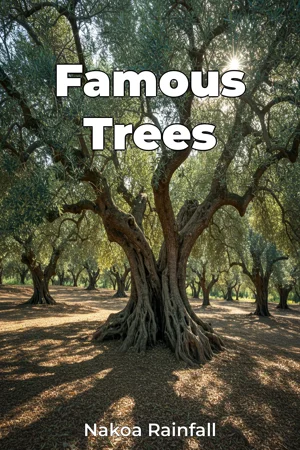
Have you ever considered that the silent giants surrounding us might be holding untold stories of our past? "Famous Trees" unveils the captivating narratives of remarkable trees that have indelibly shaped history, inspired enduring legends, and served as potent symbols across diverse cultures. This book explores how these arboreal figures are not merely passive elements of the landscape but active participants in the human story. Our journey will primarily focus on three interconnected themes: the historical significance of trees in landmark events, the role of specific trees in the genesis of cultural narratives, and the symbolic power attributed to trees across civilizations. These themes are important because they reveal a deeper connection between humanity and the natural world, prompting a reevaluation of our environmental stewardship and cultural inheritance. To fully appreciate the significance of these arboreal accounts, we will explore the historical context in which these trees flourished. This includes examining the social, political, and environmental circumstances that elevated certain trees to prominence. Familiarity with basic concepts of dendrology and folklore will enhance the reading experience, though all necessary background information will be provided. The central argument of "Famous Trees" posits that individual trees can function as living monuments, embodying pivotal moments and cultural values that have shaped human societies. By examining these arboreal figures, we gain unique insights into the past and a renewed appreciation for the enduring power of nature. The book unfolds in three distinct sections. First, we introduce the concept of "famous trees" and explore the criteria that qualify a tree for this distinction, encompassing factors such as age, size, historical association, and cultural impact. The second section delves into specific case studies, ranging from the ancient olive trees of the Mediterranean, venerated for their role in mythology and sustenance, to the iconic trees that witnessed pivotal historical events. Each case study is rigorously researched. The third section synthesizes the preceding analyses, drawing broader conclusions about the relationship between humans and trees, and the importance of preserving these living monuments for future generations. We will explore practical implications, like conservation. The evidence presented in "Famous Trees" relies on a combination of primary historical accounts, dendrochronological data, botanical research, and folkloric traditions. We will examine historical documents. The methodologies include comparative analysis of tree symbolism, historical event verification through corroborating sources, and scientific analysis of tree age and health. This book intersects with several other disciplines including environmental history, cultural studies, and botany. These connections enhance the book's argument by providing a more holistic understanding of the complex interplay between humans, trees, and the environment. Furthermore, its perspective invites a more nuanced appreciation of cultural heritage and environmental preservation efforts. "Famous Trees" adopts a narrative non-fiction style, blending rigorous research with engaging storytelling to create an accessible and informative reading experience. This approach is designed to appeal to a broad audience. This book is targeted towards history enthusiasts, nature lovers, cultural anthropologists, and anyone interested in exploring the hidden stories behind the trees around us. It offers a unique perspective on history and culture through the lens of the natural world. As a work of non-fiction, "Famous Trees" adheres to the principles of factual accuracy, objectivity, and thorough research. It distinguishes itself through its focus on the intersection of natural history and human culture. The scope of "Famous Trees" encompasses a global selection of trees, chosen to represent a diverse range of historical periods, geographical locations, and cultural traditions. However, limitations arise from the availability of verifiable historical data for certain trees and the inevitable selection bias inherent in choosing which stories to tell. The knowledge gained from "Famous Trees" can be applied practically in several ways, including promoting awareness of the importance of preserving ancient and historically significant trees, supporting local conservation efforts, and enhancing educational programs about natural and cultural heritage. While the historical significance of certain trees is widely accepted, interpretations of their symbolic meanings may vary across cultures and academic disciplines. "Famous Trees" addresses these differing perspectives, providing a balanced and nuanced analysis of the available evidence.
Have you ever considered that the silent giants surrounding us might be holding untold stories of our past? "Famous Trees" unveils the captivating narratives of remarkable trees that have indelibly shaped history, inspired enduring legends, and served as potent symbols across diverse cultures. This book explores how these arboreal figures are not merely passive elements of the landscape but active participants in the human story. Our journey will primarily focus on three interconnected themes: the historical significance of trees in landmark events, the role of specific trees in the genesis of cultural narratives, and the symbolic power attributed to trees across civilizations. These themes are important because they reveal a deeper connection between humanity and the natural world, prompting a reevaluation of our environmental stewardship and cultural inheritance. To fully appreciate the significance of these arboreal accounts, we will explore the historical context in which these trees flourished. This includes examining the social, political, and environmental circumstances that elevated certain trees to prominence. Familiarity with basic concepts of dendrology and folklore will enhance the reading experience, though all necessary background information will be provided. The central argument of "Famous Trees" posits that individual trees can function as living monuments, embodying pivotal moments and cultural values that have shaped human societies. By examining these arboreal figures, we gain unique insights into the past and a renewed appreciation for the enduring power of nature. The book unfolds in three distinct sections. First, we introduce the concept of "famous trees" and explore the criteria that qualify a tree for this distinction, encompassing factors such as age, size, historical association, and cultural impact. The second section delves into specific case studies, ranging from the ancient olive trees of the Mediterranean, venerated for their role in mythology and sustenance, to the iconic trees that witnessed pivotal historical events. Each case study is rigorously researched. The third section synthesizes the preceding analyses, drawing broader conclusions about the relationship between humans and trees, and the importance of preserving these living monuments for future generations. We will explore practical implications, like conservation. The evidence presented in "Famous Trees" relies on a combination of primary historical accounts, dendrochronological data, botanical research, and folkloric traditions. We will examine historical documents. The methodologies include comparative analysis of tree symbolism, historical event verification through corroborating sources, and scientific analysis of tree age and health. This book intersects with several other disciplines including environmental history, cultural studies, and botany. These connections enhance the book's argument by providing a more holistic understanding of the complex interplay between humans, trees, and the environment. Furthermore, its perspective invites a more nuanced appreciation of cultural heritage and environmental preservation efforts. "Famous Trees" adopts a narrative non-fiction style, blending rigorous research with engaging storytelling to create an accessible and informative reading experience. This approach is designed to appeal to a broad audience. This book is targeted towards history enthusiasts, nature lovers, cultural anthropologists, and anyone interested in exploring the hidden stories behind the trees around us. It offers a unique perspective on history and culture through the lens of the natural world. As a work of non-fiction, "Famous Trees" adheres to the principles of factual accuracy, objectivity, and thorough research. It distinguishes itself through its focus on the intersection of natural history and human culture. The scope of "Famous Trees" encompasses a global selection of trees, chosen to represent a diverse range of historical periods, geographical locations, and cultural traditions. However, limitations arise from the availability of verifiable historical data for certain trees and the inevitable selection bias inherent in choosing which stories to tell. The knowledge gained from "Famous Trees" can be applied practically in several ways, including promoting awareness of the importance of preserving ancient and historically significant trees, supporting local conservation efforts, and enhancing educational programs about natural and cultural heritage. While the historical significance of certain trees is widely accepted, interpretations of their symbolic meanings may vary across cultures and academic disciplines. "Famous Trees" addresses these differing perspectives, providing a balanced and nuanced analysis of the available evidence.
"Famous Trees" explores the captivating stories of trees that have shaped history, inspired legends, and symbolized cultural values. These silent giants are not just passive elements but active participants in the human story. The book reveals the historical significance of trees in landmark events, their role in cultural narratives, and the symbolic power they hold across civilizations. For example, ancient olive trees of the Mediterranean are venerated for their role in mythology and sustenance. The book posits that individual trees can function as living monuments, embodying pivotal moments and cultural values. It unfolds in three sections: introducing the concept of "famous trees," delving into specific case studies, and synthesizing broader conclusions about the human-tree relationship. By examining historical accounts, dendrochronological data, and folkloric traditions, "Famous Trees" offers insights into the past and a renewed appreciation for nature's enduring power. Targeted towards history enthusiasts and nature lovers, the book adopts a narrative non-fiction style, blending rigorous research with engaging storytelling. It emphasizes the importance of environmental stewardship and preserving these living monuments for future generations. The book's approach makes it a unique and valuable resource for understanding the intersection of natural history and human culture.
Book Details
ISBN
9788233974534
Publisher
Publifye AS
Your Licenses
You don't own any licenses for this book
Purchase a license below to unlock this book and download the EPUB.
Purchase License
Select a tier to unlock this book
Need bulk licensing?
Contact us for enterprise agreements.