
About This Book
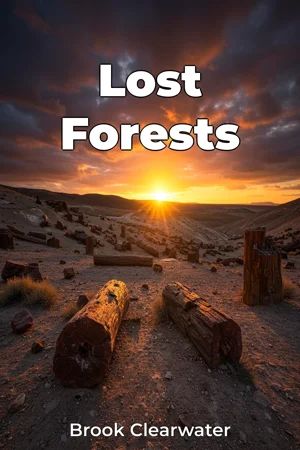
What if the rustling leaves and towering canopies of some of Earth's most magnificent forests exist only as ghosts in the geological record? "Lost Forests" delves into the fascinating and critical story of ancient woodlands that have vanished due to the combined pressures of climate change and human activity. This book examines the profound implications of these disappearances for our planet's ecological balance and future. We will explore three central themes: the paleobotanical evidence of lost forests, the driving forces behind their demise, and the lessons we can learn from the past to safeguard modern ecosystems. These topics are crucial because understanding the history of forest ecosystems is essential for predicting and mitigating the impacts of ongoing environmental challenges. This book offers a comprehensive exploration of forest ecology throughout geological time, beginning with the emergence of the earliest tree-like plants and tracing their evolution through various climatic shifts and periods of human expansion. While no specific prior knowledge is required, familiarity with basic ecological concepts will enhance the reader's understanding. The central argument of "Lost Forests" is that the past extinctions of entire forest ecosystems serve as stark warnings about the fragility of our planet's biodiversity and the long-term consequences of unsustainable practices. By examining these past events, we can gain valuable insights into the factors that make forests vulnerable and develop more effective conservation strategies. The book is structured as follows: First, we will introduce the concept of "lost forests" and establish the importance of studying past ecological changes. Second, we will present detailed case studies of specific extinct forests, such as the coal forests of the Carboniferous period and the ancient forests of the Mediterranean region, analyzing the environmental conditions that led to their collapse. Third, we will examine the roles of climate change, natural disasters, and human activity in these extinctions. Finally, we will discuss the practical implications of this research for contemporary forest management and conservation, emphasizing the need for proactive measures to prevent further losses. The evidence presented in "Lost Forests" draws upon a wide range of sources, including fossilized plant remains, pollen records, geological data, and climate models. We will also incorporate historical accounts and archaeological findings to illuminate the impact of human activities on forest ecosystems. Unique data sources will include high-resolution paleoclimate reconstructions and advanced molecular analyses of ancient plant DNA. This book connects to several other fields of study, including climate science, archaeology, and environmental policy. By integrating insights from these disciplines, we can gain a more holistic understanding of the complex interactions between forests, climate, and human societies. "Lost Forests" offers a unique perspective by combining paleobotanical research with ecological modeling to reconstruct the dynamics of extinct forest ecosystems. This approach allows us to move beyond simple descriptions of past events and develop a deeper understanding of the underlying processes that drive forest change. The book adopts a fact-based writing style, presenting complex scientific information in a clear and accessible manner. While grounded in rigorous research, the narrative is designed to be engaging and thought-provoking for a broad audience. The target audience for "Lost Forests" includes students, researchers, policymakers, and anyone interested in environmental science, conservation, and natural history. The book will be especially valuable to those seeking a deeper understanding of the long-term impacts of climate change and human activity on ecosystems. As a work of environmental science and Earth Sciences Geography, "Lost Forests" adheres to the conventions of presenting well-researched, evidence-based arguments, supported by robust data and analyses. The book also adopts a responsible tone, acknowledging the complexities and uncertainties inherent in scientific research. The scope of "Lost Forests" is limited to the study of terrestrial forest ecosystems that have undergone significant decline or extinction. While we will touch upon the interactions between forests and other ecosystems, the primary focus remains on the internal dynamics of forest environments. The information presented in "Lost Forests" has numerous real-world applications. By understanding the factors that led to the collapse of past forests, we can develop more effective strategies for managing and protecting existing forests. These strategies include reducing greenhouse gas emissions, promoting sustainable forestry practices, and restoring degraded forest ecosystems. While this book presents a comprehensive overview of the topic, it is important to acknowledge that there are ongoing debates within the scientific community regarding the precise causes and consequences of past forest extinctions. We will address these controversies directly, presenting different perspectives and evaluating the available evidence.
What if the rustling leaves and towering canopies of some of Earth's most magnificent forests exist only as ghosts in the geological record? "Lost Forests" delves into the fascinating and critical story of ancient woodlands that have vanished due to the combined pressures of climate change and human activity. This book examines the profound implications of these disappearances for our planet's ecological balance and future. We will explore three central themes: the paleobotanical evidence of lost forests, the driving forces behind their demise, and the lessons we can learn from the past to safeguard modern ecosystems. These topics are crucial because understanding the history of forest ecosystems is essential for predicting and mitigating the impacts of ongoing environmental challenges. This book offers a comprehensive exploration of forest ecology throughout geological time, beginning with the emergence of the earliest tree-like plants and tracing their evolution through various climatic shifts and periods of human expansion. While no specific prior knowledge is required, familiarity with basic ecological concepts will enhance the reader's understanding. The central argument of "Lost Forests" is that the past extinctions of entire forest ecosystems serve as stark warnings about the fragility of our planet's biodiversity and the long-term consequences of unsustainable practices. By examining these past events, we can gain valuable insights into the factors that make forests vulnerable and develop more effective conservation strategies. The book is structured as follows: First, we will introduce the concept of "lost forests" and establish the importance of studying past ecological changes. Second, we will present detailed case studies of specific extinct forests, such as the coal forests of the Carboniferous period and the ancient forests of the Mediterranean region, analyzing the environmental conditions that led to their collapse. Third, we will examine the roles of climate change, natural disasters, and human activity in these extinctions. Finally, we will discuss the practical implications of this research for contemporary forest management and conservation, emphasizing the need for proactive measures to prevent further losses. The evidence presented in "Lost Forests" draws upon a wide range of sources, including fossilized plant remains, pollen records, geological data, and climate models. We will also incorporate historical accounts and archaeological findings to illuminate the impact of human activities on forest ecosystems. Unique data sources will include high-resolution paleoclimate reconstructions and advanced molecular analyses of ancient plant DNA. This book connects to several other fields of study, including climate science, archaeology, and environmental policy. By integrating insights from these disciplines, we can gain a more holistic understanding of the complex interactions between forests, climate, and human societies. "Lost Forests" offers a unique perspective by combining paleobotanical research with ecological modeling to reconstruct the dynamics of extinct forest ecosystems. This approach allows us to move beyond simple descriptions of past events and develop a deeper understanding of the underlying processes that drive forest change. The book adopts a fact-based writing style, presenting complex scientific information in a clear and accessible manner. While grounded in rigorous research, the narrative is designed to be engaging and thought-provoking for a broad audience. The target audience for "Lost Forests" includes students, researchers, policymakers, and anyone interested in environmental science, conservation, and natural history. The book will be especially valuable to those seeking a deeper understanding of the long-term impacts of climate change and human activity on ecosystems. As a work of environmental science and Earth Sciences Geography, "Lost Forests" adheres to the conventions of presenting well-researched, evidence-based arguments, supported by robust data and analyses. The book also adopts a responsible tone, acknowledging the complexities and uncertainties inherent in scientific research. The scope of "Lost Forests" is limited to the study of terrestrial forest ecosystems that have undergone significant decline or extinction. While we will touch upon the interactions between forests and other ecosystems, the primary focus remains on the internal dynamics of forest environments. The information presented in "Lost Forests" has numerous real-world applications. By understanding the factors that led to the collapse of past forests, we can develop more effective strategies for managing and protecting existing forests. These strategies include reducing greenhouse gas emissions, promoting sustainable forestry practices, and restoring degraded forest ecosystems. While this book presents a comprehensive overview of the topic, it is important to acknowledge that there are ongoing debates within the scientific community regarding the precise causes and consequences of past forest extinctions. We will address these controversies directly, presenting different perspectives and evaluating the available evidence.
"Lost Forests" explores the disappearance of ancient woodlands due to climate change and human activity, revealing profound implications for our planet's ecological balance. The book examines paleobotanical evidence to understand the driving forces behind these forest extinctions, offering lessons to safeguard modern ecosystems. For example, the coal forests of the Carboniferous period provide insights into how environmental shifts can decimate entire ecosystems. The book uniquely combines paleobotanical research with ecological modeling, moving beyond simple descriptions to understand the processes driving forest change. It starts by introducing the concept of "lost forests," progresses through case studies of specific extinct forests, and then delves into the roles of climate change and human activity. Finally, it emphasizes the need for proactive measures to prevent further losses, highlighting the fragility of biodiversity and the consequences of unsustainable practices.
Book Details
ISBN
9788233974497
Publisher
Publifye AS
Your Licenses
You don't own any licenses for this book
Purchase a license below to unlock this book and download the EPUB.
Purchase License
Select a tier to unlock this book
Need bulk licensing?
Contact us for enterprise agreements.