
About This Book
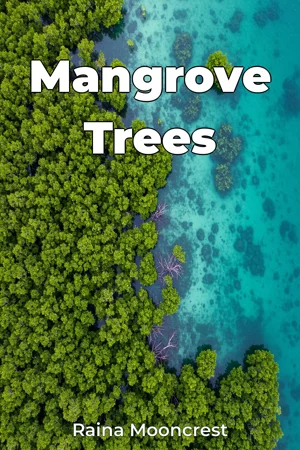
Have you ever considered the unsung heroes silently safeguarding our coastlines? "Mangrove Trees" delves into the multifaceted world of these unique coastal forests, revealing their pivotal role in both environmental protection and the sustenance of marine ecosystems. This book offers a comprehensive exploration of mangroves, bridging the gap between intricate biological processes and tangible real-world applications. We begin by establishing context, outlining the global distribution of mangrove forests, their evolutionary history, and the specific environmental conditions necessary for their survival. Found primarily in tropical and subtropical regions, mangroves represent a fascinating adaptation to harsh intertidal zones, a crucial point that underpins their ecological significance. Readers will gain an understanding of the different mangrove species, including their unique root systems and physiological adaptations to saline environments. This foundational knowledge prepares the reader to fully appreciate the ecological roles of these forests. The central argument of "Mangrove Trees" is that these ecosystems are indispensable for coastal resilience and the maintenance of biodiversity. Their complex root systems act as natural barriers, mitigating the impacts of storms, reducing erosion, and buffering shorelines against sea-level rise. Furthermore, mangrove forests function as vital nurseries for a multitude of marine species, supporting fisheries and contributing to overall ocean health. The book is structured in a manner that systematically builds understanding. First, we explore the biological adaptations of mangrove trees that allow them to thrive in challenging coastal environments. This includes a discussion of their salt tolerance mechanisms, specialized root structures, and reproductive strategies. Second, we examine the ecological roles of mangrove forests, including their contribution to nutrient cycling, carbon sequestration, and habitat provision for diverse flora and fauna. Special attention is given to the intricate food webs that are supported by mangroves, highlighting their importance in maintaining marine biodiversity. Third, the book investigates the threats facing mangrove ecosystems, such as deforestation, pollution, and climate change, and explores potential strategies for conservation and restoration. The evidence presented within "Mangrove Trees" is drawn from a wide range of scientific disciplines, including botany, ecology, oceanography, and environmental science. We incorporate data from long-term ecological monitoring studies, remote sensing analyses of mangrove forest cover, and experimental investigations of mangrove responses to environmental stressors. The book also integrates case studies from around the world, showcasing successful mangrove conservation initiatives and highlighting the socio-economic benefits of protecting these valuable ecosystems. "Mangrove Trees" connects to several interdisciplinary domains. Firstly, it connects to climate science, as mangroves play a significant role in carbon sequestration and climate change mitigation. Secondly, it connects to coastal engineering, as mangroves provide natural coastal protection services that can be more cost-effective and sustainable than artificial structures. Thirdly, it connects to economics, as mangrove ecosystems support fisheries, tourism, and other economic activities. This book adopts an accessible, yet scientifically rigorous, approach, making it suitable for a broad audience, including students, researchers, policymakers, and anyone interested in coastal conservation and marine ecosystems. While acknowledging the complexities of mangrove ecology, we strive to present information in a clear and engaging manner, using real-world examples and compelling visuals to illustrate key concepts. The intended readership includes university students studying environmental science, biology, or marine ecology; researchers working on coastal ecosystems; environmental policymakers seeking information on nature-based solutions for coastal protection; and anyone with a general interest in the natural world. The book is designed to be valuable for both academic and practical purposes, providing insights into the science behind mangrove ecosystems and offering guidance on how to conserve and restore these valuable resources. "Mangrove Trees" primarily focuses on the ecological and biological aspects of mangrove forests, with a secondary focus on conservation strategies. While it touches upon the socio-economic aspects of mangrove management, this is not its primary focus. It acknowledges that there are ongoing debates regarding the optimal approaches to mangrove conservation and restoration and highlights some of the challenges and trade-offs involved in balancing conservation goals with human needs. Ultimately, this book demonstrates the profound importance of mangrove forests and provides readers with the knowledge and tools to become advocates for their protection. "Mangrove Trees" offers practical insights into how individuals, communities, and governments can work together to ensure the long-term survival of these invaluable ecosystems.
Have you ever considered the unsung heroes silently safeguarding our coastlines? "Mangrove Trees" delves into the multifaceted world of these unique coastal forests, revealing their pivotal role in both environmental protection and the sustenance of marine ecosystems. This book offers a comprehensive exploration of mangroves, bridging the gap between intricate biological processes and tangible real-world applications. We begin by establishing context, outlining the global distribution of mangrove forests, their evolutionary history, and the specific environmental conditions necessary for their survival. Found primarily in tropical and subtropical regions, mangroves represent a fascinating adaptation to harsh intertidal zones, a crucial point that underpins their ecological significance. Readers will gain an understanding of the different mangrove species, including their unique root systems and physiological adaptations to saline environments. This foundational knowledge prepares the reader to fully appreciate the ecological roles of these forests. The central argument of "Mangrove Trees" is that these ecosystems are indispensable for coastal resilience and the maintenance of biodiversity. Their complex root systems act as natural barriers, mitigating the impacts of storms, reducing erosion, and buffering shorelines against sea-level rise. Furthermore, mangrove forests function as vital nurseries for a multitude of marine species, supporting fisheries and contributing to overall ocean health. The book is structured in a manner that systematically builds understanding. First, we explore the biological adaptations of mangrove trees that allow them to thrive in challenging coastal environments. This includes a discussion of their salt tolerance mechanisms, specialized root structures, and reproductive strategies. Second, we examine the ecological roles of mangrove forests, including their contribution to nutrient cycling, carbon sequestration, and habitat provision for diverse flora and fauna. Special attention is given to the intricate food webs that are supported by mangroves, highlighting their importance in maintaining marine biodiversity. Third, the book investigates the threats facing mangrove ecosystems, such as deforestation, pollution, and climate change, and explores potential strategies for conservation and restoration. The evidence presented within "Mangrove Trees" is drawn from a wide range of scientific disciplines, including botany, ecology, oceanography, and environmental science. We incorporate data from long-term ecological monitoring studies, remote sensing analyses of mangrove forest cover, and experimental investigations of mangrove responses to environmental stressors. The book also integrates case studies from around the world, showcasing successful mangrove conservation initiatives and highlighting the socio-economic benefits of protecting these valuable ecosystems. "Mangrove Trees" connects to several interdisciplinary domains. Firstly, it connects to climate science, as mangroves play a significant role in carbon sequestration and climate change mitigation. Secondly, it connects to coastal engineering, as mangroves provide natural coastal protection services that can be more cost-effective and sustainable than artificial structures. Thirdly, it connects to economics, as mangrove ecosystems support fisheries, tourism, and other economic activities. This book adopts an accessible, yet scientifically rigorous, approach, making it suitable for a broad audience, including students, researchers, policymakers, and anyone interested in coastal conservation and marine ecosystems. While acknowledging the complexities of mangrove ecology, we strive to present information in a clear and engaging manner, using real-world examples and compelling visuals to illustrate key concepts. The intended readership includes university students studying environmental science, biology, or marine ecology; researchers working on coastal ecosystems; environmental policymakers seeking information on nature-based solutions for coastal protection; and anyone with a general interest in the natural world. The book is designed to be valuable for both academic and practical purposes, providing insights into the science behind mangrove ecosystems and offering guidance on how to conserve and restore these valuable resources. "Mangrove Trees" primarily focuses on the ecological and biological aspects of mangrove forests, with a secondary focus on conservation strategies. While it touches upon the socio-economic aspects of mangrove management, this is not its primary focus. It acknowledges that there are ongoing debates regarding the optimal approaches to mangrove conservation and restoration and highlights some of the challenges and trade-offs involved in balancing conservation goals with human needs. Ultimately, this book demonstrates the profound importance of mangrove forests and provides readers with the knowledge and tools to become advocates for their protection. "Mangrove Trees" offers practical insights into how individuals, communities, and governments can work together to ensure the long-term survival of these invaluable ecosystems.
"Mangrove Trees" explores the vital role of mangrove forests in coastal ecosystems and environmental protection. These unique trees, found in tropical and subtropical regions, are biological marvels, adapted to thrive in harsh, saline environments. Their complex root systems aren't just an evolutionary wonder; they are also nature's shield, buffering coastlines against storms and erosion. The book emphasizes the ecological roles of mangroves, highlighting their importance in maintaining biodiversity and supporting marine life. Mangrove forests act as nurseries for countless marine species, contributing significantly to ocean health and fisheries. Readers will learn about the threats facing these invaluable habitats, from deforestation to climate change, and discover strategies for conservation and restoration. The book progresses systematically, building from the biological adaptations of mangroves through their ecological functions to conservation efforts. "Mangrove Trees" offers an accessible yet scientifically rigorous exploration of these critical ecosystems. By drawing from diverse scientific disciplines and incorporating real-world examples, the book showcases the profound importance of mangrove forests and equips readers with the knowledge to advocate for their protection and understand their role in carbon sequestration.
Book Details
ISBN
9788233974442
Publisher
Publifye AS
Your Licenses
You don't own any licenses for this book
Purchase a license below to unlock this book and download the EPUB.
Purchase License
Select a tier to unlock this book
Need bulk licensing?
Contact us for enterprise agreements.