
About This Book
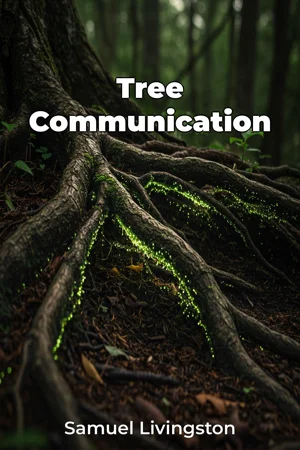
Did you know that trees engage in complex conversations, sharing resources and warnings through a vast, intricate network hidden beneath our feet? "Tree Communication" unveils the groundbreaking science behind how trees interact, revealing a world of biological networking rivaling our own digital age. This book delves into the fascinating realm of plant neurobiology and chemical ecology, exploring the intricate communication systems that allow trees to thrive in dynamic ecosystems. This book explores key topics, the first being the "wood-wide web," a complex network of mycorrhizal fungi that connects the root systems of different trees. We investigate how this subterranean web facilitates the exchange of nutrients, water, and even warning signals between trees. A second major focus will be on chemical signaling, detailing how trees emit volatile organic compounds to communicate with each other and surrounding organisms, including insects and animals. Finally, we will discuss the relatively new field of plant neurobiology and how plants respond to stimuli. Understanding tree communication is crucial for several reasons. Firstly, it challenges our anthropocentric view of the natural world, demonstrating that plants are far more complex and interconnected than we previously imagined. Secondly, comprehending these communication systems is essential for effective forest management and conservation efforts, allowing us to develop strategies that promote ecosystem health and resilience. Lastly, gaining insights into plant communication can inspire innovative solutions in fields like agriculture and biomedicine. The central argument of "Tree Communication" is that trees are not isolated individuals but rather integral components of a sophisticated, interconnected network, and this network plays a vital role in the health of ecosystems. We support this by tracing the evolution of our understanding from early observations to the latest scientific discoveries. The book begins by introducing the fundamental concepts of plant communication, providing a historical context and a scientific foundation. It then delves into the "wood-wide web," explaining how mycorrhizal networks function and their significance in forest ecosystems. Subsequent chapters will explore chemical signaling, detailing the types of compounds trees use to communicate and the messages they convey. We then explore the relatively new field of plant neurobiology, and assess the responses to different stimuli. The book culminates by examining the practical applications of this research, highlighting how understanding tree communication can inform sustainable forestry practices and conservation strategies. The evidence presented in "Tree Communication" is derived from diverse sources, including peer-reviewed scientific studies, field experiments, and laboratory analyses. We draw upon data from ecological studies, chemical analyses, DNA sequencing, and advanced imaging techniques. The authors will also incorporate original research conducted in various forest ecosystems around the world. "Tree Communication" also intersects with other fields. Mycology, of course, is vital to the understanding of the "wood-wide web." There are also connections to soil science, and how the soil microbiome impacts the trees. Finally there are connections to climate science. What sets "Tree Communication" apart is its interdisciplinary approach, integrating insights from ecology, botany, mycology, and chemistry to provide a holistic understanding of tree communication. This book will also show how plants can feel and react to stimuli. The writing style is accessible and engaging, aiming to make complex scientific concepts understandable for a wide audience. While grounded in scientific rigor, the book incorporates compelling anecdotes and real-world examples to illustrate key points and maintain reader interest. "Tree Communication" is intended for anyone with an interest in nature, biology, and environmental science. It will appeal to science enthusiasts, nature lovers, students, and professionals in fields such as forestry, ecology, and conservation. The book will offer valuable insights into the hidden world of plant communication. A basic understanding of biology would be helpful but is not required. As a work of non-fiction, "Tree Communication" will be committed to accuracy, thorough research, and clear presentation of evidence. The book aims to provide a comprehensive overview of the current state of knowledge regarding tree communication, while also acknowledging areas of uncertainty and ongoing research. The scope of the book is limited to the biological aspects of tree communication, focusing on the mechanisms and ecological significance of these interactions. While it touches on the implications for forest management, it does not delve into the socio-economic aspects of forestry. The information presented in "Tree Communication" has numerous real-world applications. By understanding how trees communicate, we can develop more effective strategies for managing forests, restoring degraded ecosystems, and mitigating the impacts of climate change. This knowledge can also inform agricultural practices, leading to more sustainable and resilient food production systems. The book addresses some of the debates in the field, such as the extent to which trees exhibit altruistic behavior and the role of competition versus cooperation in forest ecosystems. By presenting different perspectives and evaluating the evidence, the book encourages critical thinking and informed decision-making.
Did you know that trees engage in complex conversations, sharing resources and warnings through a vast, intricate network hidden beneath our feet? "Tree Communication" unveils the groundbreaking science behind how trees interact, revealing a world of biological networking rivaling our own digital age. This book delves into the fascinating realm of plant neurobiology and chemical ecology, exploring the intricate communication systems that allow trees to thrive in dynamic ecosystems. This book explores key topics, the first being the "wood-wide web," a complex network of mycorrhizal fungi that connects the root systems of different trees. We investigate how this subterranean web facilitates the exchange of nutrients, water, and even warning signals between trees. A second major focus will be on chemical signaling, detailing how trees emit volatile organic compounds to communicate with each other and surrounding organisms, including insects and animals. Finally, we will discuss the relatively new field of plant neurobiology and how plants respond to stimuli. Understanding tree communication is crucial for several reasons. Firstly, it challenges our anthropocentric view of the natural world, demonstrating that plants are far more complex and interconnected than we previously imagined. Secondly, comprehending these communication systems is essential for effective forest management and conservation efforts, allowing us to develop strategies that promote ecosystem health and resilience. Lastly, gaining insights into plant communication can inspire innovative solutions in fields like agriculture and biomedicine. The central argument of "Tree Communication" is that trees are not isolated individuals but rather integral components of a sophisticated, interconnected network, and this network plays a vital role in the health of ecosystems. We support this by tracing the evolution of our understanding from early observations to the latest scientific discoveries. The book begins by introducing the fundamental concepts of plant communication, providing a historical context and a scientific foundation. It then delves into the "wood-wide web," explaining how mycorrhizal networks function and their significance in forest ecosystems. Subsequent chapters will explore chemical signaling, detailing the types of compounds trees use to communicate and the messages they convey. We then explore the relatively new field of plant neurobiology, and assess the responses to different stimuli. The book culminates by examining the practical applications of this research, highlighting how understanding tree communication can inform sustainable forestry practices and conservation strategies. The evidence presented in "Tree Communication" is derived from diverse sources, including peer-reviewed scientific studies, field experiments, and laboratory analyses. We draw upon data from ecological studies, chemical analyses, DNA sequencing, and advanced imaging techniques. The authors will also incorporate original research conducted in various forest ecosystems around the world. "Tree Communication" also intersects with other fields. Mycology, of course, is vital to the understanding of the "wood-wide web." There are also connections to soil science, and how the soil microbiome impacts the trees. Finally there are connections to climate science. What sets "Tree Communication" apart is its interdisciplinary approach, integrating insights from ecology, botany, mycology, and chemistry to provide a holistic understanding of tree communication. This book will also show how plants can feel and react to stimuli. The writing style is accessible and engaging, aiming to make complex scientific concepts understandable for a wide audience. While grounded in scientific rigor, the book incorporates compelling anecdotes and real-world examples to illustrate key points and maintain reader interest. "Tree Communication" is intended for anyone with an interest in nature, biology, and environmental science. It will appeal to science enthusiasts, nature lovers, students, and professionals in fields such as forestry, ecology, and conservation. The book will offer valuable insights into the hidden world of plant communication. A basic understanding of biology would be helpful but is not required. As a work of non-fiction, "Tree Communication" will be committed to accuracy, thorough research, and clear presentation of evidence. The book aims to provide a comprehensive overview of the current state of knowledge regarding tree communication, while also acknowledging areas of uncertainty and ongoing research. The scope of the book is limited to the biological aspects of tree communication, focusing on the mechanisms and ecological significance of these interactions. While it touches on the implications for forest management, it does not delve into the socio-economic aspects of forestry. The information presented in "Tree Communication" has numerous real-world applications. By understanding how trees communicate, we can develop more effective strategies for managing forests, restoring degraded ecosystems, and mitigating the impacts of climate change. This knowledge can also inform agricultural practices, leading to more sustainable and resilient food production systems. The book addresses some of the debates in the field, such as the extent to which trees exhibit altruistic behavior and the role of competition versus cooperation in forest ecosystems. By presenting different perspectives and evaluating the evidence, the book encourages critical thinking and informed decision-making.
"Tree Communication" reveals the fascinating world of how trees interact and share information through complex biological networks. It explores the groundbreaking science behind the "wood-wide web," a subterranean network of fungi connecting trees' root systems, allowing them to exchange nutrients, water, and even warning signals. The book also delves into chemical signaling, detailing how trees use volatile organic compounds to communicate with each other and other organisms. The book progresses from introducing fundamental concepts and the historical context of plant communication to exploring the wood-wide web, chemical signaling, and plant neurobiology. Understanding these complex systems challenges our understanding of nature, suggesting that plants are more interconnected than previously thought. This knowledge is crucial for effective forest management and conservation, potentially inspiring innovations in agriculture and biomedicine.
Book Details
ISBN
9788233974411
Publisher
Publifye AS
Your Licenses
You don't own any licenses for this book
Purchase a license below to unlock this book and download the EPUB.
Purchase License
Select a tier to unlock this book
Need bulk licensing?
Contact us for enterprise agreements.