
About This Book
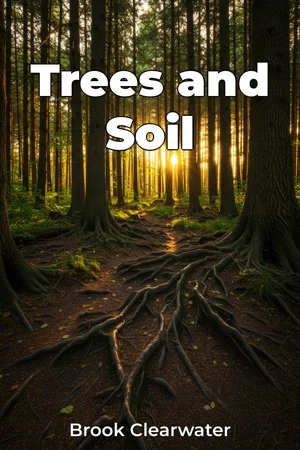
Have you ever considered the silent, unseen labor occurring beneath our feet, the intricate dance between trees and the soil that sustains them both? This book, "Trees and Soil," delves into the crucial relationship between trees and the ground they inhabit, exploring how tree roots are fundamental to soil stabilization, erosion prevention, and the enhancement of land fertility. These topics are paramount in an era facing increasing environmental challenges, where understanding natural processes is vital for sustainable land management and ecological preservation. This exploration requires an understanding of basic ecological principles and earth science concepts, such as soil composition, hydrological cycles, and the mechanics of erosion. With this understanding comes a greater appreciation for the delicate balance within terrestrial ecosystems. The central argument of "Trees and Soil" posits that the presence and health of trees are inextricably linked to the well-being of soil, and that understanding this connection is essential for effective environmental stewardship. It's a call to recognize trees not merely as sources of timber or aesthetic beauty, but as keystone components of stable and fertile landscapes. The book begins by introducing the main concepts of soil science and root biology, examining the various types of soil and the diverse architectures of root systems. It proceeds to develop these ideas across three major sections. The first section analyzes the mechanical role of tree roots in soil stabilization, detailing how root networks bind soil particles together, increasing soil shear strength and reducing the likelihood of landslides and other forms of mass wasting. Case studies of forested and deforested areas will illustrate the dramatic impact of tree cover on slope stability. The second section investigates the hydrological functions of trees, focusing on how roots regulate water infiltration, reduce surface runoff, and mitigate the impacts of heavy rainfall events. Specific examples will be presented, highlighting the role of trees in flood control and drought resilience. Data from watershed studies and hydrological models will support these claims. The third section explores the biochemical interactions between trees and soil, examining how roots contribute to nutrient cycling, organic matter accumulation, and the overall fertility of the land. It will explain how trees draw nutrients from the soil and, through decomposition of leaf litter and root turnover, return those nutrients to the soil in a more accessible form. The book will culminate by synthesizing these strands of evidence to demonstrate how the relationship between trees and soil functions as a self-reinforcing system. It will then explore the practical applications of this understanding in reforestation efforts, sustainable agriculture, and urban planning. The evidence presented will draw from a range of sources, including field studies of forested ecosystems, laboratory analyses of soil samples, and experimental manipulations of root systems. Unique data will be presented from long-term ecological research sites, showcasing the effects of different tree species and management practices on soil health over extended periods. "Trees and Soil" connects to several other fields of study, including civil engineering (through its analysis of slope stability), hydrology (through its examination of water flow dynamics), and agriculture (through its investigation of soil fertility). These connections enhance the book's argument by placing the relationship between trees and soil within a broader context of human activities and environmental management. A novel aspect of this book is its integrated approach, combining mechanical, hydrological, and biochemical perspectives to provide a holistic understanding of the tree-soil interaction. It moves beyond simplistic notions of trees as mere soil stabilizers to explore the complex feedback loops that govern ecosystem functioning. The book will adopt an accessible yet informative tone, blending scientific rigor with clear explanations and engaging examples. It is designed to be accessible to a broad audience, including students, researchers, environmental professionals, and anyone interested in learning more about the natural world. The target audience includes students in environmental science, forestry, and related fields; researchers studying soil ecology and plant physiology; environmental consultants involved in land management and restoration projects; and informed citizens seeking to understand the scientific basis for sustainable practices. As a non-fiction work in the environmental science genre, "Trees and Soil" adheres to the conventions of presenting evidence-based arguments, citing sources appropriately, and maintaining objectivity in its analysis. It will avoid overly technical jargon and strive for clarity and conciseness in its writing. While the book will provide a comprehensive overview of the topic, it will intentionally limit its scope to terrestrial ecosystems, focusing primarily on the interactions between trees and mineral soils. It will not delve into the specifics of wetland or aquatic environments. The information can be applied practically by readers through informed decision-making in land management, reforestation, and agricultural practices. For example, understanding the role of tree roots in soil stabilization can guide the selection of appropriate tree species for erosion control projects. The book will address ongoing debates in the field, such as the relative importance of different tree species in promoting soil health and the potential trade-offs between timber production and ecological conservation. It will present different perspectives on these issues and encourage readers to critically evaluate the evidence.
Have you ever considered the silent, unseen labor occurring beneath our feet, the intricate dance between trees and the soil that sustains them both? This book, "Trees and Soil," delves into the crucial relationship between trees and the ground they inhabit, exploring how tree roots are fundamental to soil stabilization, erosion prevention, and the enhancement of land fertility. These topics are paramount in an era facing increasing environmental challenges, where understanding natural processes is vital for sustainable land management and ecological preservation. This exploration requires an understanding of basic ecological principles and earth science concepts, such as soil composition, hydrological cycles, and the mechanics of erosion. With this understanding comes a greater appreciation for the delicate balance within terrestrial ecosystems. The central argument of "Trees and Soil" posits that the presence and health of trees are inextricably linked to the well-being of soil, and that understanding this connection is essential for effective environmental stewardship. It's a call to recognize trees not merely as sources of timber or aesthetic beauty, but as keystone components of stable and fertile landscapes. The book begins by introducing the main concepts of soil science and root biology, examining the various types of soil and the diverse architectures of root systems. It proceeds to develop these ideas across three major sections. The first section analyzes the mechanical role of tree roots in soil stabilization, detailing how root networks bind soil particles together, increasing soil shear strength and reducing the likelihood of landslides and other forms of mass wasting. Case studies of forested and deforested areas will illustrate the dramatic impact of tree cover on slope stability. The second section investigates the hydrological functions of trees, focusing on how roots regulate water infiltration, reduce surface runoff, and mitigate the impacts of heavy rainfall events. Specific examples will be presented, highlighting the role of trees in flood control and drought resilience. Data from watershed studies and hydrological models will support these claims. The third section explores the biochemical interactions between trees and soil, examining how roots contribute to nutrient cycling, organic matter accumulation, and the overall fertility of the land. It will explain how trees draw nutrients from the soil and, through decomposition of leaf litter and root turnover, return those nutrients to the soil in a more accessible form. The book will culminate by synthesizing these strands of evidence to demonstrate how the relationship between trees and soil functions as a self-reinforcing system. It will then explore the practical applications of this understanding in reforestation efforts, sustainable agriculture, and urban planning. The evidence presented will draw from a range of sources, including field studies of forested ecosystems, laboratory analyses of soil samples, and experimental manipulations of root systems. Unique data will be presented from long-term ecological research sites, showcasing the effects of different tree species and management practices on soil health over extended periods. "Trees and Soil" connects to several other fields of study, including civil engineering (through its analysis of slope stability), hydrology (through its examination of water flow dynamics), and agriculture (through its investigation of soil fertility). These connections enhance the book's argument by placing the relationship between trees and soil within a broader context of human activities and environmental management. A novel aspect of this book is its integrated approach, combining mechanical, hydrological, and biochemical perspectives to provide a holistic understanding of the tree-soil interaction. It moves beyond simplistic notions of trees as mere soil stabilizers to explore the complex feedback loops that govern ecosystem functioning. The book will adopt an accessible yet informative tone, blending scientific rigor with clear explanations and engaging examples. It is designed to be accessible to a broad audience, including students, researchers, environmental professionals, and anyone interested in learning more about the natural world. The target audience includes students in environmental science, forestry, and related fields; researchers studying soil ecology and plant physiology; environmental consultants involved in land management and restoration projects; and informed citizens seeking to understand the scientific basis for sustainable practices. As a non-fiction work in the environmental science genre, "Trees and Soil" adheres to the conventions of presenting evidence-based arguments, citing sources appropriately, and maintaining objectivity in its analysis. It will avoid overly technical jargon and strive for clarity and conciseness in its writing. While the book will provide a comprehensive overview of the topic, it will intentionally limit its scope to terrestrial ecosystems, focusing primarily on the interactions between trees and mineral soils. It will not delve into the specifics of wetland or aquatic environments. The information can be applied practically by readers through informed decision-making in land management, reforestation, and agricultural practices. For example, understanding the role of tree roots in soil stabilization can guide the selection of appropriate tree species for erosion control projects. The book will address ongoing debates in the field, such as the relative importance of different tree species in promoting soil health and the potential trade-offs between timber production and ecological conservation. It will present different perspectives on these issues and encourage readers to critically evaluate the evidence.
"Trees and Soil" explores the vital link between trees and the soil, highlighting their interdependence for ecological balance. It emphasizes how tree roots play a crucial role in soil stabilization, preventing erosion, and boosting land fertility, all essential for environmental stewardship and sustainable land management. The book uniquely integrates mechanical, hydrological, and biochemical perspectives, revealing complex feedback loops within terrestrial ecosystems. Did you know that tree root networks can significantly increase soil shear strength, reducing landslides? Or that trees help regulate water infiltration, mitigating floods and droughts? The book begins by introducing soil science and root biology, then progresses through sections analyzing the mechanical role of roots in soil stabilization, the hydrological functions of trees, and the biochemical interactions contributing to nutrient cycling. It demonstrates how the tree-soil relationship creates a self-reinforcing system, applicable in reforestation, sustainable agriculture, and urban planning. Case studies show the impact of deforestation on slope stability, while watershed studies illustrate the role of trees in flood control, making complex earth science concepts accessible. This book is valuable to those in earth sciences geography and environmental science, providing a holistic understanding of the tree-soil dynamic, moving beyond the traditional view of trees as mere soil stabilizers. By examining data from field studies, soil analyses, and experimental manipulations, "Trees and Soil" shows how understanding this connection is essential for promoting ecological preservation and sustainable practices.
Book Details
ISBN
9788233974404
Publisher
Publifye AS
Your Licenses
You don't own any licenses for this book
Purchase a license below to unlock this book and download the EPUB.
Purchase License
Select a tier to unlock this book
Need bulk licensing?
Contact us for enterprise agreements.