
About This Book
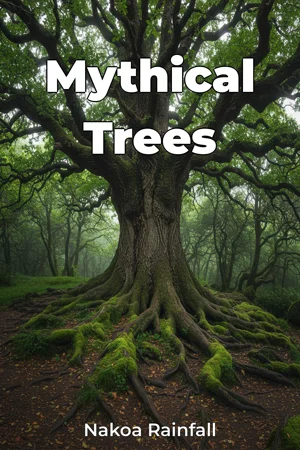
Have you ever considered the silent, rooted sentinels that stand at the heart of our oldest stories? *Mythical Trees* delves into the rich tapestry of folklore, mythology, history, and natural science to explore the profound significance of trees in human culture across the globe. This book examines how specific trees have been venerated, feared, and imbued with mystical properties, shaping human beliefs and practices for millennia. We will investigate three central themes. First, the book explores the "World Tree" archetype, analyzing its varied manifestations in Norse, Siberian, and other indigenous traditions as a symbol of cosmic order and the interconnectedness of all things. Second, we will examine individual "Sacred Trees," such as the Bodhi tree under which Buddha attained enlightenment, and the Oak, central to Druidic rituals, detailing their specific roles in religious and spiritual practices. Finally, we will explore the intersection of tree lore and historical events, examining how trees have served as symbols of power, resistance, and remembrance in various cultures. These topics are important because they reveal the deep-seated human need to find meaning and connection in the natural world, and how this need has been expressed through tangible symbols. The book places these narratives within a cross-cultural framework, drawing on historical accounts, archaeological findings, and botanical research. Understanding the cultural context in which these myths arose is vital; therefore, each chapter incorporates relevant social and environmental histories to provide a comprehensive understanding. While no specific scientific background is required, readers will benefit from an interest in comparative mythology and cultural history. The central argument of *Mythical Trees* is that the enduring presence of trees in myth and folklore reflects a universal human recognition of their vital role in the ecosystem, as well as their symbolic power as embodiments of life, death, and regeneration. This argument is significant because it challenges conventional anthropocentric views by highlighting the agency and influence of the natural world on human culture. The book begins by introducing the concept of "mythical trees" and their prevalence across different cultures. It then develops this idea through three major sections: "Cosmic Trees," focusing on creation myths and world tree symbolism; "Sacred Groves," exploring the role of trees in religious rituals and sacred spaces; and "Trees in History," examining their use as political symbols and commemorative landmarks. The concluding chapter synthesizes these findings, demonstrating how the stories we tell about trees continue to shape our relationship with the environment and inform contemporary conservation efforts. The book employs a multidisciplinary approach, drawing on evidence from anthropology, botany, religious studies, and literature. Unique data sources include translations of ancient texts, ethnographic studies of contemporary tree veneration practices, and analyses of tree-related iconography in art and architecture. *Mythical Trees* connects to several other fields, including environmental studies (by highlighting the ecological importance of trees revealed through cultural practices), art history (by analyzing the depiction of trees in various artistic traditions), and psychology (by exploring the psychological significance of trees as symbols of stability and growth). These interdisciplinary connections enrich the book's argument by providing a more holistic understanding of the relationship between humans and trees. This book offers a comprehensive yet accessible exploration of the global phenomenon of tree mythology. The book's tone is both informative and engaging, aimed at captivating a broad audience. The target audience includes readers interested in mythology, folklore, cultural history, botany, and environmental studies. It will also appeal to those seeking a deeper understanding of the human connection to the natural world. This book is valuable because it provides a unique lens through which to examine human culture and ecological awareness. As a work of non-fiction, *Mythical Trees* adheres to the standards of academic rigor, presenting well-researched information in a clear and organized manner. While the book aims to be comprehensive, its scope is limited to well-documented myths and historical accounts, focusing primarily on cultures with established written traditions or significant archaeological evidence. The information in *Mythical Trees* can be applied practically by readers interested in environmental conservation, cultural preservation, and fostering a deeper connection with nature. By understanding the historical and cultural significance of trees, readers can gain a greater appreciation for their ecological value and cultural importance. While the book presents various interpretations of tree mythology, it acknowledges ongoing debates regarding the authenticity and meaning of these stories, particularly in the context of cultural appropriation and environmental exploitation.
Have you ever considered the silent, rooted sentinels that stand at the heart of our oldest stories? *Mythical Trees* delves into the rich tapestry of folklore, mythology, history, and natural science to explore the profound significance of trees in human culture across the globe. This book examines how specific trees have been venerated, feared, and imbued with mystical properties, shaping human beliefs and practices for millennia. We will investigate three central themes. First, the book explores the "World Tree" archetype, analyzing its varied manifestations in Norse, Siberian, and other indigenous traditions as a symbol of cosmic order and the interconnectedness of all things. Second, we will examine individual "Sacred Trees," such as the Bodhi tree under which Buddha attained enlightenment, and the Oak, central to Druidic rituals, detailing their specific roles in religious and spiritual practices. Finally, we will explore the intersection of tree lore and historical events, examining how trees have served as symbols of power, resistance, and remembrance in various cultures. These topics are important because they reveal the deep-seated human need to find meaning and connection in the natural world, and how this need has been expressed through tangible symbols. The book places these narratives within a cross-cultural framework, drawing on historical accounts, archaeological findings, and botanical research. Understanding the cultural context in which these myths arose is vital; therefore, each chapter incorporates relevant social and environmental histories to provide a comprehensive understanding. While no specific scientific background is required, readers will benefit from an interest in comparative mythology and cultural history. The central argument of *Mythical Trees* is that the enduring presence of trees in myth and folklore reflects a universal human recognition of their vital role in the ecosystem, as well as their symbolic power as embodiments of life, death, and regeneration. This argument is significant because it challenges conventional anthropocentric views by highlighting the agency and influence of the natural world on human culture. The book begins by introducing the concept of "mythical trees" and their prevalence across different cultures. It then develops this idea through three major sections: "Cosmic Trees," focusing on creation myths and world tree symbolism; "Sacred Groves," exploring the role of trees in religious rituals and sacred spaces; and "Trees in History," examining their use as political symbols and commemorative landmarks. The concluding chapter synthesizes these findings, demonstrating how the stories we tell about trees continue to shape our relationship with the environment and inform contemporary conservation efforts. The book employs a multidisciplinary approach, drawing on evidence from anthropology, botany, religious studies, and literature. Unique data sources include translations of ancient texts, ethnographic studies of contemporary tree veneration practices, and analyses of tree-related iconography in art and architecture. *Mythical Trees* connects to several other fields, including environmental studies (by highlighting the ecological importance of trees revealed through cultural practices), art history (by analyzing the depiction of trees in various artistic traditions), and psychology (by exploring the psychological significance of trees as symbols of stability and growth). These interdisciplinary connections enrich the book's argument by providing a more holistic understanding of the relationship between humans and trees. This book offers a comprehensive yet accessible exploration of the global phenomenon of tree mythology. The book's tone is both informative and engaging, aimed at captivating a broad audience. The target audience includes readers interested in mythology, folklore, cultural history, botany, and environmental studies. It will also appeal to those seeking a deeper understanding of the human connection to the natural world. This book is valuable because it provides a unique lens through which to examine human culture and ecological awareness. As a work of non-fiction, *Mythical Trees* adheres to the standards of academic rigor, presenting well-researched information in a clear and organized manner. While the book aims to be comprehensive, its scope is limited to well-documented myths and historical accounts, focusing primarily on cultures with established written traditions or significant archaeological evidence. The information in *Mythical Trees* can be applied practically by readers interested in environmental conservation, cultural preservation, and fostering a deeper connection with nature. By understanding the historical and cultural significance of trees, readers can gain a greater appreciation for their ecological value and cultural importance. While the book presents various interpretations of tree mythology, it acknowledges ongoing debates regarding the authenticity and meaning of these stories, particularly in the context of cultural appropriation and environmental exploitation.
"Mythical Trees" explores the profound role of trees in global cultures, revealing how these silent giants have shaped human beliefs and practices. From serving as cosmic symbols of interconnectedness, like the World Tree in Norse mythology, to embodying spiritual significance as sacred entities, trees occupy a central place in folklore and religious traditions. The book uncovers intriguing facts, such as the Bodhi tree's association with Buddha's enlightenment and the Oak's importance in Druidic rituals. This exploration delves into the cultural history surrounding trees, examining their symbolic use as emblems of power, resistance, and remembrance. By drawing on historical accounts, archaeological findings, and botanical research, the book showcases the universal human need to find meaning in nature. Organized into sections focusing on cosmic trees, sacred groves, and trees in history, it employs a multidisciplinary approach, connecting environmental studies, art history, and psychology. Ultimately, "Mythical Trees" argues that the enduring presence of trees in myth reflects our recognition of their vital ecological role and symbolic power. The book progresses by first introducing the concept of mythical trees, then exploring their cosmic, religious, and historical significance, concluding with a synthesis of how these stories shape our relationship with the environment.
Book Details
ISBN
9788233974374
Publisher
Publifye AS
Your Licenses
You don't own any licenses for this book
Purchase a license below to unlock this book and download the EPUB.
Purchase License
Select a tier to unlock this book
Need bulk licensing?
Contact us for enterprise agreements.