
About This Book
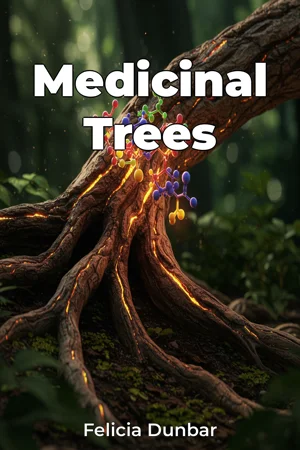
Did you know that some of the most potent medicines come not from laboratories, but from the barks, leaves, and roots of trees around the world? "Medicinal Trees" unveils the hidden pharmaceutical potential of trees, bridging traditional knowledge with modern scientific understanding. This book explores how various tree species have served as sources of healing compounds throughout history and continue to offer possibilities for treating diseases today. We will delve into the chemical properties of trees, examining the specific compounds responsible for their therapeutic effects. Trees produce a diverse array of substances, from alkaloids and terpenoids to flavonoids and tannins, each with distinct medicinal properties. Understanding these compounds is crucial for developing new drugs and therapies. Moreover, the book investigates the ethnobotanical uses of trees, highlighting how indigenous cultures have utilized these resources for centuries. Documenting this knowledge is vital for preserving cultural heritage and discovering novel applications. The historical context of medicinal trees is significant. For millennia, civilizations have relied on trees for their healing properties. From ancient Egyptian remedies to traditional Chinese medicine and the practices of indigenous peoples in the Americas, trees have been central to healthcare systems. We explore this history, tracing the evolution of our understanding and use of medicinal trees. Scientific context is interwoven, requiring a basic comprehension of biology and chemistry to understand the complex interactions between trees and human health. The central argument is that trees represent a vast, largely untapped reservoir of medicinal compounds that can contribute significantly to modern healthcare. This argument underscores the urgency of conserving forests and promoting sustainable harvesting practices. “Medicinal Trees” is organized to first introduce fundamental concepts in plant chemistry and ethnobotany, establishing a foundation for understanding the subsequent material. The book then develops specific examples, focusing on approximately twenty well-documented medicinal tree species. Each species profile includes its botanical characteristics, geographical distribution, traditional uses, chemical composition, pharmacological properties, and clinical studies (where available). A final section addresses the ethical and conservation issues surrounding the use of medicinal trees, including the importance of sustainable harvesting and protecting biodiversity. The book relies on a combination of literature reviews, scientific studies, and ethnobotanical data. We synthesize information from peer-reviewed journals, books, and reports, alongside firsthand accounts from indigenous communities where applicable. This multidisciplinary approach ensures a comprehensive and rigorous analysis. "Medicinal Trees" connects to several other fields. Firstly, it intersects with pharmacology, exploring the mechanisms of action of tree-derived compounds. Secondly, it relates to conservation biology, advocating for the sustainable management of forests to protect medicinal tree populations. Thirdly, it touches upon cultural anthropology, recognizing the importance of traditional knowledge in discovering and utilizing medicinal plants. A unique aspect of "Medicinal Trees" is its integration of traditional knowledge with modern scientific research. We do not merely present a list of medicinal trees; we analyze their properties, explore their historical uses, and evaluate their potential for future drug development. The tone is informative and accessible, aiming to convey complex scientific information in a clear and engaging manner. The target audience includes students and researchers in medicine, biology, botany, pharmacology, and ethnobotany, as well as healthcare professionals, conservationists, and anyone interested in natural remedies. This book offers valuable insights for those seeking to understand the relationship between trees and human health and for those interested in drug discovery and conservation. As a non-fiction science book, it adheres to the genre's conventions of accuracy, objectivity, and clear presentation of evidence. The scope of "Medicinal Trees" is intentionally broad, covering a diverse range of tree species from different geographical regions. However, it is limited to trees with well-documented medicinal properties, based on available scientific and ethnobotanical evidence. The knowledge within “Medicinal Trees” is not purely academic; the information related to sustainable harvesting practices helps to support conservation and helps the reader understand the sourcing of plant compounds. Furthermore, the insight on the chemical properties of these trees can encourage the exploration of new medication and treatments While the book highlights the potential of medicinal trees, it also acknowledges the ongoing debates surrounding their use. This includes discussions about the efficacy of traditional remedies, the potential for adverse effects, and the ethical considerations of bioprospecting and intellectual property rights.
Did you know that some of the most potent medicines come not from laboratories, but from the barks, leaves, and roots of trees around the world? "Medicinal Trees" unveils the hidden pharmaceutical potential of trees, bridging traditional knowledge with modern scientific understanding. This book explores how various tree species have served as sources of healing compounds throughout history and continue to offer possibilities for treating diseases today. We will delve into the chemical properties of trees, examining the specific compounds responsible for their therapeutic effects. Trees produce a diverse array of substances, from alkaloids and terpenoids to flavonoids and tannins, each with distinct medicinal properties. Understanding these compounds is crucial for developing new drugs and therapies. Moreover, the book investigates the ethnobotanical uses of trees, highlighting how indigenous cultures have utilized these resources for centuries. Documenting this knowledge is vital for preserving cultural heritage and discovering novel applications. The historical context of medicinal trees is significant. For millennia, civilizations have relied on trees for their healing properties. From ancient Egyptian remedies to traditional Chinese medicine and the practices of indigenous peoples in the Americas, trees have been central to healthcare systems. We explore this history, tracing the evolution of our understanding and use of medicinal trees. Scientific context is interwoven, requiring a basic comprehension of biology and chemistry to understand the complex interactions between trees and human health. The central argument is that trees represent a vast, largely untapped reservoir of medicinal compounds that can contribute significantly to modern healthcare. This argument underscores the urgency of conserving forests and promoting sustainable harvesting practices. “Medicinal Trees” is organized to first introduce fundamental concepts in plant chemistry and ethnobotany, establishing a foundation for understanding the subsequent material. The book then develops specific examples, focusing on approximately twenty well-documented medicinal tree species. Each species profile includes its botanical characteristics, geographical distribution, traditional uses, chemical composition, pharmacological properties, and clinical studies (where available). A final section addresses the ethical and conservation issues surrounding the use of medicinal trees, including the importance of sustainable harvesting and protecting biodiversity. The book relies on a combination of literature reviews, scientific studies, and ethnobotanical data. We synthesize information from peer-reviewed journals, books, and reports, alongside firsthand accounts from indigenous communities where applicable. This multidisciplinary approach ensures a comprehensive and rigorous analysis. "Medicinal Trees" connects to several other fields. Firstly, it intersects with pharmacology, exploring the mechanisms of action of tree-derived compounds. Secondly, it relates to conservation biology, advocating for the sustainable management of forests to protect medicinal tree populations. Thirdly, it touches upon cultural anthropology, recognizing the importance of traditional knowledge in discovering and utilizing medicinal plants. A unique aspect of "Medicinal Trees" is its integration of traditional knowledge with modern scientific research. We do not merely present a list of medicinal trees; we analyze their properties, explore their historical uses, and evaluate their potential for future drug development. The tone is informative and accessible, aiming to convey complex scientific information in a clear and engaging manner. The target audience includes students and researchers in medicine, biology, botany, pharmacology, and ethnobotany, as well as healthcare professionals, conservationists, and anyone interested in natural remedies. This book offers valuable insights for those seeking to understand the relationship between trees and human health and for those interested in drug discovery and conservation. As a non-fiction science book, it adheres to the genre's conventions of accuracy, objectivity, and clear presentation of evidence. The scope of "Medicinal Trees" is intentionally broad, covering a diverse range of tree species from different geographical regions. However, it is limited to trees with well-documented medicinal properties, based on available scientific and ethnobotanical evidence. The knowledge within “Medicinal Trees” is not purely academic; the information related to sustainable harvesting practices helps to support conservation and helps the reader understand the sourcing of plant compounds. Furthermore, the insight on the chemical properties of these trees can encourage the exploration of new medication and treatments While the book highlights the potential of medicinal trees, it also acknowledges the ongoing debates surrounding their use. This includes discussions about the efficacy of traditional remedies, the potential for adverse effects, and the ethical considerations of bioprospecting and intellectual property rights.
"Medicinal Trees" explores the fascinating world where biology and medicine intersect, revealing the therapeutic potential hidden within tree species. This book connects traditional ethnobotanical knowledge with modern pharmacology, highlighting how trees have served as sources of healing compounds throughout history. For instance, trees produce alkaloids, terpenoids, and flavonoids, each possessing distinct medicinal properties that could lead to innovative drug discovery. The book argues that trees represent a vast, largely untapped reservoir of medicinal compounds, underscoring the importance of forest conservation and sustainable harvesting. The approach taken in "Medicinal Trees" is to first lay a foundation with plant chemistry and ethnobotany. It then progresses to detail specific examples with twenty well-documented medicinal tree species. Each profile includes botanical characteristics, geographical distribution, traditional uses, chemical composition, pharmacological properties, and clinical studies. The book wraps up with a look at ethical and conservation issues surrounding medicinal trees, with insight on biodiversity protection.
Book Details
ISBN
9788233974367
Publisher
Publifye AS
Your Licenses
You don't own any licenses for this book
Purchase a license below to unlock this book and download the EPUB.
Purchase License
Select a tier to unlock this book
Need bulk licensing?
Contact us for enterprise agreements.