
About This Book
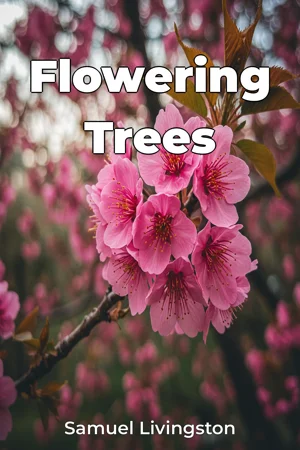
Have you ever stopped to consider the silent, vibrant lives of flowering trees, whose beauty belies their crucial role in the Earth’s ecosystems? This book, *Flowering Trees*, delves into the heart of these botanical wonders, examining their seasonal cycles, their intricate pollination methods, and their pervasive significance in the natural world. We explore not only the aesthetic appeal of flowering trees but also their fundamental importance to ecological balance and biodiversity. *Flowering Trees* focuses on three primary areas: the diverse lifecycle of flowering trees across seasonal changes, the complex mechanisms of their pollination strategies, and their overall impact on supporting various forms of life. These topics are crucial because flowering trees are foundational elements of countless ecosystems, directly influencing the health and stability of the biosphere. Understanding their biology and ecology is key to appreciating and preserving our planet’s biodiversity. Throughout history, flowering trees have been integral to human culture, featuring in art, folklore, and practical applications such as medicine and construction. Scientifically, understanding their biology has been vital for advancements in horticulture, agriculture, and conservation efforts. While the reader doesn't need advanced botanical knowledge, a basic understanding of plant biology will enhance the appreciation of the material presented. The central argument of *Flowering Trees* is that these plants are not merely decorative elements of our landscapes, but are critical ecological players whose health directly impacts our own. By understanding their biology, behavior, and ecological roles, we can better understand how to conserve these valuable organisms and the ecosystems they support. This book unfolds in several key sections. Initially, we introduce the core biological aspects of flowering trees, including their anatomy, physiology, and genetic diversity. Then, we explore their seasonal adaptations, detailing how different species respond to environmental cues like temperature and light to initiate flowering and fruiting. Following this, we examine the diverse array of pollination strategies, from wind-pollination to complex mutualistic relationships with insects, birds, and other animals. Finally, we discuss the practical implications of this understanding for conservation, horticulture, and urban planning, illustrating how we can promote the health and longevity of flowering tree populations. The evidence presented throughout *Flowering Trees* draws from a wide range of scientific research, including field studies, laboratory experiments, and genomic analyses. We incorporate data from long-term ecological monitoring projects and botanical surveys to illustrate the trends and patterns in flowering tree phenology and distribution. We also leverage botanical databases and herbarium records to provide a comprehensive overview of species diversity and evolutionary relationships. *Flowering Trees* also makes notable interdisciplinary connections, linking botany with entomology (through the study of pollinators), climatology (through the analysis of seasonal impacts), and conservation biology (through the development of management strategies). These interdisciplinary perspectives enrich the book by showing how botanical knowledge is interwoven with other scientific fields to address complex ecological challenges. This book adopts a scientific, informative approach, presenting technical information in an accessible manner for a broad audience. While grounded in empirical evidence, the writing style aims to be engaging and evocative, capturing the beauty and complexity of the natural world to inspire readers. *Flowering Trees* is intended for a broad audience, including nature enthusiasts, gardeners, students, and anyone interested in learning more about the natural world. It will be of particular value to those seeking a deeper understanding of plant biology and ecology, providing practical insights into conservation and environmental stewardship. As a work of non-fiction, the book adheres to standards of accuracy, objectivity, and clear communication, presenting information in a logical and evidence-based manner. This book focuses primarily on the biology and ecology of flowering trees, with an emphasis on temperate and tropical regions. While it touches on the economic and cultural significance of these plants, it does not delve deeply into these areas, maintaining its focus on ecological and biological themes. The insights presented in *Flowering Trees* have several real-world applications. Home gardeners can use this knowledge to select and care for flowering trees in their landscapes, promoting their health and longevity. Conservationists can apply these principles to develop effective strategies for protecting threatened species and restoring degraded ecosystems. Urban planners can incorporate these findings into the design of green spaces that support biodiversity and enhance human well-being. While this book largely focuses on established scientific understanding, we will touch on ongoing discussions regarding the impact of climate change on flowering tree phenology and the potential consequences for pollination networks. By addressing these debates, we aim to provide a comprehensive and up-to-date overview of the current state of knowledge in this field.
Have you ever stopped to consider the silent, vibrant lives of flowering trees, whose beauty belies their crucial role in the Earth’s ecosystems? This book, *Flowering Trees*, delves into the heart of these botanical wonders, examining their seasonal cycles, their intricate pollination methods, and their pervasive significance in the natural world. We explore not only the aesthetic appeal of flowering trees but also their fundamental importance to ecological balance and biodiversity. *Flowering Trees* focuses on three primary areas: the diverse lifecycle of flowering trees across seasonal changes, the complex mechanisms of their pollination strategies, and their overall impact on supporting various forms of life. These topics are crucial because flowering trees are foundational elements of countless ecosystems, directly influencing the health and stability of the biosphere. Understanding their biology and ecology is key to appreciating and preserving our planet’s biodiversity. Throughout history, flowering trees have been integral to human culture, featuring in art, folklore, and practical applications such as medicine and construction. Scientifically, understanding their biology has been vital for advancements in horticulture, agriculture, and conservation efforts. While the reader doesn't need advanced botanical knowledge, a basic understanding of plant biology will enhance the appreciation of the material presented. The central argument of *Flowering Trees* is that these plants are not merely decorative elements of our landscapes, but are critical ecological players whose health directly impacts our own. By understanding their biology, behavior, and ecological roles, we can better understand how to conserve these valuable organisms and the ecosystems they support. This book unfolds in several key sections. Initially, we introduce the core biological aspects of flowering trees, including their anatomy, physiology, and genetic diversity. Then, we explore their seasonal adaptations, detailing how different species respond to environmental cues like temperature and light to initiate flowering and fruiting. Following this, we examine the diverse array of pollination strategies, from wind-pollination to complex mutualistic relationships with insects, birds, and other animals. Finally, we discuss the practical implications of this understanding for conservation, horticulture, and urban planning, illustrating how we can promote the health and longevity of flowering tree populations. The evidence presented throughout *Flowering Trees* draws from a wide range of scientific research, including field studies, laboratory experiments, and genomic analyses. We incorporate data from long-term ecological monitoring projects and botanical surveys to illustrate the trends and patterns in flowering tree phenology and distribution. We also leverage botanical databases and herbarium records to provide a comprehensive overview of species diversity and evolutionary relationships. *Flowering Trees* also makes notable interdisciplinary connections, linking botany with entomology (through the study of pollinators), climatology (through the analysis of seasonal impacts), and conservation biology (through the development of management strategies). These interdisciplinary perspectives enrich the book by showing how botanical knowledge is interwoven with other scientific fields to address complex ecological challenges. This book adopts a scientific, informative approach, presenting technical information in an accessible manner for a broad audience. While grounded in empirical evidence, the writing style aims to be engaging and evocative, capturing the beauty and complexity of the natural world to inspire readers. *Flowering Trees* is intended for a broad audience, including nature enthusiasts, gardeners, students, and anyone interested in learning more about the natural world. It will be of particular value to those seeking a deeper understanding of plant biology and ecology, providing practical insights into conservation and environmental stewardship. As a work of non-fiction, the book adheres to standards of accuracy, objectivity, and clear communication, presenting information in a logical and evidence-based manner. This book focuses primarily on the biology and ecology of flowering trees, with an emphasis on temperate and tropical regions. While it touches on the economic and cultural significance of these plants, it does not delve deeply into these areas, maintaining its focus on ecological and biological themes. The insights presented in *Flowering Trees* have several real-world applications. Home gardeners can use this knowledge to select and care for flowering trees in their landscapes, promoting their health and longevity. Conservationists can apply these principles to develop effective strategies for protecting threatened species and restoring degraded ecosystems. Urban planners can incorporate these findings into the design of green spaces that support biodiversity and enhance human well-being. While this book largely focuses on established scientific understanding, we will touch on ongoing discussions regarding the impact of climate change on flowering tree phenology and the potential consequences for pollination networks. By addressing these debates, we aim to provide a comprehensive and up-to-date overview of the current state of knowledge in this field.
*Flowering Trees* explores the fascinating lives of these vital plants, revealing their importance to both biodiversity and ecological balance. The book examines their seasonal cycles, highlighting how trees adapt to temperature and light changes to initiate flowering and fruiting. Did you know that flowering trees employ diverse pollination strategies, from wind dispersal to intricate relationships with insects, birds, and other animals? Understanding these mechanisms is crucial, as these trees are not mere decorative plants; they are foundational to countless ecosystems. The book progresses through key sections, beginning with the anatomy, physiology, and genetic diversity of flowering trees. It then examines seasonal adaptations and pollination strategies, before discussing the practical implications for conservation, horticulture, and urban planning. The book emphasizes the critical role of flowering trees and provides insights into how we can conserve these valuable organisms, and the ecosystems they support, for future generations.
Book Details
ISBN
9788233974350
Publisher
Publifye AS
Your Licenses
You don't own any licenses for this book
Purchase a license below to unlock this book and download the EPUB.
Purchase License
Select a tier to unlock this book
Need bulk licensing?
Contact us for enterprise agreements.