
About This Book
Have you ever considered the profound connection between humanity and trees that extends beyond their ecological importance? "Sacred Trees" delves into this very connection, exploring the diverse roles trees have played in religious and cultural practices across civilizations. This book examines how trees, often seen as symbols of life, wisdom, and divinity, have shaped rituals, mythologies, and belief systems around the world. We will first establish the widespread significance of trees across diverse faiths and cultures. From the ancient groves of Europe to the sacred forests of Asia and the Americas, trees have consistently been central to spiritual life. We will analyze specific examples, such as the Bodhi tree in Buddhism, the Tree of Life in various traditions, and the oak trees revered by the Druids, demonstrating how particular species have become intertwined with core religious narratives and practices. This exploration highlights the recurring themes of creation, knowledge, and immortality associated with trees. The book will also provide essential context, examining the historical and social factors that contributed to the veneration of trees. This includes an analysis of animistic beliefs, early agricultural practices, and the development of complex social structures. Understanding these factors helps explain why certain trees were chosen as sacred, and how their symbolic meanings evolved over time. "Sacred Trees" argues that the enduring reverence for trees reflects a deep-seated human need to connect with the natural world and find meaning in our existence. By examining the cultural and religious significance of trees, we can gain insights into the values, beliefs, and worldviews of different societies. This understanding is crucial for fostering intercultural dialogue and appreciating the diverse ways humans relate to the environment. The book is structured in three primary sections: (a) Introduction: We will introduce the concept of sacred trees, defining the scope of our inquiry and outlining the key themes that will be explored. (b) Development: The central chapters will showcase the diversity of sacred trees across geographical regions. Specific case studies will look at the role of trees in creation myths, healing rituals, and symbolic representations of deities. (c) Culmination: The final section will synthesize these diverse examples, identifying common threads and exploring the implications of this enduring reverence for modern environmental ethics and conservation efforts. The evidence presented will be drawn from a variety of sources, including religious texts, anthropological studies, historical accounts, and botanical research. We will analyze folklore, art, and archaeological findings to reconstruct the cultural significance of trees in different societies. Original translations of relevant texts and previously unpublished ethnographic data will also be incorporated. The book connects to various disciplines, including botany, religious studies, anthropology, and environmental history. By integrating these perspectives, "Sacred Trees" provides a comprehensive understanding of the multifaceted relationship between humans and trees. It is a unique approach that emphasizes the interdisciplinary nature of cultural and environmental studies. The writing style will be accessible and engaging, making complex ideas understandable to a broad audience. The tone will be informative and respectful, acknowledging the diverse beliefs and practices associated with sacred trees. The target audience includes students of religion, anthropology, and environmental studies, as well as general readers interested in cultural history, mythology, and the relationship between humans and nature. It will also be valuable for environmental activists and policymakers seeking to understand the cultural dimensions of conservation. Adhering to the conventions of non-fiction, the book will maintain a fact-based approach, relying on credible sources. While the scope is broad, covering a range of cultures and time periods, it is limited to trees with documented religious and cultural significance. Forests and woods in general are beyond the purview of the book, except when individual trees or species are featured. The information presented can be applied to contemporary discussions about environmental conservation and cultural preservation. Understanding the historical and cultural significance of trees can inform sustainable development practices and promote respect for traditional ecological knowledge. While the belief in the sacredness of trees is widespread, there are differing interpretations and practices associated with this reverence. The book will acknowledge these variations, presenting a balanced and nuanced perspective on the cultural and religious significance of trees across civilizations. The controversies about deforestation and the destruction of sacred groves will also be addressed.
Have you ever considered the profound connection between humanity and trees that extends beyond their ecological importance? "Sacred Trees" delves into this very connection, exploring the diverse roles trees have played in religious and cultural practices across civilizations. This book examines how trees, often seen as symbols of life, wisdom, and divinity, have shaped rituals, mythologies, and belief systems around the world. We will first establish the widespread significance of trees across diverse faiths and cultures. From the ancient groves of Europe to the sacred forests of Asia and the Americas, trees have consistently been central to spiritual life. We will analyze specific examples, such as the Bodhi tree in Buddhism, the Tree of Life in various traditions, and the oak trees revered by the Druids, demonstrating how particular species have become intertwined with core religious narratives and practices. This exploration highlights the recurring themes of creation, knowledge, and immortality associated with trees. The book will also provide essential context, examining the historical and social factors that contributed to the veneration of trees. This includes an analysis of animistic beliefs, early agricultural practices, and the development of complex social structures. Understanding these factors helps explain why certain trees were chosen as sacred, and how their symbolic meanings evolved over time. "Sacred Trees" argues that the enduring reverence for trees reflects a deep-seated human need to connect with the natural world and find meaning in our existence. By examining the cultural and religious significance of trees, we can gain insights into the values, beliefs, and worldviews of different societies. This understanding is crucial for fostering intercultural dialogue and appreciating the diverse ways humans relate to the environment. The book is structured in three primary sections: (a) Introduction: We will introduce the concept of sacred trees, defining the scope of our inquiry and outlining the key themes that will be explored. (b) Development: The central chapters will showcase the diversity of sacred trees across geographical regions. Specific case studies will look at the role of trees in creation myths, healing rituals, and symbolic representations of deities. (c) Culmination: The final section will synthesize these diverse examples, identifying common threads and exploring the implications of this enduring reverence for modern environmental ethics and conservation efforts. The evidence presented will be drawn from a variety of sources, including religious texts, anthropological studies, historical accounts, and botanical research. We will analyze folklore, art, and archaeological findings to reconstruct the cultural significance of trees in different societies. Original translations of relevant texts and previously unpublished ethnographic data will also be incorporated. The book connects to various disciplines, including botany, religious studies, anthropology, and environmental history. By integrating these perspectives, "Sacred Trees" provides a comprehensive understanding of the multifaceted relationship between humans and trees. It is a unique approach that emphasizes the interdisciplinary nature of cultural and environmental studies. The writing style will be accessible and engaging, making complex ideas understandable to a broad audience. The tone will be informative and respectful, acknowledging the diverse beliefs and practices associated with sacred trees. The target audience includes students of religion, anthropology, and environmental studies, as well as general readers interested in cultural history, mythology, and the relationship between humans and nature. It will also be valuable for environmental activists and policymakers seeking to understand the cultural dimensions of conservation. Adhering to the conventions of non-fiction, the book will maintain a fact-based approach, relying on credible sources. While the scope is broad, covering a range of cultures and time periods, it is limited to trees with documented religious and cultural significance. Forests and woods in general are beyond the purview of the book, except when individual trees or species are featured. The information presented can be applied to contemporary discussions about environmental conservation and cultural preservation. Understanding the historical and cultural significance of trees can inform sustainable development practices and promote respect for traditional ecological knowledge. While the belief in the sacredness of trees is widespread, there are differing interpretations and practices associated with this reverence. The book will acknowledge these variations, presenting a balanced and nuanced perspective on the cultural and religious significance of trees across civilizations. The controversies about deforestation and the destruction of sacred groves will also be addressed.
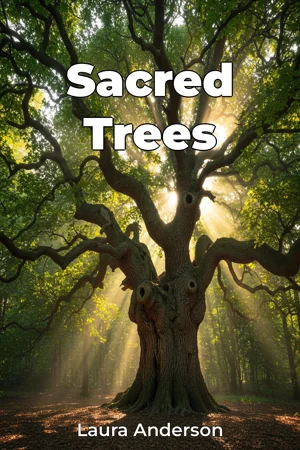
"Sacred Trees" explores the profound, enduring connection between humanity and trees, delving into their diverse roles in religious and cultural practices worldwide. It examines how trees—often symbols of life, wisdom, and divinity—have shaped rituals, mythologies, and belief systems. For example, the book illustrates how specific trees, such as the Bodhi tree in Buddhism and the oak trees revered by the Druids, have become intertwined with religious narratives. This exploration highlights recurring themes of creation, knowledge, and our fundamental relationship with nature. The book uniquely integrates perspectives from botany, religious studies, anthropology, and environmental history to provide a comprehensive understanding of the cultural significance of trees. Beginning with an introduction to the concept of sacred trees, the central chapters showcase their diversity across geographical regions, using case studies from creation myths to healing rituals. The concluding section synthesizes these examples, identifying common threads and exploring the implications of this enduring reverence for modern environmental ethics and conservation efforts, enriching our understanding of belief systems and cultural history.
Book Details
ISBN
9788233974312
Publisher
Publifye AS
Your Licenses
You don't own any licenses for this book
Purchase a license below to unlock this book and download the EPUB.
Purchase License
Select a tier to unlock this book
Need bulk licensing?
Contact us for enterprise agreements.