
About This Book
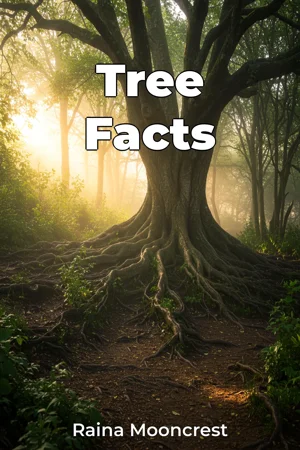
Did you know that trees, silent sentinels of our planet, have intricate communication systems and survival mechanisms far more complex than we often imagine? "Tree Facts" delves into the hidden world of these vital organisms, exploring their biology, ecological significance, and the crucial role they play in sustaining life on Earth. This book is essential reading for anyone seeking a deeper understanding of the natural world and the interconnectedness of all living things. We will explore three core themes: the astonishing growth processes of trees, their diverse and ingenious survival strategies, and their profound impact on the global environment. These topics are fundamental to understanding not only the natural history of trees but also their critical role in mitigating climate change, maintaining biodiversity, and supporting countless ecosystems. Understanding the biology of trees requires some basic knowledge of botany and ecology. We’ll build upon these foundational principles to reveal the intricacies of photosynthesis, nutrient transport, and the complex symbiotic relationships trees form with other organisms. The central argument of "Tree Facts" is that trees are not merely passive components of the environment but rather active agents shaping their surroundings and playing a pivotal role in the Earth's life support systems. By understanding their biology and ecology, we can better appreciate their value and work towards their conservation. The book begins with an introduction to the fundamental concepts of tree biology, covering topics such as anatomy, physiology, and genetics. We then explore how trees grow, adapt, and reproduce, examining the specific adaptations that allow them to thrive in diverse environments, from rainforests to deserts. Next, we investigate the complex interactions between trees and their environment, including their role in carbon sequestration, water cycling, and soil formation. The book culminates with a discussion of the challenges facing trees in the 21st century, such as deforestation, climate change, and invasive species, and explores potential solutions for ensuring their long-term survival. The arguments presented in "Tree Facts" are supported by a wealth of scientific evidence, drawn from peer-reviewed research articles, field studies, and expert interviews. The book incorporates data from diverse sources, including tree ring analysis, remote sensing, and molecular biology, to provide a comprehensive and nuanced understanding of tree biology and ecology. "Tree Facts" connects to numerous other fields of study, including climate science, forestry, and environmental policy. Understanding tree physiology is crucial for effective climate change mitigation strategies, while knowledge of forest ecology is essential for sustainable forest management practices. The book will touch upon the ethical considerations surrounding deforestation and habitat destruction. This book differentiates itself by adopting a holistic approach to understanding trees, integrating insights from diverse scientific disciplines and presenting information in an accessible and engaging manner. The aim isn't just to present established facts but to foster a deeper appreciation for the complexity and importance of trees in the natural world. The tone of "Tree Facts" is informative and engaging, making complex scientific concepts accessible to a broad audience. The writing style is clear, concise, and avoids jargon, ensuring that readers from diverse backgrounds can easily understand the material. "Tree Facts" is targeted towards anyone with an interest in nature, biology, or environmental science. It will be of particular interest to students, educators, policymakers, and nature enthusiasts seeking a reliable and comprehensive source of information about trees. As a non-fiction science book, "Tree Facts" adheres to the principles of accuracy, objectivity, and evidence-based reasoning. Information is presented in a balanced and unbiased manner, with citations provided for all sources. The scope of the book is broad, covering a wide range of topics related to tree biology, ecology, and conservation. However, the book does not delve into highly specialized or technical aspects of tree science. Topics like genetic engineering of trees and detailed wood anatomy are purposefully excluded. Readers can apply the information in "Tree Facts" in numerous practical ways, such as making informed decisions about tree planting and care, advocating for sustainable forest management practices, and supporting policies that protect forests and promote biodiversity. While the book seeks to provide a balanced view, it acknowledges ongoing debates concerning the best approaches to forest conservation and management, including discussions about sustainable harvesting practices and the role of genetically modified trees.
Did you know that trees, silent sentinels of our planet, have intricate communication systems and survival mechanisms far more complex than we often imagine? "Tree Facts" delves into the hidden world of these vital organisms, exploring their biology, ecological significance, and the crucial role they play in sustaining life on Earth. This book is essential reading for anyone seeking a deeper understanding of the natural world and the interconnectedness of all living things. We will explore three core themes: the astonishing growth processes of trees, their diverse and ingenious survival strategies, and their profound impact on the global environment. These topics are fundamental to understanding not only the natural history of trees but also their critical role in mitigating climate change, maintaining biodiversity, and supporting countless ecosystems. Understanding the biology of trees requires some basic knowledge of botany and ecology. We’ll build upon these foundational principles to reveal the intricacies of photosynthesis, nutrient transport, and the complex symbiotic relationships trees form with other organisms. The central argument of "Tree Facts" is that trees are not merely passive components of the environment but rather active agents shaping their surroundings and playing a pivotal role in the Earth's life support systems. By understanding their biology and ecology, we can better appreciate their value and work towards their conservation. The book begins with an introduction to the fundamental concepts of tree biology, covering topics such as anatomy, physiology, and genetics. We then explore how trees grow, adapt, and reproduce, examining the specific adaptations that allow them to thrive in diverse environments, from rainforests to deserts. Next, we investigate the complex interactions between trees and their environment, including their role in carbon sequestration, water cycling, and soil formation. The book culminates with a discussion of the challenges facing trees in the 21st century, such as deforestation, climate change, and invasive species, and explores potential solutions for ensuring their long-term survival. The arguments presented in "Tree Facts" are supported by a wealth of scientific evidence, drawn from peer-reviewed research articles, field studies, and expert interviews. The book incorporates data from diverse sources, including tree ring analysis, remote sensing, and molecular biology, to provide a comprehensive and nuanced understanding of tree biology and ecology. "Tree Facts" connects to numerous other fields of study, including climate science, forestry, and environmental policy. Understanding tree physiology is crucial for effective climate change mitigation strategies, while knowledge of forest ecology is essential for sustainable forest management practices. The book will touch upon the ethical considerations surrounding deforestation and habitat destruction. This book differentiates itself by adopting a holistic approach to understanding trees, integrating insights from diverse scientific disciplines and presenting information in an accessible and engaging manner. The aim isn't just to present established facts but to foster a deeper appreciation for the complexity and importance of trees in the natural world. The tone of "Tree Facts" is informative and engaging, making complex scientific concepts accessible to a broad audience. The writing style is clear, concise, and avoids jargon, ensuring that readers from diverse backgrounds can easily understand the material. "Tree Facts" is targeted towards anyone with an interest in nature, biology, or environmental science. It will be of particular interest to students, educators, policymakers, and nature enthusiasts seeking a reliable and comprehensive source of information about trees. As a non-fiction science book, "Tree Facts" adheres to the principles of accuracy, objectivity, and evidence-based reasoning. Information is presented in a balanced and unbiased manner, with citations provided for all sources. The scope of the book is broad, covering a wide range of topics related to tree biology, ecology, and conservation. However, the book does not delve into highly specialized or technical aspects of tree science. Topics like genetic engineering of trees and detailed wood anatomy are purposefully excluded. Readers can apply the information in "Tree Facts" in numerous practical ways, such as making informed decisions about tree planting and care, advocating for sustainable forest management practices, and supporting policies that protect forests and promote biodiversity. While the book seeks to provide a balanced view, it acknowledges ongoing debates concerning the best approaches to forest conservation and management, including discussions about sustainable harvesting practices and the role of genetically modified trees.
"Tree Facts" unveils the hidden lives of trees, showcasing their vital role in our planet's ecosystems. Exploring tree biology, the book reveals how these organisms actively shape their surroundings. Did you know that trees possess intricate communication systems and survival strategies? Or that trees are not just passive bystanders but active agents in carbon sequestration, which is essential for mitigating climate change? This book emphasizes the interconnectedness of all living things, making it a valuable resource for anyone keen to understand the natural world. The book's unique approach integrates insights from various scientific disciplines, presenting information in an accessible and engaging style. Beginning with fundamental concepts of tree anatomy, physiology, and genetics, it progresses to explore how trees grow and adapt in diverse environments. "Tree Facts" then investigates the complex interactions between trees and their environment, culminating in a discussion of the challenges trees face in the 21st century, such as deforestation and climate change.
Book Details
ISBN
9788233974299
Publisher
Publifye AS
Your Licenses
You don't own any licenses for this book
Purchase a license below to unlock this book and download the EPUB.
Purchase License
Select a tier to unlock this book
Need bulk licensing?
Contact us for enterprise agreements.