
About This Book
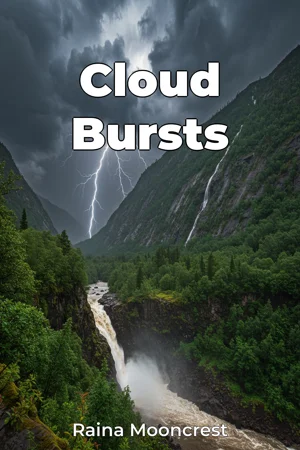
Have you ever witnessed rainfall so intense it seemed as if the sky were collapsing? This book, "Cloud Bursts," delves into the science behind these sudden, localized downpours, exploring their causes, characteristics, and the often-devastating consequences they unleash. We will examine two critical elements: the atmospheric conditions conducive to cloud burst formation and the geographical factors that amplify their impact. Understanding these elements is crucial because cloud bursts, though relatively small in scale, pose a significant threat to mountainous regions and densely populated areas, often triggering flash floods and landslides. The occurrence of cloud bursts is tied to specific weather patterns and topographical features. Air currents forced to rise rapidly over mountains can create supercooled clouds containing vast amounts of water. When these clouds release their precipitation in a concentrated area and timeframe, the result is a cloud burst. We will explore how climate change may be altering these patterns, potentially leading to more frequent and intense events. The central argument of "Cloud Bursts" is that a comprehensive understanding of the meteorological and geographical dynamics of cloud bursts is essential for developing effective early warning systems and mitigation strategies. By integrating scientific research with case studies of past events, we aim to provide actionable insights for policymakers, emergency responders, and communities at risk. The structure of this book is designed to progressively build the reader's understanding. First, we define cloud bursts and differentiate them from ordinary heavy rainfall, drawing on meteorological data and established scientific literature. Second, we explore the atmospheric processes involved, including orographic lift, condensation mechanisms, and the role of aerosols. Third, we examine the geographical factors that influence cloud burst severity, such as slope angle, soil composition, and vegetation cover. Fourth, we analyze case studies of cloud bursts from various regions, highlighting common patterns and unique characteristics. Finally, we discuss practical applications, including the use of radar technology and hydrological models for prediction, as well as strategies for land-use planning and infrastructure development to minimize risk. Supporting our arguments will be data from weather agencies, geological surveys, and academic research institutions. We will incorporate radar imagery, rainfall measurements, and topographic maps to illustrate the dynamics of cloud bursts. Furthermore, we will draw upon firsthand accounts from communities affected by these events to provide a human perspective. This book also intersects with other disciplines, including hydrology (the study of water movement), geomorphology (the study of landforms), and disaster management. By integrating insights from these fields, we offer a holistic understanding of the causes, impacts, and potential solutions related to cloud bursts. A unique aspect of "Cloud Bursts" is its synthesis of scientific and practical knowledge. While grounded in rigorous scientific analysis, the book avoids jargon and technical details, making it accessible to a broad audience. We present complex concepts in a clear and engaging manner, using real-world examples and visual aids to enhance understanding. The tone of the book is informative and authoritative, reflecting the seriousness of the subject matter. While maintaining a professional approach, we strive to connect with the reader on a personal level, conveying a sense of urgency and concern for the safety and well-being of communities at risk. The target audience includes students and researchers in earth sciences, geography, and environmental studies, as well as policymakers, emergency managers, and anyone interested in understanding natural hazards. This book provides valuable insights into a significant environmental phenomenon and empowers readers to make informed decisions. As a work of non-fiction within the nature, earth sciences, and geography genres, this book strives for accuracy, clarity, and objectivity. We adhere to the principles of scientific integrity and cite our sources meticulously. The scope of "Cloud Bursts" is limited to the scientific understanding and practical management of cloud bursts. While we acknowledge the broader context of climate change and its potential impact on extreme weather events, we do not delve into the political or economic dimensions of disaster relief. The information presented can be applied to creating more resilient infrastructure, improving early warning systems, and informing land-use planning decisions in vulnerable regions. By understanding the dynamics of these weather events, communities can better prepare for and mitigate their impact. While the science of cloud bursts is relatively well-established, there are ongoing debates about the precise mechanisms that trigger them and the effectiveness of different prediction methods. We address these controversies by presenting different perspectives and evaluating the evidence supporting each viewpoint. This book aims to provide a balanced and nuanced understanding of these complex phenomena.
Have you ever witnessed rainfall so intense it seemed as if the sky were collapsing? This book, "Cloud Bursts," delves into the science behind these sudden, localized downpours, exploring their causes, characteristics, and the often-devastating consequences they unleash. We will examine two critical elements: the atmospheric conditions conducive to cloud burst formation and the geographical factors that amplify their impact. Understanding these elements is crucial because cloud bursts, though relatively small in scale, pose a significant threat to mountainous regions and densely populated areas, often triggering flash floods and landslides. The occurrence of cloud bursts is tied to specific weather patterns and topographical features. Air currents forced to rise rapidly over mountains can create supercooled clouds containing vast amounts of water. When these clouds release their precipitation in a concentrated area and timeframe, the result is a cloud burst. We will explore how climate change may be altering these patterns, potentially leading to more frequent and intense events. The central argument of "Cloud Bursts" is that a comprehensive understanding of the meteorological and geographical dynamics of cloud bursts is essential for developing effective early warning systems and mitigation strategies. By integrating scientific research with case studies of past events, we aim to provide actionable insights for policymakers, emergency responders, and communities at risk. The structure of this book is designed to progressively build the reader's understanding. First, we define cloud bursts and differentiate them from ordinary heavy rainfall, drawing on meteorological data and established scientific literature. Second, we explore the atmospheric processes involved, including orographic lift, condensation mechanisms, and the role of aerosols. Third, we examine the geographical factors that influence cloud burst severity, such as slope angle, soil composition, and vegetation cover. Fourth, we analyze case studies of cloud bursts from various regions, highlighting common patterns and unique characteristics. Finally, we discuss practical applications, including the use of radar technology and hydrological models for prediction, as well as strategies for land-use planning and infrastructure development to minimize risk. Supporting our arguments will be data from weather agencies, geological surveys, and academic research institutions. We will incorporate radar imagery, rainfall measurements, and topographic maps to illustrate the dynamics of cloud bursts. Furthermore, we will draw upon firsthand accounts from communities affected by these events to provide a human perspective. This book also intersects with other disciplines, including hydrology (the study of water movement), geomorphology (the study of landforms), and disaster management. By integrating insights from these fields, we offer a holistic understanding of the causes, impacts, and potential solutions related to cloud bursts. A unique aspect of "Cloud Bursts" is its synthesis of scientific and practical knowledge. While grounded in rigorous scientific analysis, the book avoids jargon and technical details, making it accessible to a broad audience. We present complex concepts in a clear and engaging manner, using real-world examples and visual aids to enhance understanding. The tone of the book is informative and authoritative, reflecting the seriousness of the subject matter. While maintaining a professional approach, we strive to connect with the reader on a personal level, conveying a sense of urgency and concern for the safety and well-being of communities at risk. The target audience includes students and researchers in earth sciences, geography, and environmental studies, as well as policymakers, emergency managers, and anyone interested in understanding natural hazards. This book provides valuable insights into a significant environmental phenomenon and empowers readers to make informed decisions. As a work of non-fiction within the nature, earth sciences, and geography genres, this book strives for accuracy, clarity, and objectivity. We adhere to the principles of scientific integrity and cite our sources meticulously. The scope of "Cloud Bursts" is limited to the scientific understanding and practical management of cloud bursts. While we acknowledge the broader context of climate change and its potential impact on extreme weather events, we do not delve into the political or economic dimensions of disaster relief. The information presented can be applied to creating more resilient infrastructure, improving early warning systems, and informing land-use planning decisions in vulnerable regions. By understanding the dynamics of these weather events, communities can better prepare for and mitigate their impact. While the science of cloud bursts is relatively well-established, there are ongoing debates about the precise mechanisms that trigger them and the effectiveness of different prediction methods. We address these controversies by presenting different perspectives and evaluating the evidence supporting each viewpoint. This book aims to provide a balanced and nuanced understanding of these complex phenomena.
"Cloud Bursts" explores the science behind these intense, localized downpours, examining both the atmospheric conditions and geographical factors that contribute to their formation and devastating impacts. These events, often triggering flash floods in mountainous regions, occur when moisture-laden air rapidly ascends, such as through orographic lift, leading to concentrated rainfall. Understanding the interplay between weather patterns and topography is crucial for predicting and mitigating the risks associated with cloud bursts. The book progresses systematically, starting with defining cloud bursts and differentiating them from normal rainfall, then delving into atmospheric processes, geographical influences, and case studies from various regions. A key insight is the need for effective early warning systems, utilizing tools like radar technology and hydrological models, alongside informed land-use planning. The book uniquely synthesizes scientific research with practical applications, providing actionable information for policymakers and communities at risk. Ultimately, "Cloud Bursts" emphasizes that a comprehensive understanding of the meteorological and geographical dynamics is essential for developing mitigation strategies. By integrating insights from hydrology, geomorphology, and disaster management, the book offers a holistic view, empowering readers to make informed decisions and enhance resilience against these hazardous weather events.
Book Details
ISBN
9788233974268
Publisher
Publifye AS
Your Licenses
You don't own any licenses for this book
Purchase a license below to unlock this book and download the EPUB.
Purchase License
Select a tier to unlock this book
Need bulk licensing?
Contact us for enterprise agreements.