
About This Book
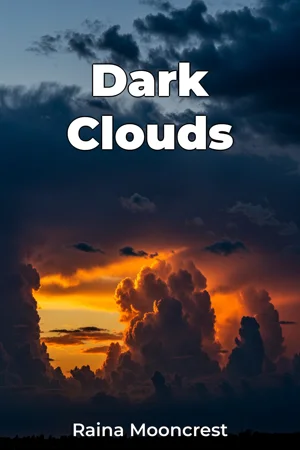
Have you ever looked up at the sky and sensed a change in the atmosphere, alerted by the presence of ominous, dark clouds? More than just a scenic element, these cloud formations are nature's warnings, silent storytellers of impending weather events. "Dark Clouds" explores the fascinating science behind these atmospheric phenomena, revealing their formation, behavior, and the critical signals they convey about approaching storms. This book delves into the essential concepts of meteorology and atmospheric science, explaining cloud classification, the processes that lead to cloud formation, and the dynamics that cause them to darken before significant weather changes. Understanding these topics is crucial for anyone interested in predicting weather patterns, from amateur weather enthusiasts to professionals in fields like agriculture and emergency management. This book argues that recognizing and interpreting dark cloud formations is a fundamental skill for understanding and preparing for severe weather. We will cover topics ranging from basic atmospheric principles to advanced forecasting techniques. The significance of this knowledge extends beyond mere curiosity as it directly relates to personal safety, agricultural planning, and disaster preparedness. "Dark Clouds" is structured to provide a comprehensive understanding of these topics. It begins with an introduction to basic meteorological principles, explaining atmospheric pressure, temperature gradients, and humidity. It then proceeds to a detailed exploration of cloud classification, focusing on the specific types of dark clouds, such as cumulonimbus, nimbostratus, and altostratus formations. Subsequent chapters investigate the atmospheric conditions that lead to the formation of these clouds, detailing the processes of condensation, convection, and advection. The book culminates in an analysis of how these clouds signal impending storms, discussing the correlation between cloud appearance, atmospheric stability, and precipitation intensity. We also explore how modern technologies like weather radar and satellite imaging complement traditional cloud observation techniques in forecasting. The evidence presented in "Dark Clouds" is drawn from a variety of sources, including meteorological databases, observational studies, and peer-reviewed scientific literature. We incorporate data from weather agencies worldwide, providing a global perspective on cloud behavior and storm patterns. Additionally, the book discusses case studies of specific weather events, demonstrating how cloud formations served as early indicators of severe conditions. "Dark Clouds" integrates knowledge from various disciplines. It connects to environmental science by examining the impact of climate change on cloud formation and storm intensity. It also links to geography by illustrating how regional topography influences weather patterns. Additionally, it ties into technology through its discussion of weather forecasting tools and techniques. The book distinguishes itself through its accessible approach to complex scientific concepts. It avoids excessive jargon, presenting information in a clear and engaging manner suitable for a broad audience. It combines scientific rigor with practical guidance, enabling readers to apply their newfound knowledge in real-world situations. Written in a clear, accessible style, "Dark Clouds" aims to engage both amateur weather enthusiasts and individuals seeking a deeper understanding of atmospheric science. It provides information to anyone who wants to learn more about storm prediction and environmental awareness. The book's scope is intentionally broad, covering the major types of dark clouds and their associated weather events. However, it does not delve into extreme micro-meteorological phenomena. The focus remains on providing a solid foundation in cloud observation and weather prediction for a general readership. The information presented in "Dark Clouds" has numerous real-world applications. Readers can use their knowledge to make informed decisions about outdoor activities, prepare for potential weather hazards, and contribute to community-based weather monitoring initiatives. For example, farmers can use cloud observations to anticipate rainfall and adjust irrigation schedules, while hikers can use cloud formations to assess the risk of thunderstorms in mountainous regions. While the scientific understanding of cloud formation and storm prediction is well-established, there are ongoing debates about the precise impact of climate change on cloud behavior and storm frequency. "Dark Clouds" addresses these controversies, presenting different perspectives and highlighting areas of ongoing research. By exploring these debates, the book encourages readers to think critically about the complexities of atmospheric science and the challenges of predicting future weather patterns.
Have you ever looked up at the sky and sensed a change in the atmosphere, alerted by the presence of ominous, dark clouds? More than just a scenic element, these cloud formations are nature's warnings, silent storytellers of impending weather events. "Dark Clouds" explores the fascinating science behind these atmospheric phenomena, revealing their formation, behavior, and the critical signals they convey about approaching storms. This book delves into the essential concepts of meteorology and atmospheric science, explaining cloud classification, the processes that lead to cloud formation, and the dynamics that cause them to darken before significant weather changes. Understanding these topics is crucial for anyone interested in predicting weather patterns, from amateur weather enthusiasts to professionals in fields like agriculture and emergency management. This book argues that recognizing and interpreting dark cloud formations is a fundamental skill for understanding and preparing for severe weather. We will cover topics ranging from basic atmospheric principles to advanced forecasting techniques. The significance of this knowledge extends beyond mere curiosity as it directly relates to personal safety, agricultural planning, and disaster preparedness. "Dark Clouds" is structured to provide a comprehensive understanding of these topics. It begins with an introduction to basic meteorological principles, explaining atmospheric pressure, temperature gradients, and humidity. It then proceeds to a detailed exploration of cloud classification, focusing on the specific types of dark clouds, such as cumulonimbus, nimbostratus, and altostratus formations. Subsequent chapters investigate the atmospheric conditions that lead to the formation of these clouds, detailing the processes of condensation, convection, and advection. The book culminates in an analysis of how these clouds signal impending storms, discussing the correlation between cloud appearance, atmospheric stability, and precipitation intensity. We also explore how modern technologies like weather radar and satellite imaging complement traditional cloud observation techniques in forecasting. The evidence presented in "Dark Clouds" is drawn from a variety of sources, including meteorological databases, observational studies, and peer-reviewed scientific literature. We incorporate data from weather agencies worldwide, providing a global perspective on cloud behavior and storm patterns. Additionally, the book discusses case studies of specific weather events, demonstrating how cloud formations served as early indicators of severe conditions. "Dark Clouds" integrates knowledge from various disciplines. It connects to environmental science by examining the impact of climate change on cloud formation and storm intensity. It also links to geography by illustrating how regional topography influences weather patterns. Additionally, it ties into technology through its discussion of weather forecasting tools and techniques. The book distinguishes itself through its accessible approach to complex scientific concepts. It avoids excessive jargon, presenting information in a clear and engaging manner suitable for a broad audience. It combines scientific rigor with practical guidance, enabling readers to apply their newfound knowledge in real-world situations. Written in a clear, accessible style, "Dark Clouds" aims to engage both amateur weather enthusiasts and individuals seeking a deeper understanding of atmospheric science. It provides information to anyone who wants to learn more about storm prediction and environmental awareness. The book's scope is intentionally broad, covering the major types of dark clouds and their associated weather events. However, it does not delve into extreme micro-meteorological phenomena. The focus remains on providing a solid foundation in cloud observation and weather prediction for a general readership. The information presented in "Dark Clouds" has numerous real-world applications. Readers can use their knowledge to make informed decisions about outdoor activities, prepare for potential weather hazards, and contribute to community-based weather monitoring initiatives. For example, farmers can use cloud observations to anticipate rainfall and adjust irrigation schedules, while hikers can use cloud formations to assess the risk of thunderstorms in mountainous regions. While the scientific understanding of cloud formation and storm prediction is well-established, there are ongoing debates about the precise impact of climate change on cloud behavior and storm frequency. "Dark Clouds" addresses these controversies, presenting different perspectives and highlighting areas of ongoing research. By exploring these debates, the book encourages readers to think critically about the complexities of atmospheric science and the challenges of predicting future weather patterns.
"Dark Clouds" unveils the secrets behind ominous cloud formations, transforming them from mere scenic elements into vital indicators of impending weather. This book delves into atmospheric science and meteorology, explaining how factors like temperature gradients and humidity influence cloud formation. Readers will discover how to classify different types of dark clouds, such as cumulonimbus and nimbostratus, and understand the atmospheric conditions that lead to their development. The book uniquely emphasizes practical application, showing how interpreting dark clouds is crucial for storm prediction and environmental awareness; this knowledge extends to personal safety and disaster preparedness. Did you know the shape and altitude of clouds can reveal if a storm is building? Or that cloud formations can offer clues about atmospheric stability? "Dark Clouds" progresses from basic meteorological principles to advanced forecasting techniques, incorporating data from weather agencies worldwide and case studies of specific weather events. The book offers an accessible approach, avoiding excessive jargon while connecting atmospheric science to environmental concerns and geography. It also explores how modern technologies like weather radar complement traditional cloud observation. Readers gain a solid foundation in cloud observation and weather prediction, learning to apply their knowledge in real-world scenarios, from anticipating rainfall for agriculture to assessing thunderstorm risks during outdoor activities.
Book Details
ISBN
9788233974244
Publisher
Publifye AS
Your Licenses
You don't own any licenses for this book
Purchase a license below to unlock this book and download the EPUB.
Purchase License
Select a tier to unlock this book
Need bulk licensing?
Contact us for enterprise agreements.