
About This Book
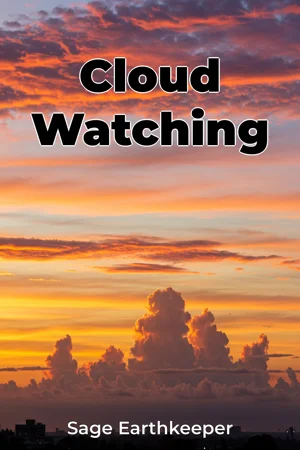
Have you ever wondered if you could predict the weather just by looking up? "Cloud Watching" unlocks the secrets held within the sky, offering a comprehensive guide to understanding cloud formations and their relationship to atmospheric conditions. This book explores the dynamic interplay between cloud types, weather patterns, and the underlying scientific principles that govern our atmosphere, providing readers with the tools to become amateur meteorologists. At its core, "Cloud Watching" focuses on three key areas: cloud identification, weather prediction, and the science of cloud formation. Cloud identification involves learning to recognize the ten basic cloud types (cirrus, cumulus, stratus, etc.) and their variations, understanding their altitudes, and associating them with specific weather phenomena. Weather prediction builds upon cloud identification, teaching readers how to interpret cloud sequences and combinations to forecast changes in temperature, precipitation, and wind. The science of cloud formation delves into the atmospheric processes, such as convection, condensation, and adiabatic cooling, that give rise to different cloud forms. These topics are important because they empower readers to understand and anticipate the weather around them, fostering a deeper connection with the natural world. Throughout history, observations of clouds have informed agricultural practices, navigation, and even military strategy. “Cloud Watching” builds on the work of Luke Howard, whose cloud classification system, developed in the early 19th century, remains the foundation of modern cloud identification. No prior scientific knowledge is required to understand "Cloud Watching", as fundamental concepts of meteorology are explained in an accessible manner. The central argument of "Cloud Watching" is that anyone can learn to interpret the language of the clouds and accurately predict weather changes with consistent observation and a basic understanding of atmospheric principles. This argument challenges the notion that weather forecasting is solely the domain of experts and demonstrates the accessibility of meteorological knowledge to the general public. The book begins with an introduction to the basics of meteorology, including atmospheric pressure, temperature gradients, and humidity. It then progresses to detailed descriptions of each of the ten basic cloud types, supplemented with high-quality photographs and illustrations. Subsequent chapters focus on cloud combinations, weather systems, and the use of cloud observations to predict short-term changes in the weather, such as approaching storms or temperature shifts. The book culminates in a synthesis of these skills, offering practical exercises and real-world scenarios to solidify the reader's understanding. The arguments presented in "Cloud Watching" are supported by meteorological data, cloud atlases, and case studies of weather events. The book also draws on historical weather records and contemporary forecasting models to illustrate the accuracy and limitations of cloud-based predictions. “Cloud Watching” connects to several other fields, including environmental science, geography, and even art history. By understanding cloud formations, we can gain insights into broader environmental processes, such as climate change and air pollution. The book connects to geography by exploring how different landscapes and geographical features influence cloud formation, while the connection to art history explores how clouds have been depicted by artists over time. One unique aspect of this book is its emphasis on practical application. Unlike many theoretical treatments of meteorology, "Cloud Watching" provides readers with the tools to immediately apply their knowledge and begin making their own weather predictions. Presented in a conversational tone that avoids jargon, the book is intended for a general audience, including nature enthusiasts, hikers, gardeners, and anyone curious about the weather. Its value lies in its ability to democratize meteorological knowledge, making it accessible and engaging for readers of all backgrounds. As a work of nature writing, the book adheres to the genre's focus on observation, description, and personal experience, while also incorporating elements of scientific explanation. While "Cloud Watching" aims to provide a comprehensive overview of cloud-based weather prediction, it is important to acknowledge its limitations. The book focuses primarily on short-term forecasting (12-24 hours) and does not delve into the complexities of long-range weather patterns or climate modeling. The principles outlined in "Cloud Watching" can be applied in many real-world situations. Farmers can use cloud observations to anticipate rainfall, hikers can assess the risk of approaching storms, and gardeners can adjust their watering schedules. The book equips readers with a valuable skill that enhances their understanding of and interaction with the natural environment. While the basic principles of cloud identification and weather prediction are well-established, there are ongoing debates within the meteorological community regarding climate change and its effects on cloud formation and weather patterns. "Cloud Watching" acknowledges these debates and encourages readers to consider the broader environmental context of their observations.
Have you ever wondered if you could predict the weather just by looking up? "Cloud Watching" unlocks the secrets held within the sky, offering a comprehensive guide to understanding cloud formations and their relationship to atmospheric conditions. This book explores the dynamic interplay between cloud types, weather patterns, and the underlying scientific principles that govern our atmosphere, providing readers with the tools to become amateur meteorologists. At its core, "Cloud Watching" focuses on three key areas: cloud identification, weather prediction, and the science of cloud formation. Cloud identification involves learning to recognize the ten basic cloud types (cirrus, cumulus, stratus, etc.) and their variations, understanding their altitudes, and associating them with specific weather phenomena. Weather prediction builds upon cloud identification, teaching readers how to interpret cloud sequences and combinations to forecast changes in temperature, precipitation, and wind. The science of cloud formation delves into the atmospheric processes, such as convection, condensation, and adiabatic cooling, that give rise to different cloud forms. These topics are important because they empower readers to understand and anticipate the weather around them, fostering a deeper connection with the natural world. Throughout history, observations of clouds have informed agricultural practices, navigation, and even military strategy. “Cloud Watching” builds on the work of Luke Howard, whose cloud classification system, developed in the early 19th century, remains the foundation of modern cloud identification. No prior scientific knowledge is required to understand "Cloud Watching", as fundamental concepts of meteorology are explained in an accessible manner. The central argument of "Cloud Watching" is that anyone can learn to interpret the language of the clouds and accurately predict weather changes with consistent observation and a basic understanding of atmospheric principles. This argument challenges the notion that weather forecasting is solely the domain of experts and demonstrates the accessibility of meteorological knowledge to the general public. The book begins with an introduction to the basics of meteorology, including atmospheric pressure, temperature gradients, and humidity. It then progresses to detailed descriptions of each of the ten basic cloud types, supplemented with high-quality photographs and illustrations. Subsequent chapters focus on cloud combinations, weather systems, and the use of cloud observations to predict short-term changes in the weather, such as approaching storms or temperature shifts. The book culminates in a synthesis of these skills, offering practical exercises and real-world scenarios to solidify the reader's understanding. The arguments presented in "Cloud Watching" are supported by meteorological data, cloud atlases, and case studies of weather events. The book also draws on historical weather records and contemporary forecasting models to illustrate the accuracy and limitations of cloud-based predictions. “Cloud Watching” connects to several other fields, including environmental science, geography, and even art history. By understanding cloud formations, we can gain insights into broader environmental processes, such as climate change and air pollution. The book connects to geography by exploring how different landscapes and geographical features influence cloud formation, while the connection to art history explores how clouds have been depicted by artists over time. One unique aspect of this book is its emphasis on practical application. Unlike many theoretical treatments of meteorology, "Cloud Watching" provides readers with the tools to immediately apply their knowledge and begin making their own weather predictions. Presented in a conversational tone that avoids jargon, the book is intended for a general audience, including nature enthusiasts, hikers, gardeners, and anyone curious about the weather. Its value lies in its ability to democratize meteorological knowledge, making it accessible and engaging for readers of all backgrounds. As a work of nature writing, the book adheres to the genre's focus on observation, description, and personal experience, while also incorporating elements of scientific explanation. While "Cloud Watching" aims to provide a comprehensive overview of cloud-based weather prediction, it is important to acknowledge its limitations. The book focuses primarily on short-term forecasting (12-24 hours) and does not delve into the complexities of long-range weather patterns or climate modeling. The principles outlined in "Cloud Watching" can be applied in many real-world situations. Farmers can use cloud observations to anticipate rainfall, hikers can assess the risk of approaching storms, and gardeners can adjust their watering schedules. The book equips readers with a valuable skill that enhances their understanding of and interaction with the natural environment. While the basic principles of cloud identification and weather prediction are well-established, there are ongoing debates within the meteorological community regarding climate change and its effects on cloud formation and weather patterns. "Cloud Watching" acknowledges these debates and encourages readers to consider the broader environmental context of their observations.
"Cloud Watching" reveals how observing cloud formations can unlock the ability to predict the weather. By understanding the relationships between cloud types, like cirrus, cumulus, and stratus, and atmospheric conditions, readers can learn to forecast temperature changes, precipitation, and wind patterns. This accessible guide empowers anyone to become an amateur meteorologist, fostering a deeper connection with nature and the environment. The book emphasizes practical application, teaching cloud identification and the science behind cloud formation. Did you know that observations of clouds have historically informed agricultural practices and navigation? Or that Luke Howard's 19th-century cloud classification system still forms the basis of modern cloud identification? "Cloud Watching" progresses from basic meteorology to detailed descriptions of cloud types, combinations, and weather systems, culminating in practical exercises to solidify understanding. This unique approach democratizes meteorological knowledge, making it engaging for nature enthusiasts, hikers, and gardeners alike. Unlike theoretical treatments, "Cloud Watching" offers tools to immediately apply knowledge and make personal weather predictions. Its value lies in its ability to enhance understanding of the natural environment, connecting Earth sciences and geography through the lens of the atmosphere.
Book Details
ISBN
9788233974206
Publisher
Publifye AS
Your Licenses
You don't own any licenses for this book
Purchase a license below to unlock this book and download the EPUB.
Purchase License
Select a tier to unlock this book
Need bulk licensing?
Contact us for enterprise agreements.