
About This Book
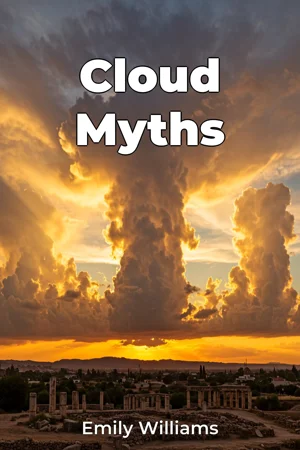
Have you ever gazed at the clouds and wondered what stories they hold? "Cloud Myths" delves into the fascinating world of clouds, exploring their profound influence on human cultures throughout history. This book unveils ancient myths, their varied meanings, and their significant role in folklore across diverse societies. We will analyze how these atmospheric formations have shaped human imagination, belief systems, and even daily life. This book focuses on three key areas: the origin and evolution of cloud myths, the cultural significance of different cloud types, and the impact of these myths on art, literature, and societal practices. These topics are important because they reveal the deep-seated human need to understand and interpret the natural world. By examining cloud myths, we gain insight into how our ancestors perceived their environment and constructed meaning around it. To fully appreciate these myths, we will provide historical and geographical context, examining the environmental conditions and societal structures that gave rise to specific beliefs. Readers will not need any prior knowledge of meteorology or mythology; we’ll explain key concepts as they arise. The central argument of "Cloud Myths" is that cloud myths are not simply quaint stories, but rather complex reflections of human interaction with the environment, offering valuable insights into cultural values, scientific understanding (or lack thereof), and artistic expression. This argument underscores the importance of folklore as a rich source of information about the history of human thought. The book is structured as follows: First, we introduce the fundamental concepts of cloud formation and classification, alongside a historical overview of how different cultures viewed the sky. Second, we explore specific cloud types (cumulus, stratus, cirrus, etc.) and their associated myths in various regions of the world. For example, we examine rain-bringing cloud deities from agricultural societies and compare them to omens of war or fortune linked to clouds in nomadic cultures. Third, we analyze the influence of cloud mythology on artistic and literary representations, demonstrating how these myths have inspired countless works of art and narratives. Finally, we discuss the practical implications of understanding these myths, including their relevance to contemporary environmental awareness and cultural heritage preservation. The evidence presented within the book draws from a wide range of sources, including ancient texts, ethnographic studies, folklore collections, and visual art archives. We analyze these sources using interdisciplinary methods, combining historical analysis, comparative mythology, and art historical interpretation. "Cloud Myths" connects to several other fields of study, including anthropology, art history, and environmental studies. By exploring the cultural significance of clouds, we gain a deeper understanding of human societies and their relationship with the natural world. Furthermore, the book highlights the importance of preserving cultural heritage and promoting environmental awareness. A unique aspect of this book is its comparative approach, analyzing cloud myths from diverse cultures and identifying common themes and variations. This allows us to develop a more nuanced understanding of the human experience and the role of mythology in shaping our world. The book is written in a clear and accessible style, suitable for both general readers and academic audiences. We aim to present complex information in an engaging manner, using vivid examples and compelling storytelling to bring the myths to life. The target audience includes anyone interested in mythology, folklore, history, geography, earth sciences, and cultural studies. The book will be valuable to students, researchers, and general readers seeking to expand their knowledge of human cultures and their relationship with the environment. As a work of non-fiction, "Cloud Myths" maintains rigorous standards of accuracy and objectivity, providing a reliable and informative account of the subject matter. The book’s scope encompasses a broad range of cultures and historical periods, but we have intentionally limited our focus to myths and folklore directly related to clouds, rather than attempting a comprehensive survey of all meteorological beliefs. The information in "Cloud Myths" can be applied in various practical ways. For example, understanding cultural attitudes towards weather phenomena can inform climate change communication strategies. Furthermore, the book provides valuable insights for artists and writers seeking inspiration from mythology. While many cultures viewed clouds as signs of divine power, some also debated their origins and influence. The book will touch upon these debates, highlighting the diversity of perspectives on cloud mythology.
Have you ever gazed at the clouds and wondered what stories they hold? "Cloud Myths" delves into the fascinating world of clouds, exploring their profound influence on human cultures throughout history. This book unveils ancient myths, their varied meanings, and their significant role in folklore across diverse societies. We will analyze how these atmospheric formations have shaped human imagination, belief systems, and even daily life. This book focuses on three key areas: the origin and evolution of cloud myths, the cultural significance of different cloud types, and the impact of these myths on art, literature, and societal practices. These topics are important because they reveal the deep-seated human need to understand and interpret the natural world. By examining cloud myths, we gain insight into how our ancestors perceived their environment and constructed meaning around it. To fully appreciate these myths, we will provide historical and geographical context, examining the environmental conditions and societal structures that gave rise to specific beliefs. Readers will not need any prior knowledge of meteorology or mythology; we’ll explain key concepts as they arise. The central argument of "Cloud Myths" is that cloud myths are not simply quaint stories, but rather complex reflections of human interaction with the environment, offering valuable insights into cultural values, scientific understanding (or lack thereof), and artistic expression. This argument underscores the importance of folklore as a rich source of information about the history of human thought. The book is structured as follows: First, we introduce the fundamental concepts of cloud formation and classification, alongside a historical overview of how different cultures viewed the sky. Second, we explore specific cloud types (cumulus, stratus, cirrus, etc.) and their associated myths in various regions of the world. For example, we examine rain-bringing cloud deities from agricultural societies and compare them to omens of war or fortune linked to clouds in nomadic cultures. Third, we analyze the influence of cloud mythology on artistic and literary representations, demonstrating how these myths have inspired countless works of art and narratives. Finally, we discuss the practical implications of understanding these myths, including their relevance to contemporary environmental awareness and cultural heritage preservation. The evidence presented within the book draws from a wide range of sources, including ancient texts, ethnographic studies, folklore collections, and visual art archives. We analyze these sources using interdisciplinary methods, combining historical analysis, comparative mythology, and art historical interpretation. "Cloud Myths" connects to several other fields of study, including anthropology, art history, and environmental studies. By exploring the cultural significance of clouds, we gain a deeper understanding of human societies and their relationship with the natural world. Furthermore, the book highlights the importance of preserving cultural heritage and promoting environmental awareness. A unique aspect of this book is its comparative approach, analyzing cloud myths from diverse cultures and identifying common themes and variations. This allows us to develop a more nuanced understanding of the human experience and the role of mythology in shaping our world. The book is written in a clear and accessible style, suitable for both general readers and academic audiences. We aim to present complex information in an engaging manner, using vivid examples and compelling storytelling to bring the myths to life. The target audience includes anyone interested in mythology, folklore, history, geography, earth sciences, and cultural studies. The book will be valuable to students, researchers, and general readers seeking to expand their knowledge of human cultures and their relationship with the environment. As a work of non-fiction, "Cloud Myths" maintains rigorous standards of accuracy and objectivity, providing a reliable and informative account of the subject matter. The book’s scope encompasses a broad range of cultures and historical periods, but we have intentionally limited our focus to myths and folklore directly related to clouds, rather than attempting a comprehensive survey of all meteorological beliefs. The information in "Cloud Myths" can be applied in various practical ways. For example, understanding cultural attitudes towards weather phenomena can inform climate change communication strategies. Furthermore, the book provides valuable insights for artists and writers seeking inspiration from mythology. While many cultures viewed clouds as signs of divine power, some also debated their origins and influence. The book will touch upon these debates, highlighting the diversity of perspectives on cloud mythology.
"Cloud Myths" explores how clouds have shaped human cultures through mythology, folklore, and belief systems. The book uncovers the cultural significance of clouds, revealing how ancient societies interpreted these atmospheric formations. For instance, agricultural societies often revered clouds as rain-bringers, while nomadic cultures sometimes saw them as omens of war. The book also highlights how cloud myths have influenced art and literature, inspiring countless creative works across different cultures and eras. This exploration of cloud lore offers a unique perspective on environmental history and human interaction with the environment. "Cloud Myths" progresses by first introducing the basics of cloud formation and historical views of the sky. It then delves into specific cloud types like cumulus and cirrus, examining their associated myths across the globe. Finally, the book analyzes the influence of cloud mythology on artistic and literary representations. By examining cloud myths from diverse cultures, the book identifies common themes and variations, providing a nuanced understanding of the human experience. It ultimately demonstrates that these myths are not just quaint stories, but complex reflections of cultural values and early attempts at understanding the natural world.
Book Details
ISBN
9788233974091
Publisher
Publifye AS
Your Licenses
You don't own any licenses for this book
Purchase a license below to unlock this book and download the EPUB.
Purchase License
Select a tier to unlock this book
Need bulk licensing?
Contact us for enterprise agreements.