
About This Book
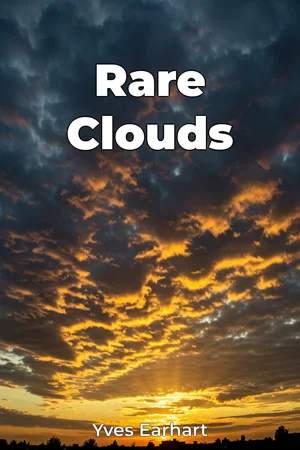
Have you ever looked up at the sky and seen something that defied your understanding of clouds? "Rare Clouds" unveils the seldom-seen wonders of atmospheric formations, taking you far beyond the familiar cumulus and cirrus. This book explores the science, formation, and significance of unique cloud types, ranging from the mesmerizing beauty of lenticular clouds to the ethereal glow of noctilucent clouds. Understanding these rare formations is more than just an exercise in meteorology; it deepens our comprehension of atmospheric processes and their intricate relationship with the Earth's climate and environment. We begin by establishing a foundational understanding of cloud formation, covering essential concepts such as atmospheric thermodynamics, nucleation processes, and the influence of terrain and weather systems. The book avoids complex equations, focusing instead on clear explanations and illustrative examples. The core of "Rare Clouds" delves into specific cloud types, each chapter dedicated to a particular phenomenon. Lenticular clouds, with their smooth, lens-like shapes, are explored in terms of their formation over mountainous regions and their sometimes mistaken identity as unidentified flying objects. Undulatus asperatus clouds, characterized by their dramatic, wave-like appearance, are examined in the context of atmospheric instability and wind shear. Finally, noctilucent clouds, those shimmering, high-altitude formations visible only during twilight, are investigated as indicators of mesospheric conditions and their potential connection to climate change. The central argument advanced is that studying rare cloud formations provides invaluable insights into complex atmospheric dynamics that are often overlooked by traditional meteorological studies. These clouds act as visual markers of specific atmospheric conditions and can serve as indicators of larger environmental changes. The book is structured to guide the reader through a progressive understanding. First, the basic principles of cloud science are presented. Subsequent segments focus on specific rare cloud types, detailing their formation mechanisms, typical locations, and visual characteristics. Each cloud type is analyzed using observational data, photographic evidence, and scientific explanations. The concluding section emphasizes the broader implications of studying these phenomena, particularly in the context of climate science and atmospheric research. The evidence presented consists of a compilation of meteorological data, scientific studies, and photographic documentation gathered from various international sources, including scientific journals, meteorological organizations, citizen science initiatives, and specialized cloud atlases. Specific case studies and observational reports are provided to support explanations of cloud formation processes. "Rare Clouds" intersects with several disciplines, including meteorology, climatology, and geography. The study of noctilucent clouds, for instance, provides data relevant to understanding changes in the Earth's upper atmosphere, a key area of climate research. The geographical distribution of specific cloud types, such as lenticular clouds, offers insights into regional weather patterns and topographical influences. The book also touches on art and photography, acknowledging the aesthetic appeal and cultural significance of clouds as subjects of artistic expression. A unique aspect of this book is its focus on citizen science and the role of amateur cloud observers in contributing to our understanding of rare cloud formations. It encourages readers to become active participants in cloud observation and reporting, highlighting the value of crowdsourced data in scientific research. The book is written in a clear and accessible tone, avoiding technical jargon where possible and providing explanations for any specialized terminology used. The writing style aims to engage a broad audience, from amateur weather enthusiasts to students and professionals in related fields. The target audience includes weather enthusiasts, amateur and professional photographers, students of atmospheric science, geography students, and anyone with a general interest in the natural world. This book will be valuable to them by providing a comprehensive and visually engaging exploration of rare cloud formations, enhancing their understanding of atmospheric processes and inspiring a deeper appreciation for the beauty and complexity of the sky. As a work of non-fiction in the earth sciences genre, this book presents rigorously researched information in an objective and informative manner; it distinguishes between established scientific knowledge and ongoing areas of research. The scope of the book is limited to cloud formations that are considered relatively rare or unusual, and does not cover more common cloud types in detail. The information in "Rare Clouds" has practical applications in fields such as aviation, where understanding cloud formations can aid in flight planning and weather forecasting. It also has relevance to renewable energy, where cloud cover impacts solar power generation. While the scientific community largely agrees on the basic principles of cloud formation, debates continue regarding the precise mechanisms involved in the formation of certain rare cloud types, particularly regarding the role of atmospheric waves and turbulence. This book acknowledges these ongoing discussions and presents different viewpoints where applicable.
Have you ever looked up at the sky and seen something that defied your understanding of clouds? "Rare Clouds" unveils the seldom-seen wonders of atmospheric formations, taking you far beyond the familiar cumulus and cirrus. This book explores the science, formation, and significance of unique cloud types, ranging from the mesmerizing beauty of lenticular clouds to the ethereal glow of noctilucent clouds. Understanding these rare formations is more than just an exercise in meteorology; it deepens our comprehension of atmospheric processes and their intricate relationship with the Earth's climate and environment. We begin by establishing a foundational understanding of cloud formation, covering essential concepts such as atmospheric thermodynamics, nucleation processes, and the influence of terrain and weather systems. The book avoids complex equations, focusing instead on clear explanations and illustrative examples. The core of "Rare Clouds" delves into specific cloud types, each chapter dedicated to a particular phenomenon. Lenticular clouds, with their smooth, lens-like shapes, are explored in terms of their formation over mountainous regions and their sometimes mistaken identity as unidentified flying objects. Undulatus asperatus clouds, characterized by their dramatic, wave-like appearance, are examined in the context of atmospheric instability and wind shear. Finally, noctilucent clouds, those shimmering, high-altitude formations visible only during twilight, are investigated as indicators of mesospheric conditions and their potential connection to climate change. The central argument advanced is that studying rare cloud formations provides invaluable insights into complex atmospheric dynamics that are often overlooked by traditional meteorological studies. These clouds act as visual markers of specific atmospheric conditions and can serve as indicators of larger environmental changes. The book is structured to guide the reader through a progressive understanding. First, the basic principles of cloud science are presented. Subsequent segments focus on specific rare cloud types, detailing their formation mechanisms, typical locations, and visual characteristics. Each cloud type is analyzed using observational data, photographic evidence, and scientific explanations. The concluding section emphasizes the broader implications of studying these phenomena, particularly in the context of climate science and atmospheric research. The evidence presented consists of a compilation of meteorological data, scientific studies, and photographic documentation gathered from various international sources, including scientific journals, meteorological organizations, citizen science initiatives, and specialized cloud atlases. Specific case studies and observational reports are provided to support explanations of cloud formation processes. "Rare Clouds" intersects with several disciplines, including meteorology, climatology, and geography. The study of noctilucent clouds, for instance, provides data relevant to understanding changes in the Earth's upper atmosphere, a key area of climate research. The geographical distribution of specific cloud types, such as lenticular clouds, offers insights into regional weather patterns and topographical influences. The book also touches on art and photography, acknowledging the aesthetic appeal and cultural significance of clouds as subjects of artistic expression. A unique aspect of this book is its focus on citizen science and the role of amateur cloud observers in contributing to our understanding of rare cloud formations. It encourages readers to become active participants in cloud observation and reporting, highlighting the value of crowdsourced data in scientific research. The book is written in a clear and accessible tone, avoiding technical jargon where possible and providing explanations for any specialized terminology used. The writing style aims to engage a broad audience, from amateur weather enthusiasts to students and professionals in related fields. The target audience includes weather enthusiasts, amateur and professional photographers, students of atmospheric science, geography students, and anyone with a general interest in the natural world. This book will be valuable to them by providing a comprehensive and visually engaging exploration of rare cloud formations, enhancing their understanding of atmospheric processes and inspiring a deeper appreciation for the beauty and complexity of the sky. As a work of non-fiction in the earth sciences genre, this book presents rigorously researched information in an objective and informative manner; it distinguishes between established scientific knowledge and ongoing areas of research. The scope of the book is limited to cloud formations that are considered relatively rare or unusual, and does not cover more common cloud types in detail. The information in "Rare Clouds" has practical applications in fields such as aviation, where understanding cloud formations can aid in flight planning and weather forecasting. It also has relevance to renewable energy, where cloud cover impacts solar power generation. While the scientific community largely agrees on the basic principles of cloud formation, debates continue regarding the precise mechanisms involved in the formation of certain rare cloud types, particularly regarding the role of atmospheric waves and turbulence. This book acknowledges these ongoing discussions and presents different viewpoints where applicable.
"Rare Clouds" explores the captivating world of unusual cloud formations, delving into the science behind these atmospheric phenomena and their significance in understanding Earth's climate. It goes beyond typical cloud classifications to examine rare types like lenticular clouds, often mistaken for UFOs due to their smooth, lens-like shapes formed over mountains, and shimmering noctilucent clouds, high-altitude formations that indicate mesospheric conditions. By studying these less common types, the book argues that we gain invaluable insights into atmospheric dynamics often overlooked by traditional meteorology. The book avoids complex equations, opting for clear explanations interwoven with striking examples and observational data. Each chapter focuses on a specific cloud type, detailing its formation, typical locations, and visual characteristics. For example, it examines undulatus asperatus clouds, known for their dramatic, wave-like appearance caused by atmospheric instability. Structured to progressively build understanding, "Rare Clouds" first lays a foundation in cloud science, then dedicates sections to individual rare cloud types, and concludes by emphasizing their broader implications for climate and atmospheric research. It uniquely highlights the role of citizen scientists in cloud observation, encouraging readers to contribute to ongoing research.
Book Details
ISBN
9788233974060
Publisher
Publifye AS
Your Licenses
You don't own any licenses for this book
Purchase a license below to unlock this book and download the EPUB.
Purchase License
Select a tier to unlock this book
Need bulk licensing?
Contact us for enterprise agreements.