
About This Book
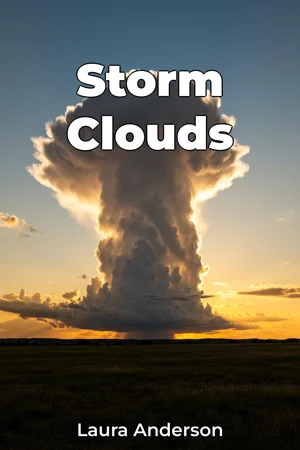
Have you ever stopped to consider the immense power and complex processes behind the seemingly simple formation of a storm cloud? "Storm Clouds" delves into the fascinating world of atmospheric science, exploring the origins, behavior, and impact of these meteorological phenomena, with a particular focus on their connection to severe weather events, including the formation of tornadoes. Understanding these complex systems is crucial, not only for meteorologists and researchers, but also for anyone seeking to comprehend the dynamic forces that shape our planet's weather patterns and influence our daily lives. This book investigates the atmospheric conditions that lead to the formation of various types of storm clouds, from the towering cumulonimbus clouds associated with thunderstorms to the layered nimbostratus clouds that bring steady rain. We will examine the roles of moisture, temperature, and atmospheric stability in creating an environment ripe for cloud development and subsequent precipitation. A key focus will be on how these conditions can intensify, leading to severe weather outbreaks. Building upon fundamental principles of thermodynamics and atmospheric dynamics, "Storm Clouds" provides a comprehensive overview of the processes involved. We will explore the historical context of weather forecasting, tracing the evolution of our understanding of storm cloud formation from early observational methods to sophisticated modern computer models. The book's central argument is that a thorough understanding of storm cloud dynamics is essential for improving weather prediction accuracy and mitigating the risks associated with severe weather. The structure of "Storm Clouds" is designed to guide the reader through a logical progression of topics. The early chapters introduce the basic concepts of atmospheric science, explaining the properties of air, the water cycle, and the various types of clouds. Later, we delve into the specific conditions that lead to the development of severe thunderstorms, including the formation of supercells, mesocyclones, and ultimately, tornadoes. The culminating chapters explore the practical applications of this knowledge, such as improving weather forecasting models and developing strategies for minimizing the impact of severe weather events on communities. The information presented relies on a wide range of evidence, including observational data from weather stations, satellite imagery, radar data, and results from numerical weather prediction models. The book also draws on the latest research findings from peer-reviewed scientific journals and government reports. "Storm Clouds" connects to several interdisciplinary fields, including physics, chemistry, and computer science. The physics of fluid dynamics is essential for understanding the movement of air within storm clouds, while chemistry plays a role in the formation of precipitation. Computer science is crucial for developing and running the complex models used to forecast weather. What sets "Storm Clouds" apart is its accessible yet thorough approach to explaining complex meteorological phenomena. The book avoids technical jargon where possible and uses clear diagrams and illustrations to help readers visualize the processes involved. The overall tone is informative and engaging, making the book accessible to a broad audience. The target audience for "Storm Clouds" includes students of meteorology, geography, and environmental science, as well as weather enthusiasts, emergency management professionals, and anyone interested in learning more about the science behind severe weather. This book would be valuable to them by providing a comprehensive and up-to-date overview of the subject. As a work in the genre of Earth Sciences and Geography, it is important to note that "Storm Clouds" focuses specifically on the atmospheric processes related to storm cloud formation and severe weather. While it touches on the impacts of severe weather on human societies and the environment, it does not delve deeply into social, economic, or political aspects. In terms of real-world applications, the knowledge gained from "Storm Clouds" can be applied to improve personal safety during severe weather events, inform community planning and infrastructure development, and contribute to the ongoing efforts to improve weather forecasting accuracy. Furthermore, the book acknowledges the ongoing debates within the meteorological community regarding the effects of climate change on severe weather patterns, presenting a balanced perspective on this complex issue. The scope is limited to terrestrial storm clouds, not addressing similar phenomena on other planets.
Have you ever stopped to consider the immense power and complex processes behind the seemingly simple formation of a storm cloud? "Storm Clouds" delves into the fascinating world of atmospheric science, exploring the origins, behavior, and impact of these meteorological phenomena, with a particular focus on their connection to severe weather events, including the formation of tornadoes. Understanding these complex systems is crucial, not only for meteorologists and researchers, but also for anyone seeking to comprehend the dynamic forces that shape our planet's weather patterns and influence our daily lives. This book investigates the atmospheric conditions that lead to the formation of various types of storm clouds, from the towering cumulonimbus clouds associated with thunderstorms to the layered nimbostratus clouds that bring steady rain. We will examine the roles of moisture, temperature, and atmospheric stability in creating an environment ripe for cloud development and subsequent precipitation. A key focus will be on how these conditions can intensify, leading to severe weather outbreaks. Building upon fundamental principles of thermodynamics and atmospheric dynamics, "Storm Clouds" provides a comprehensive overview of the processes involved. We will explore the historical context of weather forecasting, tracing the evolution of our understanding of storm cloud formation from early observational methods to sophisticated modern computer models. The book's central argument is that a thorough understanding of storm cloud dynamics is essential for improving weather prediction accuracy and mitigating the risks associated with severe weather. The structure of "Storm Clouds" is designed to guide the reader through a logical progression of topics. The early chapters introduce the basic concepts of atmospheric science, explaining the properties of air, the water cycle, and the various types of clouds. Later, we delve into the specific conditions that lead to the development of severe thunderstorms, including the formation of supercells, mesocyclones, and ultimately, tornadoes. The culminating chapters explore the practical applications of this knowledge, such as improving weather forecasting models and developing strategies for minimizing the impact of severe weather events on communities. The information presented relies on a wide range of evidence, including observational data from weather stations, satellite imagery, radar data, and results from numerical weather prediction models. The book also draws on the latest research findings from peer-reviewed scientific journals and government reports. "Storm Clouds" connects to several interdisciplinary fields, including physics, chemistry, and computer science. The physics of fluid dynamics is essential for understanding the movement of air within storm clouds, while chemistry plays a role in the formation of precipitation. Computer science is crucial for developing and running the complex models used to forecast weather. What sets "Storm Clouds" apart is its accessible yet thorough approach to explaining complex meteorological phenomena. The book avoids technical jargon where possible and uses clear diagrams and illustrations to help readers visualize the processes involved. The overall tone is informative and engaging, making the book accessible to a broad audience. The target audience for "Storm Clouds" includes students of meteorology, geography, and environmental science, as well as weather enthusiasts, emergency management professionals, and anyone interested in learning more about the science behind severe weather. This book would be valuable to them by providing a comprehensive and up-to-date overview of the subject. As a work in the genre of Earth Sciences and Geography, it is important to note that "Storm Clouds" focuses specifically on the atmospheric processes related to storm cloud formation and severe weather. While it touches on the impacts of severe weather on human societies and the environment, it does not delve deeply into social, economic, or political aspects. In terms of real-world applications, the knowledge gained from "Storm Clouds" can be applied to improve personal safety during severe weather events, inform community planning and infrastructure development, and contribute to the ongoing efforts to improve weather forecasting accuracy. Furthermore, the book acknowledges the ongoing debates within the meteorological community regarding the effects of climate change on severe weather patterns, presenting a balanced perspective on this complex issue. The scope is limited to terrestrial storm clouds, not addressing similar phenomena on other planets.
"Storm Clouds" explores the fascinating science behind these weather phenomena, focusing on their origins, behavior, and impact, especially concerning severe weather. It examines how different atmospheric conditions, such as moisture and temperature, lead to the formation of various storm clouds, from cumulonimbus to nimbostratus, and how these can intensify into severe weather outbreaks. Understanding storm cloud dynamics is vital for improving weather prediction and mitigating risks associated with severe weather events, such as tornadoes. The book progresses logically, starting with basic atmospheric science principles and cloud types. It then delves into the specific conditions that create severe thunderstorms, including supercells and mesocyclones. Finally, it explores practical applications like improving weather forecasting models. The approach is designed to be accessible, using clear diagrams and avoiding excessive jargon, making complex meteorological phenomena understandable for a broad audience interested in Earth Sciences and Geography.
Book Details
ISBN
9788233974053
Publisher
Publifye AS
Your Licenses
You don't own any licenses for this book
Purchase a license below to unlock this book and download the EPUB.
Purchase License
Select a tier to unlock this book
Need bulk licensing?
Contact us for enterprise agreements.