
About This Book
Have you ever wondered what transforms a seemingly innocuous cloud into a harbinger of torrential rain and powerful storms? "Rain Clouds" delves into this fascinating realm, exploring the intricate processes that govern the birth, development, and behavior of these atmospheric powerhouses. This book offers a comprehensive understanding of rain clouds, revealing the science behind their formation, the factors influencing their darkness, and the mechanisms that trigger storm activity. The key topics include cloud genesis, focusing on how water vapor transforms into cloud droplets and ice crystals, the microphysical processes within clouds that dictate their properties, and the atmospheric conditions conducive to cloud formation and growth. Next, the book explores the optical properties of rain clouds, explaining why some clouds appear dark and ominous while others remain light and airy, and discusses the role of light scattering and absorption by cloud particles. Finally, the book investigates the dynamics of storm development, detailing how rain clouds can evolve into thunderstorms, hailstorms, and other severe weather phenomena, also focusing on understanding the atmospheric instability, moisture content, and lifting mechanisms involved in storm initiation and intensification. Understanding rain cloud dynamics is crucial for several reasons. Firstly, it is essential for accurate weather forecasting, enabling us to anticipate and prepare for potential hazards. Secondly, it is vital for comprehending the Earth's water cycle and its impact on climate patterns and water resource management. Thirdly, it facilitates the study of atmospheric processes and their broader implications for environmental science. This book will build upon fundamental concepts of meteorology, including thermodynamics, fluid dynamics, and radiative transfer. Readers should ideally possess a basic understanding of weather phenomena, the water cycle, and atmospheric structure. At its core, "Rain Clouds" argues that a comprehensive understanding of cloud microphysics, thermodynamics, and atmospheric dynamics is essential for predicting and mitigating the impacts of severe weather events. The book emphasizes the interconnectedness of these factors and highlights the importance of interdisciplinary research in advancing our knowledge of rain cloud behavior. The book begins by introducing the fundamental principles of cloud formation, outlining the processes of condensation, nucleation, and droplet growth. It progresses by examining the microphysical properties of rain clouds, including droplet size distributions, ice crystal habits, and precipitation formation mechanisms. Detailed case studies of specific cloud types and storm events illustrate the theoretical concepts and real-world implications. The book culminates by discussing the challenges and opportunities in cloud modeling and weather prediction, emphasizing the need for continued research and technological advancement. The book relies on a wealth of observational data from weather satellites, radar systems, and ground-based instruments. It also incorporates insights from numerical weather models and laboratory experiments, providing a diverse range of evidence to support its arguments. "Rain Clouds" connects to several other fields, including climate science, hydrology, and environmental engineering. Understanding cloud behavior is essential for predicting climate change impacts, managing water resources, and designing effective mitigation strategies for severe weather events. The book provides a unique perspective by integrating these different disciplines, offering a holistic view of rain cloud processes and their consequences. The book takes an innovative approach by combining theoretical analysis with real-world observations and modeling results. It presents complex scientific concepts in an accessible and engaging manner, appealing to a broad audience of students, researchers, and weather enthusiasts. Written in a clear and concise style, "Rain Clouds" aims to make complex scientific concepts accessible to a broad audience. The book balances technical detail with narrative explanations, providing a comprehensive yet engaging overview of rain cloud science. The book is targeted toward students, researchers, and professionals in meteorology, atmospheric science, and related fields. It also appeals to weather enthusiasts and anyone interested in learning more about the science behind rain clouds and storms. As a work of non-fiction in the Earth Sciences, "Rain Clouds" emphasizes accuracy, objectivity, and evidence-based reasoning. The book adheres to the standards of scientific rigor while presenting information in a way that is both informative and engaging. While the book covers a broad range of topics related to rain clouds, it focuses primarily on the physical and dynamical processes within clouds themselves. It does not delve deeply into the broader aspects of climate modeling or long-term climate change projections. The information in "Rain Clouds" can be applied to improve weather forecasting, water resource management, and disaster preparedness. It can also inform policy decisions related to climate change mitigation and adaptation. The book addresses ongoing debates in the field, such as the role of aerosols in cloud formation and the uncertainty in predicting the intensity of severe storms. It presents different perspectives on these issues and encourages readers to critically evaluate the evidence.
Have you ever wondered what transforms a seemingly innocuous cloud into a harbinger of torrential rain and powerful storms? "Rain Clouds" delves into this fascinating realm, exploring the intricate processes that govern the birth, development, and behavior of these atmospheric powerhouses. This book offers a comprehensive understanding of rain clouds, revealing the science behind their formation, the factors influencing their darkness, and the mechanisms that trigger storm activity. The key topics include cloud genesis, focusing on how water vapor transforms into cloud droplets and ice crystals, the microphysical processes within clouds that dictate their properties, and the atmospheric conditions conducive to cloud formation and growth. Next, the book explores the optical properties of rain clouds, explaining why some clouds appear dark and ominous while others remain light and airy, and discusses the role of light scattering and absorption by cloud particles. Finally, the book investigates the dynamics of storm development, detailing how rain clouds can evolve into thunderstorms, hailstorms, and other severe weather phenomena, also focusing on understanding the atmospheric instability, moisture content, and lifting mechanisms involved in storm initiation and intensification. Understanding rain cloud dynamics is crucial for several reasons. Firstly, it is essential for accurate weather forecasting, enabling us to anticipate and prepare for potential hazards. Secondly, it is vital for comprehending the Earth's water cycle and its impact on climate patterns and water resource management. Thirdly, it facilitates the study of atmospheric processes and their broader implications for environmental science. This book will build upon fundamental concepts of meteorology, including thermodynamics, fluid dynamics, and radiative transfer. Readers should ideally possess a basic understanding of weather phenomena, the water cycle, and atmospheric structure. At its core, "Rain Clouds" argues that a comprehensive understanding of cloud microphysics, thermodynamics, and atmospheric dynamics is essential for predicting and mitigating the impacts of severe weather events. The book emphasizes the interconnectedness of these factors and highlights the importance of interdisciplinary research in advancing our knowledge of rain cloud behavior. The book begins by introducing the fundamental principles of cloud formation, outlining the processes of condensation, nucleation, and droplet growth. It progresses by examining the microphysical properties of rain clouds, including droplet size distributions, ice crystal habits, and precipitation formation mechanisms. Detailed case studies of specific cloud types and storm events illustrate the theoretical concepts and real-world implications. The book culminates by discussing the challenges and opportunities in cloud modeling and weather prediction, emphasizing the need for continued research and technological advancement. The book relies on a wealth of observational data from weather satellites, radar systems, and ground-based instruments. It also incorporates insights from numerical weather models and laboratory experiments, providing a diverse range of evidence to support its arguments. "Rain Clouds" connects to several other fields, including climate science, hydrology, and environmental engineering. Understanding cloud behavior is essential for predicting climate change impacts, managing water resources, and designing effective mitigation strategies for severe weather events. The book provides a unique perspective by integrating these different disciplines, offering a holistic view of rain cloud processes and their consequences. The book takes an innovative approach by combining theoretical analysis with real-world observations and modeling results. It presents complex scientific concepts in an accessible and engaging manner, appealing to a broad audience of students, researchers, and weather enthusiasts. Written in a clear and concise style, "Rain Clouds" aims to make complex scientific concepts accessible to a broad audience. The book balances technical detail with narrative explanations, providing a comprehensive yet engaging overview of rain cloud science. The book is targeted toward students, researchers, and professionals in meteorology, atmospheric science, and related fields. It also appeals to weather enthusiasts and anyone interested in learning more about the science behind rain clouds and storms. As a work of non-fiction in the Earth Sciences, "Rain Clouds" emphasizes accuracy, objectivity, and evidence-based reasoning. The book adheres to the standards of scientific rigor while presenting information in a way that is both informative and engaging. While the book covers a broad range of topics related to rain clouds, it focuses primarily on the physical and dynamical processes within clouds themselves. It does not delve deeply into the broader aspects of climate modeling or long-term climate change projections. The information in "Rain Clouds" can be applied to improve weather forecasting, water resource management, and disaster preparedness. It can also inform policy decisions related to climate change mitigation and adaptation. The book addresses ongoing debates in the field, such as the role of aerosols in cloud formation and the uncertainty in predicting the intensity of severe storms. It presents different perspectives on these issues and encourages readers to critically evaluate the evidence.
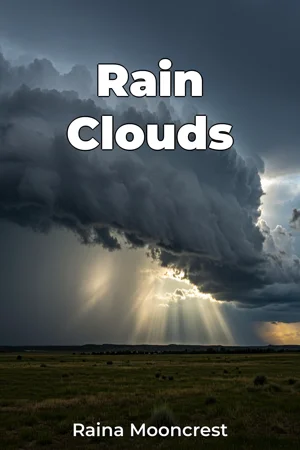
"Rain Clouds" explores the fascinating science behind rain clouds, detailing their formation, behavior, and impact on our planet. It reveals how seemingly ordinary clouds can transform into powerful storms, driven by intricate atmospheric processes. The book highlights that understanding cloud microphysics is crucial for predicting severe weather, such as thunderstorms and hailstorms, and for comprehending the Earth's water cycle. Furthermore, it examines why some rain clouds appear dark and ominous, while others remain light, explaining the role of light scattering and absorption. The book progresses from fundamental principles of cloud formation, such as condensation and droplet growth, to examining the microphysical properties of rain clouds. By integrating theoretical analysis with real-world observations and modeling results, "Rain Clouds" offers a comprehensive view of these complex systems. Case studies illustrate theoretical concepts, while the book emphasizes the need for continued research and technological advancement in cloud modeling and weather prediction.
Book Details
ISBN
9788233974046
Publisher
Publifye AS
Your Licenses
You don't own any licenses for this book
Purchase a license below to unlock this book and download the EPUB.
Purchase License
Select a tier to unlock this book
Need bulk licensing?
Contact us for enterprise agreements.