
About This Book
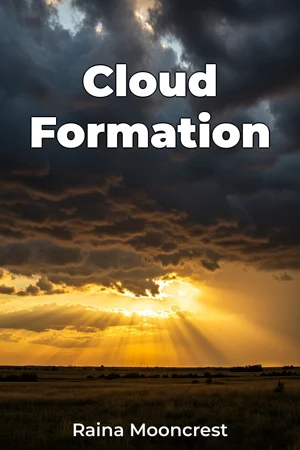
Have you ever gazed at the sky and wondered about the silent, ever-changing sculptures of clouds? "Cloud Formation" delves into the fascinating world of cloud genesis, the critical role clouds play in the Earth's water cycle, and the atmospheric conditions that dictate their diverse forms. These ethereal formations are not merely aesthetic features of our skies; they are integral components of our planet's climate system, influencing weather patterns, temperature regulation, and precipitation. Understanding these processes is crucial for anyone seeking a deeper comprehension of Earth's dynamic processes. This book explores the science of cloud formation, beginning with an explanation of the fundamental principles of atmospheric thermodynamics and microphysics. Readers do not need an advanced scientific background; explanations are designed to be accessible to anyone with a general interest in nature and earth sciences. Prior knowledge of basic weather concepts will be beneficial but not necessary. The central argument of "Cloud Formation" is that clouds are not random occurrences but predictable results of specific atmospheric conditions and processes. By understanding these processes, we can better predict weather patterns, understand climate change, and appreciate the complexity of our planet's atmospheric system. This understanding is particularly relevant in an era where climate change is altering weather patterns and cloud formations globally. The book is structured to provide a comprehensive understanding of cloud formation. Initially, it introduces basic concepts such as humidity, temperature, and atmospheric pressure. It then moves into the core processes of cloud formation, examining the roles of condensation, nucleation, and uplift mechanisms. Major sections will cover the intricacies of the water cycle, detailing how evaporation, condensation, and precipitation are interconnected and directly influence cloud development. Later chapters provide detailed descriptions of different cloud types, categorizing them based on altitude, shape, and formation mechanisms. Finally, the book culminates in a discussion of the impact of clouds on climate and weather forecasting, explaining how cloud observations and models are used to predict future weather patterns. Evidence presented throughout the book is drawn from established meteorological research, atmospheric science publications, and data collected from weather observation networks globally. The book will also incorporate satellite imagery and radar data to illustrate cloud formations and precipitation patterns. "Cloud Formation" connects to several interdisciplinary fields. First, it is intrinsically linked to meteorology, providing a foundation for understanding weather forecasting. Second, it relates to climatology, as clouds play a crucial role in regulating Earth's temperature and influencing climate patterns. Third, the book connects to environmental science, as changes in cloud cover and precipitation patterns reflect broader environmental shifts caused by pollution and global warming. A unique aspect of this book is its focus on the interplay between theoretical concepts and real-world observations. It presents complex scientific principles through clear explanations and uses visual examples to illustrate these principles in action. The writing style will be informative yet engaging, avoiding technical jargon where possible to make the content accessible to a broad audience. The target audience includes students of earth science, weather enthusiasts, environmental professionals, and anyone curious about the natural world. By reading this book, individuals will gain a deeper appreciation for the complexity and beauty of cloud formations and their significance in the Earth's system. As a work of non-fiction in the earth sciences genre, "Cloud Formation" adheres to a rigorous standard of accuracy and objectivity. It presents established scientific theories and avoids speculative or unverified claims. The scope of the book is limited to the science of cloud formation and its immediate implications for weather and climate. It does not delve into the social or economic impacts of weather events, although it acknowledges their importance. The knowledge gained from "Cloud Formation" can be applied in various practical ways. For example, understanding cloud types can help individuals make informed decisions about outdoor activities. Additionally, insights into how clouds affect weather patterns can improve awareness of potential weather hazards. While the basic principles of cloud formation are well-established, there are ongoing debates about the precise role of aerosols in cloud formation and the impact of climate change on cloud behavior. These controversies are acknowledged and discussed within the book, providing a balanced perspective on the current state of scientific understanding.
Have you ever gazed at the sky and wondered about the silent, ever-changing sculptures of clouds? "Cloud Formation" delves into the fascinating world of cloud genesis, the critical role clouds play in the Earth's water cycle, and the atmospheric conditions that dictate their diverse forms. These ethereal formations are not merely aesthetic features of our skies; they are integral components of our planet's climate system, influencing weather patterns, temperature regulation, and precipitation. Understanding these processes is crucial for anyone seeking a deeper comprehension of Earth's dynamic processes. This book explores the science of cloud formation, beginning with an explanation of the fundamental principles of atmospheric thermodynamics and microphysics. Readers do not need an advanced scientific background; explanations are designed to be accessible to anyone with a general interest in nature and earth sciences. Prior knowledge of basic weather concepts will be beneficial but not necessary. The central argument of "Cloud Formation" is that clouds are not random occurrences but predictable results of specific atmospheric conditions and processes. By understanding these processes, we can better predict weather patterns, understand climate change, and appreciate the complexity of our planet's atmospheric system. This understanding is particularly relevant in an era where climate change is altering weather patterns and cloud formations globally. The book is structured to provide a comprehensive understanding of cloud formation. Initially, it introduces basic concepts such as humidity, temperature, and atmospheric pressure. It then moves into the core processes of cloud formation, examining the roles of condensation, nucleation, and uplift mechanisms. Major sections will cover the intricacies of the water cycle, detailing how evaporation, condensation, and precipitation are interconnected and directly influence cloud development. Later chapters provide detailed descriptions of different cloud types, categorizing them based on altitude, shape, and formation mechanisms. Finally, the book culminates in a discussion of the impact of clouds on climate and weather forecasting, explaining how cloud observations and models are used to predict future weather patterns. Evidence presented throughout the book is drawn from established meteorological research, atmospheric science publications, and data collected from weather observation networks globally. The book will also incorporate satellite imagery and radar data to illustrate cloud formations and precipitation patterns. "Cloud Formation" connects to several interdisciplinary fields. First, it is intrinsically linked to meteorology, providing a foundation for understanding weather forecasting. Second, it relates to climatology, as clouds play a crucial role in regulating Earth's temperature and influencing climate patterns. Third, the book connects to environmental science, as changes in cloud cover and precipitation patterns reflect broader environmental shifts caused by pollution and global warming. A unique aspect of this book is its focus on the interplay between theoretical concepts and real-world observations. It presents complex scientific principles through clear explanations and uses visual examples to illustrate these principles in action. The writing style will be informative yet engaging, avoiding technical jargon where possible to make the content accessible to a broad audience. The target audience includes students of earth science, weather enthusiasts, environmental professionals, and anyone curious about the natural world. By reading this book, individuals will gain a deeper appreciation for the complexity and beauty of cloud formations and their significance in the Earth's system. As a work of non-fiction in the earth sciences genre, "Cloud Formation" adheres to a rigorous standard of accuracy and objectivity. It presents established scientific theories and avoids speculative or unverified claims. The scope of the book is limited to the science of cloud formation and its immediate implications for weather and climate. It does not delve into the social or economic impacts of weather events, although it acknowledges their importance. The knowledge gained from "Cloud Formation" can be applied in various practical ways. For example, understanding cloud types can help individuals make informed decisions about outdoor activities. Additionally, insights into how clouds affect weather patterns can improve awareness of potential weather hazards. While the basic principles of cloud formation are well-established, there are ongoing debates about the precise role of aerosols in cloud formation and the impact of climate change on cloud behavior. These controversies are acknowledged and discussed within the book, providing a balanced perspective on the current state of scientific understanding.
"Cloud Formation" unveils the science behind those ever-changing sky sculptures, explaining how clouds are integral to Earth's water cycle, weather patterns, and temperature regulation. The book clarifies that clouds aren't random occurrences but predictable results of specific atmospheric conditions. Discover how these formations influence everything from daily weather to long-term climate, impacting precipitation and overall environmental stability. Beginning with basic concepts like humidity and temperature, "Cloud Formation" progresses to core processes like condensation and nucleation. Major sections detail the intricacies of the water cycle and explore different cloud types based on altitude and formation. The book uniquely balances theoretical concepts with real-world observations, using satellite imagery and radar data to illustrate cloud formations and precipitation patterns, making complex atmospheric science accessible. The book culminates by discussing the impact of clouds on climate and weather forecasting, explaining how observations and models predict future conditions. Understand the crucial role of atmospheric thermodynamics and how changes in cloud cover, influenced by climate change, reflect broader environmental shifts. This book provides a foundation for understanding weather forecasting and appreciating the complexity of our planet's atmospheric system.
Book Details
ISBN
9788233974039
Publisher
Publifye AS
Your Licenses
You don't own any licenses for this book
Purchase a license below to unlock this book and download the EPUB.
Purchase License
Select a tier to unlock this book
Need bulk licensing?
Contact us for enterprise agreements.