
About This Book
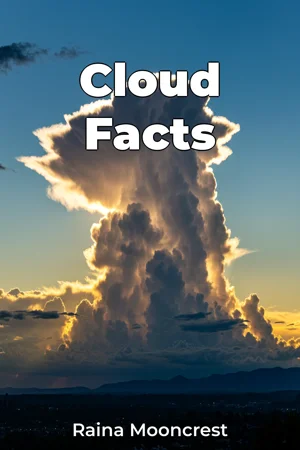
Have you ever looked up at the sky and wondered about the silent, ever-changing sculptures that drift above us? "Cloud Facts" delves into the atmospheric phenomena we know as clouds, exploring not just their aesthetic appeal, but their crucial role in Earth's weather patterns and climate systems. This book offers a comprehensive exploration of cloud types, cloud formation, and the significance of clouds in understanding and predicting weather. Clouds are more than just water vapor; they are complex atmospheric formations influenced by temperature, altitude, and geographic location. This book unravels these complexities, making the science accessible to a broad audience. Understanding clouds is vital because they directly influence precipitation, temperature regulation, and global energy balance. Without a grasp of cloud behavior, predicting weather patterns and understanding climate change becomes significantly more challenging. "Cloud Facts" provides the background necessary to comprehend the intricacies of our climate. The central argument of "Cloud Facts" is that a deeper understanding of cloud science empowers individuals to interpret and contextualize weather phenomena and the broader implications of climate change. This book meticulously examines the processes influencing cloud behavior and presents the evidence for their impact on weather systems. The book is structured to guide the reader through the fundamentals of cloud science. It begins by introducing the basic principles of atmospheric science, including concepts like humidity, condensation, and air pressure, which are essential for understanding cloud formation. We then move into a detailed categorization of cloud types - cirrus, cumulus, stratus, and cumulonimbus – describing their distinct characteristics, altitudes, and associated weather conditions. Subsequent chapters explore the specific mechanisms behind cloud formation, covering processes like convection, orographic lift, and frontal lifting. The culmination of the book explores the practical implications of cloud science, specifically focusing on their use in weather forecasting, climate modeling, and understanding cloud feedback loops in a changing global climate. "Cloud Facts" draws on a wide array of scientific data, including meteorological observations, satellite imagery, and climate model outputs. It references established scientific literature and incorporates data from international meteorological organizations like the World Meteorological Organization (WMO). The book also includes real-world case studies of specific weather events, illustrating how cloud formations influenced the course and severity of these events. The study of clouds intersects with several other disciplines within Earth Sciences and Physics. For instance, radiative transfer principles from physics are crucial in understanding how clouds affect the Earth's energy budget. Similarly, geography plays a role in determining local cloud formation patterns due to variations in terrain and proximity to water bodies. Finally, atmospheric chemistry helps explain the role of aerosols and other airborne particles in cloud condensation. What sets "Cloud Facts" apart is its blend of scientific rigor and accessible language. It avoids overly technical jargon, opting instead for clear explanations supported by visual aids, such as diagrams, photographs. The book’s tone is informative and engaging, designed to foster curiosity and promote a deeper appreciation for the natural world. The primary audience for this book includes weather enthusiasts, students of earth science, and anyone curious about the natural world. "Cloud Facts" provides valuable insights for those seeking to understand weather patterns and the complexities of our planet's climate system. It is particularly beneficial for educators seeking to supplement their teaching materials on weather and climate. As a non-fiction book, "Cloud Facts" adheres to the conventions of accuracy, objectivity, and evidence-based reasoning. It presents information based on established scientific principles and avoids speculative claims. While the book strives for comprehensive coverage, it acknowledges the vastness and dynamic nature of atmospheric science. The book focuses on the fundamental principles, acknowledging that some specific regional variations might require more specialized study. Readers will gain the ability to interpret weather forecasts more effectively, understand regional climate variations, and recognize the potential impacts of climate change on cloud behavior. The book serves as a practical guide for interpreting the clouds we see every day, transforming passive observation into informed understanding. While "Cloud Facts" presents a comprehensive foundation in cloud science, it acknowledges that certain aspects of cloud microphysics and advanced climate modeling are continually evolving fields. Where applicable, the book addresses ongoing debates – for example, the precise impact of cloud feedback mechanisms on future global warming.
Have you ever looked up at the sky and wondered about the silent, ever-changing sculptures that drift above us? "Cloud Facts" delves into the atmospheric phenomena we know as clouds, exploring not just their aesthetic appeal, but their crucial role in Earth's weather patterns and climate systems. This book offers a comprehensive exploration of cloud types, cloud formation, and the significance of clouds in understanding and predicting weather. Clouds are more than just water vapor; they are complex atmospheric formations influenced by temperature, altitude, and geographic location. This book unravels these complexities, making the science accessible to a broad audience. Understanding clouds is vital because they directly influence precipitation, temperature regulation, and global energy balance. Without a grasp of cloud behavior, predicting weather patterns and understanding climate change becomes significantly more challenging. "Cloud Facts" provides the background necessary to comprehend the intricacies of our climate. The central argument of "Cloud Facts" is that a deeper understanding of cloud science empowers individuals to interpret and contextualize weather phenomena and the broader implications of climate change. This book meticulously examines the processes influencing cloud behavior and presents the evidence for their impact on weather systems. The book is structured to guide the reader through the fundamentals of cloud science. It begins by introducing the basic principles of atmospheric science, including concepts like humidity, condensation, and air pressure, which are essential for understanding cloud formation. We then move into a detailed categorization of cloud types - cirrus, cumulus, stratus, and cumulonimbus – describing their distinct characteristics, altitudes, and associated weather conditions. Subsequent chapters explore the specific mechanisms behind cloud formation, covering processes like convection, orographic lift, and frontal lifting. The culmination of the book explores the practical implications of cloud science, specifically focusing on their use in weather forecasting, climate modeling, and understanding cloud feedback loops in a changing global climate. "Cloud Facts" draws on a wide array of scientific data, including meteorological observations, satellite imagery, and climate model outputs. It references established scientific literature and incorporates data from international meteorological organizations like the World Meteorological Organization (WMO). The book also includes real-world case studies of specific weather events, illustrating how cloud formations influenced the course and severity of these events. The study of clouds intersects with several other disciplines within Earth Sciences and Physics. For instance, radiative transfer principles from physics are crucial in understanding how clouds affect the Earth's energy budget. Similarly, geography plays a role in determining local cloud formation patterns due to variations in terrain and proximity to water bodies. Finally, atmospheric chemistry helps explain the role of aerosols and other airborne particles in cloud condensation. What sets "Cloud Facts" apart is its blend of scientific rigor and accessible language. It avoids overly technical jargon, opting instead for clear explanations supported by visual aids, such as diagrams, photographs. The book’s tone is informative and engaging, designed to foster curiosity and promote a deeper appreciation for the natural world. The primary audience for this book includes weather enthusiasts, students of earth science, and anyone curious about the natural world. "Cloud Facts" provides valuable insights for those seeking to understand weather patterns and the complexities of our planet's climate system. It is particularly beneficial for educators seeking to supplement their teaching materials on weather and climate. As a non-fiction book, "Cloud Facts" adheres to the conventions of accuracy, objectivity, and evidence-based reasoning. It presents information based on established scientific principles and avoids speculative claims. While the book strives for comprehensive coverage, it acknowledges the vastness and dynamic nature of atmospheric science. The book focuses on the fundamental principles, acknowledging that some specific regional variations might require more specialized study. Readers will gain the ability to interpret weather forecasts more effectively, understand regional climate variations, and recognize the potential impacts of climate change on cloud behavior. The book serves as a practical guide for interpreting the clouds we see every day, transforming passive observation into informed understanding. While "Cloud Facts" presents a comprehensive foundation in cloud science, it acknowledges that certain aspects of cloud microphysics and advanced climate modeling are continually evolving fields. Where applicable, the book addresses ongoing debates – for example, the precise impact of cloud feedback mechanisms on future global warming.
"Cloud Facts" explores the captivating world of clouds, revealing their vital role in weather and climate. Clouds are not just picturesque formations; they significantly influence precipitation, temperature regulation, and the Earth's energy balance. The Earth science book makes complex atmospheric science accessible, explaining how factors like temperature, altitude, and geographic location shape cloud behavior. The book progresses from basic atmospheric principles like humidity and air pressure to detailed categorizations of cloud types such as cirrus, cumulus, and stratus. It delves into cloud formation mechanisms, including convection and orographic lift, before addressing the practical implications for weather forecasting and understanding climate change. "Cloud Facts" stands out by blending scientific rigor with accessible language, making it a valuable resource for weather enthusiasts and anyone seeking to understand the intricacies of our climate. The book uniquely empowers readers to interpret weather phenomena and grasp climate change implications by understanding cloud science. Using meteorological observations and climate model outputs, the book references scientific literature to support its explanations. By understanding cloud feedback loops, readers will be better equipped to understand global warming.
Book Details
ISBN
9788233974015
Publisher
Publifye AS
Your Licenses
You don't own any licenses for this book
Purchase a license below to unlock this book and download the EPUB.
Purchase License
Select a tier to unlock this book
Need bulk licensing?
Contact us for enterprise agreements.