
About This Book
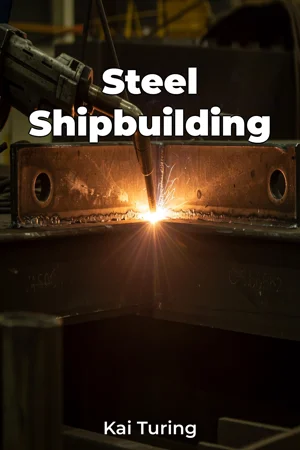
How is it possible to construct massive steel ships that can withstand the immense pressures of the open ocean? This book, *Steel Shipbuilding*, addresses this complex question by thoroughly examining the advanced engineering principles, cutting-edge welding techniques, and rigorous design standards critical to modern steel ship construction. These elements are vital for ensuring structural integrity, operational safety, and the longevity of vessels operating in increasingly demanding maritime environments. This book delves into three primary areas: modern steel materials and their applications in shipbuilding, the science and practice of welding technologies used in ship construction, and the design standards and regulatory frameworks governing this industry. Understanding these areas is essential for naval architects, marine engineers, welding specialists, and anyone involved in the shipbuilding process. The historical context of steel shipbuilding, evolving from iron to high-strength alloys, will be discussed, illustrating the importance of material science advancements. Readers will gain a fundamental understanding of metallurgy and material properties, though a prior background in engineering or basic physics would be beneficial. Our central argument is that the successful construction of modern steel ships hinges on a holistic understanding and integration of material science, advanced welding methodologies, and adherence to stringent design standards. We will demonstrate how these three pillars interdependently contribute to the structural reliability and overall performance of these complex machines. The book is structured to methodically build understanding. We begin by introducing the properties of various steel alloys, and then move into welding processes, including detailed explanations of techniques like submerged arc welding, laser welding, and friction stir welding. The final section details the key design specifications mandated by classification societies such as Lloyd's Register, the American Bureau of Shipping (ABS), and Det Norske Veritas (DNV). Each chapter culminates in real-world case studies, illustrating the application of these principles. The evidence presented is drawn from extensive literature reviews of marine engineering texts, along with empirical data from laboratory testing and field studies of welding performance. Finite element analysis (FEA) data will also showcase the structural behavior of welded joints under various loading scenarios. *Steel Shipbuilding* intersects with several related fields. Firstly, it connects directly with mechanical engineering, particularly in areas such as stress analysis and materials science. Secondly, it bridges into the realm of regulatory compliance and maritime law, considering the importance of adhering to international shipbuilding standards. Finally, it has connections to logistics and supply chain management, considering the sourcing and transportation of materials used in ship construction. This book offers a unique perspective by integrating theoretical principles with practical applications, providing a balanced approach that will be invaluable for both engineers and policymakers. The tone of the book is technical yet accessible, aiming to convey complex information in a clear and concise manner. The target audience includes naval architects, marine engineers, welding engineers, shipbuilding professionals, and students in related fields. The book’s value lies in its comprehensive coverage of the latest technologies and design standards, making it an indispensable reference for those seeking to stay at the forefront of the industry. As a work of non-fiction in the fields of Mechanical Engineering and Technology, *Steel Shipbuilding* adheres to the conventions of technical writing. The scope of the book is limited to steel ship construction, excluding alternative materials like aluminum or composite materials. We address the practical applications through case studies involving actual ships and the results of destructive and non-destructive testing of welds. Ongoing debates within the field, such as the optimal welding parameters for specific steel alloys and the cost-benefit analysis of different welding techniques, are explored. The real-world applications of the book's content are numerous, ranging from optimizing welding procedures to improving the structural design of ships for enhanced safety and efficiency.
How is it possible to construct massive steel ships that can withstand the immense pressures of the open ocean? This book, *Steel Shipbuilding*, addresses this complex question by thoroughly examining the advanced engineering principles, cutting-edge welding techniques, and rigorous design standards critical to modern steel ship construction. These elements are vital for ensuring structural integrity, operational safety, and the longevity of vessels operating in increasingly demanding maritime environments. This book delves into three primary areas: modern steel materials and their applications in shipbuilding, the science and practice of welding technologies used in ship construction, and the design standards and regulatory frameworks governing this industry. Understanding these areas is essential for naval architects, marine engineers, welding specialists, and anyone involved in the shipbuilding process. The historical context of steel shipbuilding, evolving from iron to high-strength alloys, will be discussed, illustrating the importance of material science advancements. Readers will gain a fundamental understanding of metallurgy and material properties, though a prior background in engineering or basic physics would be beneficial. Our central argument is that the successful construction of modern steel ships hinges on a holistic understanding and integration of material science, advanced welding methodologies, and adherence to stringent design standards. We will demonstrate how these three pillars interdependently contribute to the structural reliability and overall performance of these complex machines. The book is structured to methodically build understanding. We begin by introducing the properties of various steel alloys, and then move into welding processes, including detailed explanations of techniques like submerged arc welding, laser welding, and friction stir welding. The final section details the key design specifications mandated by classification societies such as Lloyd's Register, the American Bureau of Shipping (ABS), and Det Norske Veritas (DNV). Each chapter culminates in real-world case studies, illustrating the application of these principles. The evidence presented is drawn from extensive literature reviews of marine engineering texts, along with empirical data from laboratory testing and field studies of welding performance. Finite element analysis (FEA) data will also showcase the structural behavior of welded joints under various loading scenarios. *Steel Shipbuilding* intersects with several related fields. Firstly, it connects directly with mechanical engineering, particularly in areas such as stress analysis and materials science. Secondly, it bridges into the realm of regulatory compliance and maritime law, considering the importance of adhering to international shipbuilding standards. Finally, it has connections to logistics and supply chain management, considering the sourcing and transportation of materials used in ship construction. This book offers a unique perspective by integrating theoretical principles with practical applications, providing a balanced approach that will be invaluable for both engineers and policymakers. The tone of the book is technical yet accessible, aiming to convey complex information in a clear and concise manner. The target audience includes naval architects, marine engineers, welding engineers, shipbuilding professionals, and students in related fields. The book’s value lies in its comprehensive coverage of the latest technologies and design standards, making it an indispensable reference for those seeking to stay at the forefront of the industry. As a work of non-fiction in the fields of Mechanical Engineering and Technology, *Steel Shipbuilding* adheres to the conventions of technical writing. The scope of the book is limited to steel ship construction, excluding alternative materials like aluminum or composite materials. We address the practical applications through case studies involving actual ships and the results of destructive and non-destructive testing of welds. Ongoing debates within the field, such as the optimal welding parameters for specific steel alloys and the cost-benefit analysis of different welding techniques, are explored. The real-world applications of the book's content are numerous, ranging from optimizing welding procedures to improving the structural design of ships for enhanced safety and efficiency.
Steel shipbuilding, a complex feat of engineering, relies on advanced principles, modern welding techniques, and stringent design standards. This book, *Steel Shipbuilding*, explores how these elements ensure the structural integrity and longevity of vessels navigating demanding maritime environments. From the evolution of steel alloys to the intricacies of welding, the book reveals the science behind constructing massive steel ships capable of withstanding immense ocean pressures. Discover how material advancements, like the shift from iron to high-strength alloys, have revolutionized shipbuilding, impacting operational safety and efficiency. The book methodically progresses, first introducing the properties of steel alloys, then detailing welding processes such as submerged arc welding, laser welding, and friction stir welding. The final section delves into design specifications mandated by classification societies. Case studies throughout illustrate real-world applications of the principles discussed. Emphasizing the integration of material science, welding methodologies, and design standards, this book provides a balanced approach valuable to engineers and policymakers alike, offering a comprehensive reference for professionals in naval architecture, marine engineering, and related fields.
Book Details
ISBN
9788233973766
Publisher
Publifye AS
Your Licenses
You don't own any licenses for this book
Purchase a license below to unlock this book and download the EPUB.
Purchase License
Select a tier to unlock this book
Need bulk licensing?
Contact us for enterprise agreements.