
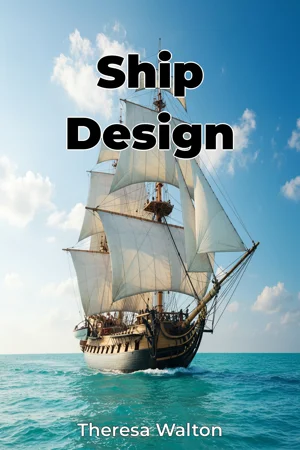
About This Book
How did we progress from wooden vessels dictated by the whims of nature to the sophisticated, data-driven ship designs of today? This book, *Ship Design*, traces that evolution, offering a comprehensive exploration of shipbuilding from its historical roots to cutting-edge contemporary practices. It examines the crucial interplay between historical precedent, technological innovation, and the ever-present demands of maritime environments. These topics are vital not only for naval architects and marine engineers but also for historians, policymakers, and anyone interested in understanding how human ingenuity has shaped our interaction with the oceans. Understanding the past is crucial to navigating the future. This book provides vital context, exploring elemental hydrodynamic principles alongside the historical, social, and scientific developments that influenced ship design. Readers will benefit from a foundational understanding of buoyancy, stability, and resistance, as well as familiarity with pivotal events, such as the advent of steam power and the development of steel hulls, which dramatically altered the course of naval architecture. No prior specialist knowledge is required. The central argument of *Ship Design* posits that modern ship design is not simply a linear progression of technological advancements but a complex synthesis of historical lessons, empirical data, and increasingly sophisticated computational modeling. It asserts that a deep understanding of past designs—their successes and failures—is essential for informed innovation and sustainable maritime practices in the 21st century. This book is structured to guide readers through this evolution. It begins by introducing fundamental naval architecture concepts. It then systematically develops the narrative through key historical periods, examining the construction techniques, material science, and performance characteristics of ships from antiquity to the age of sail. Further sections delve into the transformative impact of the Industrial Revolution, the rise of modern engineering principles, and the advent of computer-aided design. The book culminates in an analysis of contemporary challenges and innovations, including fuel efficiency, environmental regulations, and autonomous vessel technology. The analysis and arguments presented draw upon a wealth of evidence, including detailed historical blueprints sourced from maritime archives, performance data from historical voyages, and comparative studies of hull designs. Contemporary research findings from leading naval architecture institutions and industrial partners are incorporated to provide a balanced perspective. Data from computational fluid dynamics (CFD) simulations and model testing are presented to illustrate the impact of design choices on ship performance. *Ship Design* bridges the gap between several disciplines. It links historical analysis with engineering principles, connecting the evolution of ship design to broader trends in technological innovation and economic development. It also recognizes that the social sciences play a role, as governmental regulations for safety and environmental impact, influence the ships being built. The book connects naval architecture to these diverse fields to offer a rich, multifaceted understanding of ship design. This book adopts a balanced approach, examining both the theoretical underpinnings of ship design and the practical constraints imposed by materials, manufacturing processes, and operational requirements. The tone is informative and accessible, aiming to convey complex technical information clearly and engagingly. *Ship Design* is aimed at naval architects, marine engineers, maritime historians, students in related fields, and anyone seeking a comprehensive overview of the evolution of ship design. It will appeal to readers seeking to understand the technical, historical, and social factors that have shaped our interaction with the maritime world and how those factors are considered today. As a work of non-fiction, *Ship Design* adheres to rigorous standards of accuracy and objectivity. Every effort has been made to corroborate information from multiple sources and to present diverse perspectives on contentious issues. The scope of this book is broad, encompassing various vessel types, from merchant ships and warships to passenger liners and specialized research vessels. While it acknowledges the global nature of shipbuilding, it focuses primarily on developments in Europe and North America, where detailed historical records are most readily available. Finally, the principles and practices discussed in *Ship Design* have direct relevance to contemporary challenges in the maritime sector. From optimizing the design of cargo ships to minimize fuel consumption to developing innovative hull forms for renewable energy platforms, the knowledge gained from this book can be applied to advance sustainable and efficient maritime solutions.
How did we progress from wooden vessels dictated by the whims of nature to the sophisticated, data-driven ship designs of today? This book, *Ship Design*, traces that evolution, offering a comprehensive exploration of shipbuilding from its historical roots to cutting-edge contemporary practices. It examines the crucial interplay between historical precedent, technological innovation, and the ever-present demands of maritime environments. These topics are vital not only for naval architects and marine engineers but also for historians, policymakers, and anyone interested in understanding how human ingenuity has shaped our interaction with the oceans. Understanding the past is crucial to navigating the future. This book provides vital context, exploring elemental hydrodynamic principles alongside the historical, social, and scientific developments that influenced ship design. Readers will benefit from a foundational understanding of buoyancy, stability, and resistance, as well as familiarity with pivotal events, such as the advent of steam power and the development of steel hulls, which dramatically altered the course of naval architecture. No prior specialist knowledge is required. The central argument of *Ship Design* posits that modern ship design is not simply a linear progression of technological advancements but a complex synthesis of historical lessons, empirical data, and increasingly sophisticated computational modeling. It asserts that a deep understanding of past designs—their successes and failures—is essential for informed innovation and sustainable maritime practices in the 21st century. This book is structured to guide readers through this evolution. It begins by introducing fundamental naval architecture concepts. It then systematically develops the narrative through key historical periods, examining the construction techniques, material science, and performance characteristics of ships from antiquity to the age of sail. Further sections delve into the transformative impact of the Industrial Revolution, the rise of modern engineering principles, and the advent of computer-aided design. The book culminates in an analysis of contemporary challenges and innovations, including fuel efficiency, environmental regulations, and autonomous vessel technology. The analysis and arguments presented draw upon a wealth of evidence, including detailed historical blueprints sourced from maritime archives, performance data from historical voyages, and comparative studies of hull designs. Contemporary research findings from leading naval architecture institutions and industrial partners are incorporated to provide a balanced perspective. Data from computational fluid dynamics (CFD) simulations and model testing are presented to illustrate the impact of design choices on ship performance. *Ship Design* bridges the gap between several disciplines. It links historical analysis with engineering principles, connecting the evolution of ship design to broader trends in technological innovation and economic development. It also recognizes that the social sciences play a role, as governmental regulations for safety and environmental impact, influence the ships being built. The book connects naval architecture to these diverse fields to offer a rich, multifaceted understanding of ship design. This book adopts a balanced approach, examining both the theoretical underpinnings of ship design and the practical constraints imposed by materials, manufacturing processes, and operational requirements. The tone is informative and accessible, aiming to convey complex technical information clearly and engagingly. *Ship Design* is aimed at naval architects, marine engineers, maritime historians, students in related fields, and anyone seeking a comprehensive overview of the evolution of ship design. It will appeal to readers seeking to understand the technical, historical, and social factors that have shaped our interaction with the maritime world and how those factors are considered today. As a work of non-fiction, *Ship Design* adheres to rigorous standards of accuracy and objectivity. Every effort has been made to corroborate information from multiple sources and to present diverse perspectives on contentious issues. The scope of this book is broad, encompassing various vessel types, from merchant ships and warships to passenger liners and specialized research vessels. While it acknowledges the global nature of shipbuilding, it focuses primarily on developments in Europe and North America, where detailed historical records are most readily available. Finally, the principles and practices discussed in *Ship Design* have direct relevance to contemporary challenges in the maritime sector. From optimizing the design of cargo ships to minimize fuel consumption to developing innovative hull forms for renewable energy platforms, the knowledge gained from this book can be applied to advance sustainable and efficient maritime solutions.
"Ship Design" explores the fascinating evolution of shipbuilding, from rudimentary wooden vessels to today's sophisticated, technologically advanced ships. It highlights how historical precedent, technological innovation, and the demands of maritime environments have shaped vessel design. Understanding buoyancy, stability, and resistance are foundational concepts discussed, alongside pivotal events like the advent of steam power and steel hulls. The book offers a comprehensive overview suitable for naval architects, historians, and anyone interested in maritime history and technology. The book argues that modern ship design results from blending historical lessons, empirical data, and computational modeling. It emphasizes that understanding past designs is crucial for informed innovation and sustainable maritime practices. The book begins with fundamental naval architecture concepts, progresses through key historical periods, and culminates in an analysis of contemporary challenges like fuel efficiency and autonomous vessels. It uses historical blueprints, performance data, and computational fluid dynamics to illustrate the impact of design choices.
Book Details
ISBN
9788233973759
Publisher
Publifye AS
Your Licenses
You don't own any licenses for this book
Purchase a license below to unlock this book and download the EPUB.
Purchase License
Select a tier to unlock this book
Need bulk licensing?
Contact us for enterprise agreements.