
About This Book
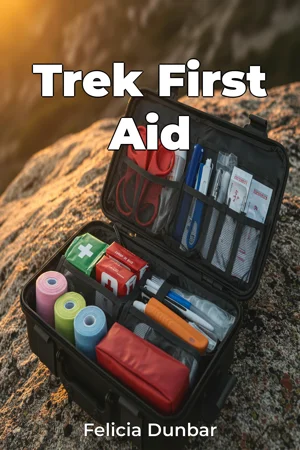
When venturing into the wilderness, is your first aid kit truly prepared for the challenges ahead, or is it merely a collection of items offering a false sense of security? This book, *Trek First Aid*, provides a comprehensive guide to equipping yourself with the essential medical supplies and knowledge needed to handle emergencies far from definitive care. We bridge the gap between standard first aid and the specific demands of wilderness medicine, giving you the confidence to respond effectively when help is delayed or unavailable. Three key topics form the foundation of this guide: understanding the unique challenges of remote medical care, selecting appropriate medical supplies based on wilderness medicine protocols, and adapting treatment strategies to resource-limited environments. These topics are vital because wilderness environments present hazards not typically encountered in urban settings, demanding specialized skills and equipment for effective intervention. The selection of medical supplies must go beyond the typical drugstore kit, considering factors such as weight, durability, versatility, and the specific risks associated with different environments and activities. We delve into evidence-based recommendations from leading wilderness medicine experts, offering detailed rationales behind the inclusion of each item. *Trek First Aid* argues that a well-informed and thoughtfully curated medical kit, coupled with practical knowledge, is the single most important factor in determining the outcome of many wilderness emergencies. This argument is crucial because it shifts the focus from simply having a kit to strategically preparing oneself for the likely scenarios within a backcountry setting, ultimately saving lives and mitigating long-term consequences. The book is structured to guide readers through a logical progression: First, we introduce fundamental concepts in wilderness medicine, including risk assessment, evacuation considerations, and the principles of improvised care. Second, we meticulously examine essential medical supplies, categorized by system (e.g., respiratory, cardiovascular, musculoskeletal), explaining their use, limitations, and potential alternatives. This section forms the core of the book and includes detailed checklists and recommendations tailored to varying trip lengths and group sizes. Third, we address common wilderness medical problems, such as wound management, fractures, dislocations, altitude sickness, and environmental injuries, providing step-by-step treatment protocols adapted for resource-scarce environments. Finally, we discuss the practical considerations of kit organization, maintenance, and training to ensure readiness and competence in the field. The recommendations presented in *Trek First Aid* are based on a thorough review of established wilderness medicine textbooks, peer-reviewed journal articles, and guidelines from organizations such as the Wilderness Medical Society. We also draw upon the collective experience of seasoned wilderness guides, search and rescue personnel, and medical professionals working in remote settings. *Trek First Aid* connects to fields such as emergency medicine, public health, and environmental science. Emergency medicine provides the foundation for understanding acute medical conditions, public health informs strategies for prevention and risk mitigation, and environmental science elucidates the environmental hazards encountered in different ecosystems. These interdisciplinary connections enrich the book's perspective, providing a more holistic and nuanced understanding of wilderness medical care. The book distinguishes itself by offering a pragmatic, evidence-based approach to wilderness medical kit selection, moving beyond theoretical discussions and anecdotal evidence. Unlike many existing resources, *Trek First Aid* emphasizes the rationales behind each recommendation, empowering readers to make informed decisions based on their specific needs and circumstances. The writing style is clear, concise, and accessible to readers with varying levels of medical knowledge. While grounded in scientific evidence, the book avoids technical jargon and presents information in a practical, user-friendly manner. *Trek First Aid* is intended for outdoor enthusiasts, backpackers, hikers, climbers, paddlers, guides, and anyone who ventures into remote environments. It is also a valuable resource for medical professionals seeking to expand their knowledge of wilderness medicine. This book equips readers with the knowledge and tools to confidently manage medical emergencies in the wilderness. The scope of *Trek First Aid* is limited to the selection and use of essential medical supplies for common wilderness medical problems. It does not provide comprehensive training in advanced medical procedures, such as surgery or advanced airway management. Its focus is on empowering individuals to effectively manage emergencies until definitive care can be obtained. The information in *Trek First Aid* can be directly applied by readers to assemble and utilize personalized wilderness medical kits. The book provides checklists, flowcharts, and practical tips that can be immediately implemented in real-world scenarios. While the fundamental principles of wilderness medicine are generally accepted, there may be variations in specific treatment recommendations or equipment choices depending on the environment, resources, and practitioner experience. *Trek First Aid* acknowledges these potential variations and encourages readers to consult with qualified medical professionals for personalized guidance.
When venturing into the wilderness, is your first aid kit truly prepared for the challenges ahead, or is it merely a collection of items offering a false sense of security? This book, *Trek First Aid*, provides a comprehensive guide to equipping yourself with the essential medical supplies and knowledge needed to handle emergencies far from definitive care. We bridge the gap between standard first aid and the specific demands of wilderness medicine, giving you the confidence to respond effectively when help is delayed or unavailable. Three key topics form the foundation of this guide: understanding the unique challenges of remote medical care, selecting appropriate medical supplies based on wilderness medicine protocols, and adapting treatment strategies to resource-limited environments. These topics are vital because wilderness environments present hazards not typically encountered in urban settings, demanding specialized skills and equipment for effective intervention. The selection of medical supplies must go beyond the typical drugstore kit, considering factors such as weight, durability, versatility, and the specific risks associated with different environments and activities. We delve into evidence-based recommendations from leading wilderness medicine experts, offering detailed rationales behind the inclusion of each item. *Trek First Aid* argues that a well-informed and thoughtfully curated medical kit, coupled with practical knowledge, is the single most important factor in determining the outcome of many wilderness emergencies. This argument is crucial because it shifts the focus from simply having a kit to strategically preparing oneself for the likely scenarios within a backcountry setting, ultimately saving lives and mitigating long-term consequences. The book is structured to guide readers through a logical progression: First, we introduce fundamental concepts in wilderness medicine, including risk assessment, evacuation considerations, and the principles of improvised care. Second, we meticulously examine essential medical supplies, categorized by system (e.g., respiratory, cardiovascular, musculoskeletal), explaining their use, limitations, and potential alternatives. This section forms the core of the book and includes detailed checklists and recommendations tailored to varying trip lengths and group sizes. Third, we address common wilderness medical problems, such as wound management, fractures, dislocations, altitude sickness, and environmental injuries, providing step-by-step treatment protocols adapted for resource-scarce environments. Finally, we discuss the practical considerations of kit organization, maintenance, and training to ensure readiness and competence in the field. The recommendations presented in *Trek First Aid* are based on a thorough review of established wilderness medicine textbooks, peer-reviewed journal articles, and guidelines from organizations such as the Wilderness Medical Society. We also draw upon the collective experience of seasoned wilderness guides, search and rescue personnel, and medical professionals working in remote settings. *Trek First Aid* connects to fields such as emergency medicine, public health, and environmental science. Emergency medicine provides the foundation for understanding acute medical conditions, public health informs strategies for prevention and risk mitigation, and environmental science elucidates the environmental hazards encountered in different ecosystems. These interdisciplinary connections enrich the book's perspective, providing a more holistic and nuanced understanding of wilderness medical care. The book distinguishes itself by offering a pragmatic, evidence-based approach to wilderness medical kit selection, moving beyond theoretical discussions and anecdotal evidence. Unlike many existing resources, *Trek First Aid* emphasizes the rationales behind each recommendation, empowering readers to make informed decisions based on their specific needs and circumstances. The writing style is clear, concise, and accessible to readers with varying levels of medical knowledge. While grounded in scientific evidence, the book avoids technical jargon and presents information in a practical, user-friendly manner. *Trek First Aid* is intended for outdoor enthusiasts, backpackers, hikers, climbers, paddlers, guides, and anyone who ventures into remote environments. It is also a valuable resource for medical professionals seeking to expand their knowledge of wilderness medicine. This book equips readers with the knowledge and tools to confidently manage medical emergencies in the wilderness. The scope of *Trek First Aid* is limited to the selection and use of essential medical supplies for common wilderness medical problems. It does not provide comprehensive training in advanced medical procedures, such as surgery or advanced airway management. Its focus is on empowering individuals to effectively manage emergencies until definitive care can be obtained. The information in *Trek First Aid* can be directly applied by readers to assemble and utilize personalized wilderness medical kits. The book provides checklists, flowcharts, and practical tips that can be immediately implemented in real-world scenarios. While the fundamental principles of wilderness medicine are generally accepted, there may be variations in specific treatment recommendations or equipment choices depending on the environment, resources, and practitioner experience. *Trek First Aid* acknowledges these potential variations and encourages readers to consult with qualified medical professionals for personalized guidance.
*Trek First Aid* offers a practical guide to wilderness medicine, focusing on how to prepare for medical emergencies when you're far from immediate help. It addresses a critical need: equipping yourself with the right medical supplies and knowledge to handle situations where help is delayed. The book emphasizes that a standard first aid kit often falls short in the backcountry, where environmental injuries like altitude sickness or unique wound management challenges require specialized care. The book guides you through understanding remote medical care, selecting appropriate medical supplies based on wilderness medicine protocols, and adapting treatment strategies to resource-limited environments. It argues that a well-informed and thoughtfully curated medical kit, coupled with practical knowledge, is crucial for positive outcomes in wilderness emergencies. Starting with fundamental concepts like risk assessment and evacuation, the book progresses through essential medical supplies, common medical problems, and practical kit organization.
Book Details
ISBN
9788233973421
Publisher
Publifye AS
Your Licenses
You don't own any licenses for this book
Purchase a license below to unlock this book and download the EPUB.
Purchase License
Select a tier to unlock this book
Need bulk licensing?
Contact us for enterprise agreements.