
About This Book
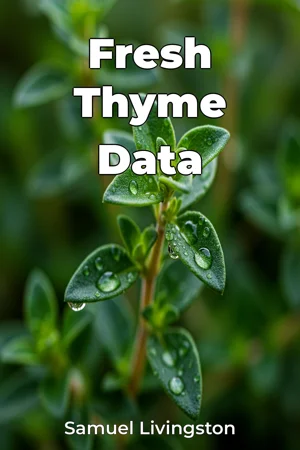
Can a humble herb like thyme truly offer substantial benefits in the face of modern respiratory challenges and escalating antimicrobial resistance? "Fresh Thyme Data" delves deep into the scientific evidence surrounding *Thymus vulgaris*, exploring its documented effects on respiratory health and its potent antimicrobial properties. This book is essential for anyone seeking a comprehensive understanding of thyme's potential in biology, microbiology, and life sciences. This book will primarily focus on two crucial areas: thyme's impact on respiratory ailments and its effectiveness as an antimicrobial agent. These topics are significant due to the increasing prevalence of respiratory diseases globally and the urgent need for novel solutions to combat antibiotic-resistant bacteria. Understanding thyme's mechanisms of action and its potential applications is vital for integrative approaches to health and wellness. Historically, thyme has been used in traditional medicine for centuries to alleviate coughs, colds, and other respiratory conditions. Furthermore, its antiseptic properties have been recognized anecdotally. However, "Fresh Thyme Data" moves beyond traditional uses by meticulously examining modern scientific research, offering an evidence-based perspective. Readers should have a basic understanding of biological processes, microbiology, and respiratory anatomy to fully appreciate the data presented. The central argument of this book is that thyme possesses significant scientifically demonstrable respiratory and antimicrobial properties, meriting further investigation and consideration as a complementary therapeutic agent. This argument is important because it challenges conventional approaches to respiratory care and antimicrobial treatments, offering natural alternatives or adjunct therapies. The book begins with an introduction to the botany and chemistry of thyme, specifically focusing on its key active compounds like thymol and carvacrol. It then proceeds to analyze the existing body of research on thyme's effects on the respiratory system, exploring its expectorant, bronchodilatory, and anti-inflammatory actions. Next, the book examines thyme's antimicrobial properties, presenting data on its effectiveness against a range of bacteria, fungi, and viruses. The culmination of the argument synthesizes these findings, proposing potential mechanisms of action and applications for thyme in healthcare. Finally, we look at practical applications in agriculture and preservation techniques. Evidence is drawn from a wide range of sources, including in vitro studies, in vivo animal models, and human clinical trials. The book also incorporates meta-analyses and systematic reviews to provide a comprehensive and unbiased assessment of the available data. Statistical analyses of clinical trials ensure the validity of the claims. "Fresh Thyme Data" connects to other fields such as pharmacology, immunology, and environmental science. Its exploration of thyme's antimicrobial properties has direct implications for developing new strategies to combat antibiotic resistance, a major concern in pharmacology. The book also touches upon the potential of thyme extracts as immunomodulatory agents, bridging the gap between herbal medicine and immunology. Finally, it discusses the environmental factors that can affect the concentration of active compounds in thyme plants, linking it to environmental science. This book offers a unique perspective by critically analyzing the scientific literature on thyme, separating evidence-based findings from anecdotal claims. It uses a rigorous, data-driven approach to assess the efficacy of thyme in treating respiratory ailments and combating microbial infections. The tone of this book is academic, but strives to be accessible, presenting complex scientific concepts in a clear and concise manner. The target audience includes researchers, healthcare professionals, students in the life sciences, and informed individuals interested in natural remedies and evidence-based herbal medicine. This book is valuable to them because it provides a comprehensive and critical evaluation of the scientific data on thyme, helping them make informed decisions. As a work of scientific non-fiction, the book adheres to standards of accuracy, objectivity, and transparency. All sources are properly cited, and potential biases are acknowledged. The scope of the book is limited to the documented effects of thyme on respiratory and antimicrobial health. It does not delve into other potential health benefits of thyme, such as its antioxidant or anticancer properties, focusing instead on its primary applications. The information in this book can be applied in various ways, from informing the development of new herbal remedies to guiding clinical practice decisions. Readers can use the data to make informed choices about using thyme as a complementary therapy for respiratory conditions or as a natural antimicrobial agent. The book addresses ongoing debates in the field regarding the optimal dosage, delivery methods, and potential interactions of thyme with other medications. It presents a balanced view of these controversies.
Can a humble herb like thyme truly offer substantial benefits in the face of modern respiratory challenges and escalating antimicrobial resistance? "Fresh Thyme Data" delves deep into the scientific evidence surrounding *Thymus vulgaris*, exploring its documented effects on respiratory health and its potent antimicrobial properties. This book is essential for anyone seeking a comprehensive understanding of thyme's potential in biology, microbiology, and life sciences. This book will primarily focus on two crucial areas: thyme's impact on respiratory ailments and its effectiveness as an antimicrobial agent. These topics are significant due to the increasing prevalence of respiratory diseases globally and the urgent need for novel solutions to combat antibiotic-resistant bacteria. Understanding thyme's mechanisms of action and its potential applications is vital for integrative approaches to health and wellness. Historically, thyme has been used in traditional medicine for centuries to alleviate coughs, colds, and other respiratory conditions. Furthermore, its antiseptic properties have been recognized anecdotally. However, "Fresh Thyme Data" moves beyond traditional uses by meticulously examining modern scientific research, offering an evidence-based perspective. Readers should have a basic understanding of biological processes, microbiology, and respiratory anatomy to fully appreciate the data presented. The central argument of this book is that thyme possesses significant scientifically demonstrable respiratory and antimicrobial properties, meriting further investigation and consideration as a complementary therapeutic agent. This argument is important because it challenges conventional approaches to respiratory care and antimicrobial treatments, offering natural alternatives or adjunct therapies. The book begins with an introduction to the botany and chemistry of thyme, specifically focusing on its key active compounds like thymol and carvacrol. It then proceeds to analyze the existing body of research on thyme's effects on the respiratory system, exploring its expectorant, bronchodilatory, and anti-inflammatory actions. Next, the book examines thyme's antimicrobial properties, presenting data on its effectiveness against a range of bacteria, fungi, and viruses. The culmination of the argument synthesizes these findings, proposing potential mechanisms of action and applications for thyme in healthcare. Finally, we look at practical applications in agriculture and preservation techniques. Evidence is drawn from a wide range of sources, including in vitro studies, in vivo animal models, and human clinical trials. The book also incorporates meta-analyses and systematic reviews to provide a comprehensive and unbiased assessment of the available data. Statistical analyses of clinical trials ensure the validity of the claims. "Fresh Thyme Data" connects to other fields such as pharmacology, immunology, and environmental science. Its exploration of thyme's antimicrobial properties has direct implications for developing new strategies to combat antibiotic resistance, a major concern in pharmacology. The book also touches upon the potential of thyme extracts as immunomodulatory agents, bridging the gap between herbal medicine and immunology. Finally, it discusses the environmental factors that can affect the concentration of active compounds in thyme plants, linking it to environmental science. This book offers a unique perspective by critically analyzing the scientific literature on thyme, separating evidence-based findings from anecdotal claims. It uses a rigorous, data-driven approach to assess the efficacy of thyme in treating respiratory ailments and combating microbial infections. The tone of this book is academic, but strives to be accessible, presenting complex scientific concepts in a clear and concise manner. The target audience includes researchers, healthcare professionals, students in the life sciences, and informed individuals interested in natural remedies and evidence-based herbal medicine. This book is valuable to them because it provides a comprehensive and critical evaluation of the scientific data on thyme, helping them make informed decisions. As a work of scientific non-fiction, the book adheres to standards of accuracy, objectivity, and transparency. All sources are properly cited, and potential biases are acknowledged. The scope of the book is limited to the documented effects of thyme on respiratory and antimicrobial health. It does not delve into other potential health benefits of thyme, such as its antioxidant or anticancer properties, focusing instead on its primary applications. The information in this book can be applied in various ways, from informing the development of new herbal remedies to guiding clinical practice decisions. Readers can use the data to make informed choices about using thyme as a complementary therapy for respiratory conditions or as a natural antimicrobial agent. The book addresses ongoing debates in the field regarding the optimal dosage, delivery methods, and potential interactions of thyme with other medications. It presents a balanced view of these controversies.
"Fresh Thyme Data" explores the science behind *Thymus vulgaris*, commonly known as thyme, and its potential benefits for respiratory health and antimicrobial properties. This book critically examines the existing research in biology, microbiology, and life sciences, providing an evidence-based perspective on thyme's traditional uses. Did you know that thyme's active compounds, such as thymol and carvacrol, have shown promise in combating antibiotic-resistant bacteria, a growing concern in modern medicine? The book helps sift through anecdotal claims and rigorous scientific findings, offering a balanced view of thyme's potential as a natural remedy. The book begins by examining the botany and chemistry of thyme, then progresses to analyzing its effects on the respiratory system, exploring its expectorant and anti-inflammatory actions. Next, it investigates thyme's antimicrobial capabilities, presenting data from in vitro studies, animal models, and human clinical trials. By synthesizing these findings and addressing ongoing debates about optimal dosage and delivery methods, "Fresh Thyme Data" offers a comprehensive resource for researchers, healthcare professionals, and anyone interested in herbal medicine.
Book Details
ISBN
9788233973315
Publisher
Publifye AS
Your Licenses
You don't own any licenses for this book
Purchase a license below to unlock this book and download the EPUB.
Purchase License
Select a tier to unlock this book
Need bulk licensing?
Contact us for enterprise agreements.