
About This Book
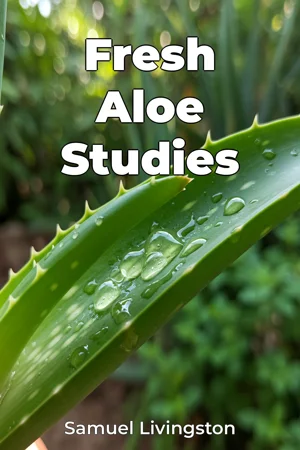
Is aloe vera simply a treatment for sunburns, or does it offer a wider spectrum of scientifically verifiable health benefits? "Fresh Aloe Studies" delves beyond conventional understanding to explore aloe's underappreciated potential in diverse areas of health and wellness, moving past anecdotal uses to solidify its place within evidence-based practices. This book examines aloe not just as a topical remedy or digestive aid, but as a bioactive agent with systemic effects. The core of this book rests on three key areas: aloe's impact on immune function, its role in metabolic regulation, and its potential neuroprotective qualities. We will demonstrate that aloe's complex polysaccharide structure interacts with immune cells, potentially modulating the body's defense mechanisms. Furthermore, the book investigates aloe's effects on blood glucose levels and lipid profiles, suggesting possible applications in managing metabolic disorders. Finally, we explore ongoing research into aloe's components and their influence on neuronal health, hinting at protective benefits against neurodegenerative diseases. These topics are significant because they address prevalent health challenges and offer insights into natural, accessible interventions. "Fresh Aloe Studies" provides essential context by tracing the historical use of aloe vera, from ancient medicinal practices to modern scientific scrutiny. It acknowledges the traditional uses of aloe while grounding the discussion in contemporary research methodologies. No specialized scientific background is required, as complex concepts will be explained with clear, concise language. The central argument is that aloe vera possesses significant bioactive properties that extend considerably beyond its established uses. The book posits that the scientific community has only begun to scratch the surface of aloe's therapeutic capabilities, and a deeper understanding of its molecular mechanisms is essential for unlocking its full potential. The book is structured to methodically build upon this argument. An introductory section will cover the botanical origins, chemical composition, and historical applications of aloe vera. The subsequent chapters will investigate aloe’s influence on the immune system, exploring its potential as an immunomodulatory agent. Then, the book transitions to metabolic health, evaluating aloe's effects on glucose homeostasis and lipid metabolism. A chapter dedicated to neurological aspects then follows, scrutinizing in vitro and in vivo studies concerning aloe’s neuroprotective capabilities. The final chapters summarize the current state of research, identify gaps in knowledge, and discuss potential future directions for aloe-based therapies. The arguments presented are supported by analysis of in vitro studies, animal models, and human clinical trials published in peer-reviewed journals. We will emphasize rigorous methodologies and reproducible results, focusing on studies that meet established criteria. Meta-analyses and systematic reviews will be utilized to provide a comprehensive overview of the existing evidence base. The book embraces interdisciplinary connections, drawing from immunology, endocrinology, and neuroscience to provide a holistic understanding of aloe's multifaceted effects. These connections are critical for translating scientific findings into practical applications and for broadening the scope of aloe vera research. "Fresh Aloe Studies" distinguishes itself by rigorously evaluating and consolidating a wide spectrum of research. The book offers a balanced perspective, acknowledging both the promising findings and the limitations of current research. The information is presented with a formal yet accessible writing style, balancing scientific rigor with readability. The tone is informative and unbiased, intended to foster critical thinking and evidence-based decision-making. The target audience includes healthcare professionals, researchers, and individuals interested in natural health solutions grounded in scientific evidence. This book will be valuable for anyone seeking to understand the science behind aloe vera and its potential applications in promoting health and well-being. As a work of scientific non-fiction, the book adheres to established academic standards, including comprehensive referencing, objective analysis, and clear articulation of research methodologies. The book's scope is intentionally limited to scientifically validated effects of aloe vera beyond skin health and digestion. It does not delve into unsubstantiated claims or anecdotal evidence. The information provided can empower readers to make informed decisions about incorporating aloe vera into their health regimens, under the guidance of healthcare professionals. The book fosters an understanding of aloe's mechanisms of action, allowing for more targeted and effective applications. While the book emphasizes evidence-based findings, it also addresses ongoing debates regarding optimal dosages, delivery methods, and potential interactions with other medications. By acknowledging these controversies, the book promotes responsible and informed use of aloe vera as a complementary therapy.
Is aloe vera simply a treatment for sunburns, or does it offer a wider spectrum of scientifically verifiable health benefits? "Fresh Aloe Studies" delves beyond conventional understanding to explore aloe's underappreciated potential in diverse areas of health and wellness, moving past anecdotal uses to solidify its place within evidence-based practices. This book examines aloe not just as a topical remedy or digestive aid, but as a bioactive agent with systemic effects. The core of this book rests on three key areas: aloe's impact on immune function, its role in metabolic regulation, and its potential neuroprotective qualities. We will demonstrate that aloe's complex polysaccharide structure interacts with immune cells, potentially modulating the body's defense mechanisms. Furthermore, the book investigates aloe's effects on blood glucose levels and lipid profiles, suggesting possible applications in managing metabolic disorders. Finally, we explore ongoing research into aloe's components and their influence on neuronal health, hinting at protective benefits against neurodegenerative diseases. These topics are significant because they address prevalent health challenges and offer insights into natural, accessible interventions. "Fresh Aloe Studies" provides essential context by tracing the historical use of aloe vera, from ancient medicinal practices to modern scientific scrutiny. It acknowledges the traditional uses of aloe while grounding the discussion in contemporary research methodologies. No specialized scientific background is required, as complex concepts will be explained with clear, concise language. The central argument is that aloe vera possesses significant bioactive properties that extend considerably beyond its established uses. The book posits that the scientific community has only begun to scratch the surface of aloe's therapeutic capabilities, and a deeper understanding of its molecular mechanisms is essential for unlocking its full potential. The book is structured to methodically build upon this argument. An introductory section will cover the botanical origins, chemical composition, and historical applications of aloe vera. The subsequent chapters will investigate aloe’s influence on the immune system, exploring its potential as an immunomodulatory agent. Then, the book transitions to metabolic health, evaluating aloe's effects on glucose homeostasis and lipid metabolism. A chapter dedicated to neurological aspects then follows, scrutinizing in vitro and in vivo studies concerning aloe’s neuroprotective capabilities. The final chapters summarize the current state of research, identify gaps in knowledge, and discuss potential future directions for aloe-based therapies. The arguments presented are supported by analysis of in vitro studies, animal models, and human clinical trials published in peer-reviewed journals. We will emphasize rigorous methodologies and reproducible results, focusing on studies that meet established criteria. Meta-analyses and systematic reviews will be utilized to provide a comprehensive overview of the existing evidence base. The book embraces interdisciplinary connections, drawing from immunology, endocrinology, and neuroscience to provide a holistic understanding of aloe's multifaceted effects. These connections are critical for translating scientific findings into practical applications and for broadening the scope of aloe vera research. "Fresh Aloe Studies" distinguishes itself by rigorously evaluating and consolidating a wide spectrum of research. The book offers a balanced perspective, acknowledging both the promising findings and the limitations of current research. The information is presented with a formal yet accessible writing style, balancing scientific rigor with readability. The tone is informative and unbiased, intended to foster critical thinking and evidence-based decision-making. The target audience includes healthcare professionals, researchers, and individuals interested in natural health solutions grounded in scientific evidence. This book will be valuable for anyone seeking to understand the science behind aloe vera and its potential applications in promoting health and well-being. As a work of scientific non-fiction, the book adheres to established academic standards, including comprehensive referencing, objective analysis, and clear articulation of research methodologies. The book's scope is intentionally limited to scientifically validated effects of aloe vera beyond skin health and digestion. It does not delve into unsubstantiated claims or anecdotal evidence. The information provided can empower readers to make informed decisions about incorporating aloe vera into their health regimens, under the guidance of healthcare professionals. The book fosters an understanding of aloe's mechanisms of action, allowing for more targeted and effective applications. While the book emphasizes evidence-based findings, it also addresses ongoing debates regarding optimal dosages, delivery methods, and potential interactions with other medications. By acknowledging these controversies, the book promotes responsible and informed use of aloe vera as a complementary therapy.
"Fresh Aloe Studies" explores the scientifically-validated health benefits of aloe vera beyond its traditional uses for skin ailments. This book delves into aloe's bioactive properties, examining its potential as an immunomodulatory agent, its effects on metabolic regulation, and its neuroprotective qualities. Did you know aloe contains complex polysaccharides that may interact with immune cells, potentially modulating the body's defense mechanisms? The book also investigates aloe's impact on blood glucose levels and lipid profiles, suggesting possible applications in managing metabolic disorders. The book traces the historical use of aloe vera and then methodically progresses through its effects on the immune system, metabolic health, and neurological aspects, supported by in vitro studies, animal models, and human clinical trials. It consolidates a wide spectrum of research, acknowledging both promising findings and limitations. "Fresh Aloe Studies" distinguishes itself by providing a balanced and evidence-based perspective, making it a valuable resource for healthcare professionals, researchers, and anyone interested in natural health solutions.
Book Details
ISBN
9788233973254
Publisher
Publifye AS
Your Licenses
You don't own any licenses for this book
Purchase a license below to unlock this book and download the EPUB.
Purchase License
Select a tier to unlock this book
Need bulk licensing?
Contact us for enterprise agreements.