
About This Book
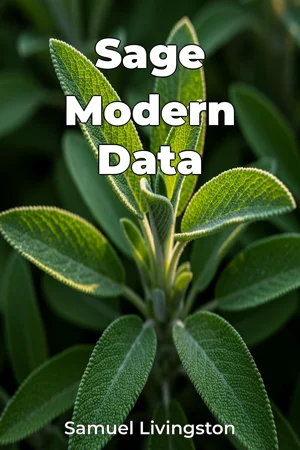
Can a common garden herb unlock profound secrets to modern health? "Sage Modern Data" delves into the burgeoning research surrounding Salvia officinalis, commonly known as sage, exploring its multifaceted medical properties through the lens of contemporary scientific investigation. This book aims to synthesize current findings, providing a comprehensive and accessible overview of sage's potential therapeutic applications for a broad audience, ranging from healthcare professionals to individuals interested in natural health solutions. The core of this book revolves around three key areas: sage's cognitive-enhancing capabilities, its anti-inflammatory and antioxidant properties, and its potential role in managing metabolic disorders. Each of these topics holds significant relevance in today's health landscape, addressing concerns about age-related cognitive decline, chronic inflammation linked to numerous diseases, and the escalating prevalence of metabolic syndromes like diabetes. Contextually, the use of sage for medicinal purposes has ancient roots, dating back to traditional herbal medicine practices across various cultures. However, "Sage Modern Data" moves beyond anecdotal evidence, focusing on rigorous scientific studies, clinical trials, and data-driven analysis to assess the herb's efficacy and safety. The book assumes a basic understanding of biological and chemical principles, though concepts are explained clearly for non-specialists. The central argument posits that while traditional uses of sage warrant respect, modern research is crucial for validating its purported benefits and for determining optimal dosages, delivery methods, and potential interactions. We emphasize the importance of evidence-based practices in integrating natural remedies into contemporary healthcare. The book is structured in three distinct parts. It begins by introducing the botany, phytochemistry, and history of sage use, laying the groundwork for understanding its potential medical applications. The following sections detail specific areas of research, including cognitive function, inflammatory responses, and metabolic regulation. Each section will provide a critical analysis of existing studies, highlighting both promising results and limitations in current knowledge. The book culminates in a discussion of practical applications, dosage recommendations, and potential risks, alongside a call for further research to solidify sage’s place in modern medicine. Evidence presented throughout relies heavily on peer-reviewed publications, meta-analyses, and clinical trial data. Emphasis is placed on studies utilizing standardized sage extracts and rigorous methodologies. Specific data sources include PubMed, Scopus, and Cochrane Library databases. "Sage Modern Data" also explores the interdisciplinary connections of sage research. Firstly, its impact on neurological function links it to fields like neuroscience and gerontology. Secondly, its anti-inflammatory properties intersect with immunology and chronic disease management. Finally, its effects on blood sugar and lipid metabolism connect it to endocrinology and nutritional science. A unique aspect of the book is its integration of "big data" approaches to analyzing research trends and identifying promising avenues for future investigation. By examining patterns in publication data, clinical trial outcomes, and patient data, the book offers a fresh perspective on the potential of sage in modern healthcare. The tone is professional and informative, avoiding overly technical jargon while maintaining scientific accuracy. The writing style is designed to be accessible to a broad audience, including healthcare professionals, researchers, and individuals seeking reliable information about natural health remedies. The target audience includes healthcare practitioners (physicians, nurses, pharmacists), researchers in botany, pharmacology, and related fields, and health-conscious individuals interested in evidence-based information about natural remedies. This book provides a valuable resource for understanding the current state of research on sage and its potential applications in modern medicine and meets the genre expectations of scientific accuracy and thoroughness, common in Biology, Science Life Sciences, Health Fitness, and Health & Fitness books. The book's scope is limited to Salvia officinalis, excluding other species of sage. This intentional limitation allows for a more in-depth exploration of the most commonly studied and readily available species. Beyond the science, "Sage Modern Data" provides actionable information. It discusses how to select high-quality sage products, appropriate dosages for various conditions (based on available research), and potential interactions with medications. Finally, the book acknowledges controversies surrounding certain claims about sage and explicitly addresses the ongoing debate about the quality and consistency of commercially available sage products. It emphasizes the need for further standardization and quality control to ensure reliable and reproducible results in both research and clinical practice.
Can a common garden herb unlock profound secrets to modern health? "Sage Modern Data" delves into the burgeoning research surrounding Salvia officinalis, commonly known as sage, exploring its multifaceted medical properties through the lens of contemporary scientific investigation. This book aims to synthesize current findings, providing a comprehensive and accessible overview of sage's potential therapeutic applications for a broad audience, ranging from healthcare professionals to individuals interested in natural health solutions. The core of this book revolves around three key areas: sage's cognitive-enhancing capabilities, its anti-inflammatory and antioxidant properties, and its potential role in managing metabolic disorders. Each of these topics holds significant relevance in today's health landscape, addressing concerns about age-related cognitive decline, chronic inflammation linked to numerous diseases, and the escalating prevalence of metabolic syndromes like diabetes. Contextually, the use of sage for medicinal purposes has ancient roots, dating back to traditional herbal medicine practices across various cultures. However, "Sage Modern Data" moves beyond anecdotal evidence, focusing on rigorous scientific studies, clinical trials, and data-driven analysis to assess the herb's efficacy and safety. The book assumes a basic understanding of biological and chemical principles, though concepts are explained clearly for non-specialists. The central argument posits that while traditional uses of sage warrant respect, modern research is crucial for validating its purported benefits and for determining optimal dosages, delivery methods, and potential interactions. We emphasize the importance of evidence-based practices in integrating natural remedies into contemporary healthcare. The book is structured in three distinct parts. It begins by introducing the botany, phytochemistry, and history of sage use, laying the groundwork for understanding its potential medical applications. The following sections detail specific areas of research, including cognitive function, inflammatory responses, and metabolic regulation. Each section will provide a critical analysis of existing studies, highlighting both promising results and limitations in current knowledge. The book culminates in a discussion of practical applications, dosage recommendations, and potential risks, alongside a call for further research to solidify sage’s place in modern medicine. Evidence presented throughout relies heavily on peer-reviewed publications, meta-analyses, and clinical trial data. Emphasis is placed on studies utilizing standardized sage extracts and rigorous methodologies. Specific data sources include PubMed, Scopus, and Cochrane Library databases. "Sage Modern Data" also explores the interdisciplinary connections of sage research. Firstly, its impact on neurological function links it to fields like neuroscience and gerontology. Secondly, its anti-inflammatory properties intersect with immunology and chronic disease management. Finally, its effects on blood sugar and lipid metabolism connect it to endocrinology and nutritional science. A unique aspect of the book is its integration of "big data" approaches to analyzing research trends and identifying promising avenues for future investigation. By examining patterns in publication data, clinical trial outcomes, and patient data, the book offers a fresh perspective on the potential of sage in modern healthcare. The tone is professional and informative, avoiding overly technical jargon while maintaining scientific accuracy. The writing style is designed to be accessible to a broad audience, including healthcare professionals, researchers, and individuals seeking reliable information about natural health remedies. The target audience includes healthcare practitioners (physicians, nurses, pharmacists), researchers in botany, pharmacology, and related fields, and health-conscious individuals interested in evidence-based information about natural remedies. This book provides a valuable resource for understanding the current state of research on sage and its potential applications in modern medicine and meets the genre expectations of scientific accuracy and thoroughness, common in Biology, Science Life Sciences, Health Fitness, and Health & Fitness books. The book's scope is limited to Salvia officinalis, excluding other species of sage. This intentional limitation allows for a more in-depth exploration of the most commonly studied and readily available species. Beyond the science, "Sage Modern Data" provides actionable information. It discusses how to select high-quality sage products, appropriate dosages for various conditions (based on available research), and potential interactions with medications. Finally, the book acknowledges controversies surrounding certain claims about sage and explicitly addresses the ongoing debate about the quality and consistency of commercially available sage products. It emphasizes the need for further standardization and quality control to ensure reliable and reproducible results in both research and clinical practice.
"Sage Modern Data" explores the scientific evidence behind the health benefits of Salvia officinalis, or common sage. Bridging traditional herbal medicine with modern science, the book investigates sage's potential in cognitive function, anti-inflammatory action, and metabolic health. Interestingly, studies suggest sage may improve memory and cognitive performance, while its antioxidant properties could combat chronic inflammation linked to various diseases. The book adopts a data-driven approach, analyzing clinical trials and research to validate sage's effects. It progresses from the plant's botany and history to detailed analyses of its impact on cognitive processes, inflammatory responses, and metabolic regulation. Emphasis is placed on evidence-based practices, offering insights into appropriate dosages and potential risks. Ultimately, the book underscores the importance of rigorous scientific investigation to unlock sage's full potential in modern healthcare.
Book Details
ISBN
9788233973148
Publisher
Publifye AS
Your Licenses
You don't own any licenses for this book
Purchase a license below to unlock this book and download the EPUB.
Purchase License
Select a tier to unlock this book
Need bulk licensing?
Contact us for enterprise agreements.