
About This Book
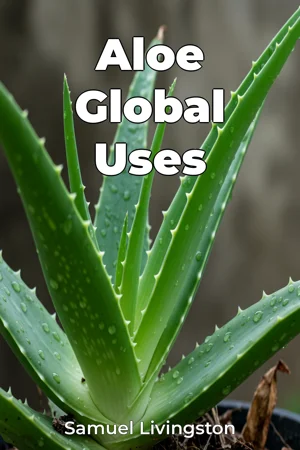
Did you know that the succulent sitting on your windowsill has a history stretching back millennia, interwoven with cultures across the globe? "Aloe Global Uses" delves deep into the scientifically verified therapeutic properties of aloe, exploring its multifaceted applications from ancient remedies to modern medicine and skincare. This book embarks on a journey across continents to uncover how different societies have harnessed the power of this versatile plant. This book’s central argument is that aloe, far from being a simple houseplant, represents a rich tapestry of botanical science, ethnobotany, and applied health practices. Its value lies not only in its direct medicinal applications but also in its role as a case study for understanding the intersection of traditional knowledge and scientific validation. The book unfolds in distinct parts. First, we introduce the taxonomy and botanical characteristics of various aloe species, emphasizing key chemical constituents responsible for its therapeutic effects. This background provides the necessary foundation for subsequent discussions. We then embark on a geographical exploration, dedicating chapters to the uses of aloe in Africa, Asia, the Americas, and Europe. Each regional chapter will detail the historical context, traditional preparations, and specific ailments treated with aloe within that culture. This section highlights the cross-cultural significance of aloe and underscores the need for rigorous scientific investigation of traditional claims. The culmination of the book focuses on the current scientific understanding of aloe's medicinal properties, examining clinical trials and research findings that support or refute traditional uses. Practical applications, including guidelines for safe and effective use, are also explored. Evidence supporting the book's claims will be drawn from a wide range of sources, including peer-reviewed scientific publications, ethnobotanical surveys, historical texts, and clinical trial data. Special attention is given to studies employing rigorous methodologies to evaluate aloe's efficacy in treating various conditions. Original data from field studies documenting traditional aloe preparations and uses will also be presented. “Aloe Global Uses” connects the fields of biology, specifically botany and phytochemistry, with health sciences, including dermatology and gastroenterology, and also incorporates elements of cultural anthropology. The exploration of aloe’s diverse applications offers a unique perspective on how a single plant species can address varied health needs across different populations. The book stands out by adopting a truly global perspective, integrating scientific findings with traditional knowledge systems. It moves beyond anecdotal evidence to provide a balanced and evidence-based assessment of aloe's therapeutic potential. The writing style is informative and accessible, designed to appeal to a broad audience, including healthcare professionals, researchers, students, and anyone interested in natural remedies and plant-based medicine. It aligns with the conventions of non-fiction science and health genres, emphasizing accuracy, clarity, and objectivity. The intended readership includes individuals seeking evidence-based information on natural health solutions, medical professionals interested in integrative medicine, and students or researchers in botany, pharmacology, or related fields. The book's value lies in its comprehensive overview of aloe's global uses and its critical assessment of the scientific evidence supporting its therapeutic claims. The scope is limited to the documented uses and scientifically verified properties of aloe species. While the book acknowledges anecdotal claims, it primarily focuses on data derived from scientific studies and reputable sources. The information presented has real-world applications for individuals seeking natural remedies for specific conditions, as well as for healthcare professionals seeking to integrate evidence-based natural therapies into their practice. Readers will gain a deeper understanding of aloe’s potential benefits and how to use it safely and effectively. The book addresses ongoing debates regarding the efficacy of aloe for certain conditions, such as cancer and diabetes. It presents a balanced perspective, acknowledging both the potential benefits and the limitations of current research. It emphasizes the need for further rigorous investigation to fully understand aloe's therapeutic potential and to identify optimal dosages and formulations.
Did you know that the succulent sitting on your windowsill has a history stretching back millennia, interwoven with cultures across the globe? "Aloe Global Uses" delves deep into the scientifically verified therapeutic properties of aloe, exploring its multifaceted applications from ancient remedies to modern medicine and skincare. This book embarks on a journey across continents to uncover how different societies have harnessed the power of this versatile plant. This book’s central argument is that aloe, far from being a simple houseplant, represents a rich tapestry of botanical science, ethnobotany, and applied health practices. Its value lies not only in its direct medicinal applications but also in its role as a case study for understanding the intersection of traditional knowledge and scientific validation. The book unfolds in distinct parts. First, we introduce the taxonomy and botanical characteristics of various aloe species, emphasizing key chemical constituents responsible for its therapeutic effects. This background provides the necessary foundation for subsequent discussions. We then embark on a geographical exploration, dedicating chapters to the uses of aloe in Africa, Asia, the Americas, and Europe. Each regional chapter will detail the historical context, traditional preparations, and specific ailments treated with aloe within that culture. This section highlights the cross-cultural significance of aloe and underscores the need for rigorous scientific investigation of traditional claims. The culmination of the book focuses on the current scientific understanding of aloe's medicinal properties, examining clinical trials and research findings that support or refute traditional uses. Practical applications, including guidelines for safe and effective use, are also explored. Evidence supporting the book's claims will be drawn from a wide range of sources, including peer-reviewed scientific publications, ethnobotanical surveys, historical texts, and clinical trial data. Special attention is given to studies employing rigorous methodologies to evaluate aloe's efficacy in treating various conditions. Original data from field studies documenting traditional aloe preparations and uses will also be presented. “Aloe Global Uses” connects the fields of biology, specifically botany and phytochemistry, with health sciences, including dermatology and gastroenterology, and also incorporates elements of cultural anthropology. The exploration of aloe’s diverse applications offers a unique perspective on how a single plant species can address varied health needs across different populations. The book stands out by adopting a truly global perspective, integrating scientific findings with traditional knowledge systems. It moves beyond anecdotal evidence to provide a balanced and evidence-based assessment of aloe's therapeutic potential. The writing style is informative and accessible, designed to appeal to a broad audience, including healthcare professionals, researchers, students, and anyone interested in natural remedies and plant-based medicine. It aligns with the conventions of non-fiction science and health genres, emphasizing accuracy, clarity, and objectivity. The intended readership includes individuals seeking evidence-based information on natural health solutions, medical professionals interested in integrative medicine, and students or researchers in botany, pharmacology, or related fields. The book's value lies in its comprehensive overview of aloe's global uses and its critical assessment of the scientific evidence supporting its therapeutic claims. The scope is limited to the documented uses and scientifically verified properties of aloe species. While the book acknowledges anecdotal claims, it primarily focuses on data derived from scientific studies and reputable sources. The information presented has real-world applications for individuals seeking natural remedies for specific conditions, as well as for healthcare professionals seeking to integrate evidence-based natural therapies into their practice. Readers will gain a deeper understanding of aloe’s potential benefits and how to use it safely and effectively. The book addresses ongoing debates regarding the efficacy of aloe for certain conditions, such as cancer and diabetes. It presents a balanced perspective, acknowledging both the potential benefits and the limitations of current research. It emphasizes the need for further rigorous investigation to fully understand aloe's therapeutic potential and to identify optimal dosages and formulations.
"Aloe Global Uses" explores the extensive history and scientifically-backed medicinal applications of aloe across diverse cultures. This book highlights the plant's journey from ancient remedies to modern skincare, revealing how societies worldwide have utilized its therapeutic properties. Intriguingly, aloe's value extends beyond direct medicinal use; it serves as a compelling case study for understanding how traditional knowledge intersects with scientific validation. The book adopts a global perspective, beginning with the botany and phytochemistry of various aloe species before embarking on a geographical exploration. Chapters dedicated to Africa, Asia, the Americas, and Europe detail the historical context, traditional preparations, and specific ailments treated with aloe in each region. The book culminates in an examination of current scientific understanding, assessing clinical trials and research findings that support or refute traditional uses. It emphasizes the need for further rigorous investigation to fully understand aloe's therapeutic potential and to identify optimal dosages and formulations. This unique approach integrates scientific findings with traditional knowledge systems, providing a balanced assessment of aloe's potential in health and skincare. It connects biology, botany, and phytochemistry with health sciences, incorporating elements of cultural anthropology. This comprehensive overview is designed for healthcare professionals, researchers, students, and anyone interested in natural remedies and plant-based medicine.
Book Details
ISBN
9788233973124
Publisher
Publifye AS
Your Licenses
You don't own any licenses for this book
Purchase a license below to unlock this book and download the EPUB.
Purchase License
Select a tier to unlock this book
Need bulk licensing?
Contact us for enterprise agreements.