
About This Book
Have you ever considered the multifaceted role of mint beyond a simple breath freshener? "Mint Global Uses" explores the expansive world of mint, delving into its diverse varieties and their empirically verified medical applications. This book bridges biology, life sciences, and health, offering a comprehensive look at this ubiquitous plant. We begin by establishing a robust foundation in the biology and taxonomy of mint. Understanding the different species—from peppermint and spearmint to less common varieties—is critical for appreciating the nuances of their chemical compositions and, consequently, their therapeutic potentials. This botanical exploration lays the groundwork for understanding how each mint variety uniquely interacts with the human body. A key argument presented is that the therapeutic applications of mint are not uniform; they are highly species-specific and dependent on chemotype. This distinction is often overlooked in popular discourse, leading to unsubstantiated claims and ineffective applications. The narrative unfolds systematically, beginning with a detailed overview of mint’s historical uses in traditional medicine across various cultures. This historical context is interwoven with modern scientific research to either validate or debunk long-held beliefs. Successive chapters will explore the active compounds within mint, such as menthol, menthone, and limonene, detailing their individual properties and synergistic effects. Particular attention is given to rigorous clinical trials and peer-reviewed studies that support the use of specific mint varieties for conditions like irritable bowel syndrome (IBS), nausea, and the common cold. The book analyzes the mechanisms by which mint exerts its effects, from its antispasmodic properties in the gut to its antimicrobial actions. The core of the content relies on a compilation of evidence derived from scientific literature, clinical trials, and pharmacological studies. We critically evaluate research methodologies, sample sizes, and potential biases to provide a balanced and evidence-based perspective. "Mint Global Uses" recognizes the interdisciplinary nature of this topic, drawing connections between botany, pharmacology, physiology, and even culinary arts. Its unique perspective lies in its meticulous examination of clinical data, separating substantiated claims from anecdotal evidence or generalized assumptions. Our approach is scholarly yet accessible, aiming to cater to healthcare professionals, researchers, students, and informed consumers who seek a deeper understanding of mint's therapeutic potential. While the book offers an extensive review of the available science, it does not serve as a substitute for professional medical advice. The scope is intentionally limited to mint varieties with documented medicinal uses, acknowledging that many culinary applications lack equivalent rigorous scientific validation. "Mint Global Uses" tackles head-on the current controversies surrounding the efficacy of certain mint-based remedies. By presenting a thorough review of the scientific literature, the book aims to clarify these debates and offer a rational, evidence-based perspective. Ultimately, this book provides the reader with the knowledge to make informed decisions about the appropriate and effective use of mint for health and wellness. It empowers readers to distinguish facts from fiction in the often-murky waters of natural remedies.
Have you ever considered the multifaceted role of mint beyond a simple breath freshener? "Mint Global Uses" explores the expansive world of mint, delving into its diverse varieties and their empirically verified medical applications. This book bridges biology, life sciences, and health, offering a comprehensive look at this ubiquitous plant. We begin by establishing a robust foundation in the biology and taxonomy of mint. Understanding the different species—from peppermint and spearmint to less common varieties—is critical for appreciating the nuances of their chemical compositions and, consequently, their therapeutic potentials. This botanical exploration lays the groundwork for understanding how each mint variety uniquely interacts with the human body. A key argument presented is that the therapeutic applications of mint are not uniform; they are highly species-specific and dependent on chemotype. This distinction is often overlooked in popular discourse, leading to unsubstantiated claims and ineffective applications. The narrative unfolds systematically, beginning with a detailed overview of mint’s historical uses in traditional medicine across various cultures. This historical context is interwoven with modern scientific research to either validate or debunk long-held beliefs. Successive chapters will explore the active compounds within mint, such as menthol, menthone, and limonene, detailing their individual properties and synergistic effects. Particular attention is given to rigorous clinical trials and peer-reviewed studies that support the use of specific mint varieties for conditions like irritable bowel syndrome (IBS), nausea, and the common cold. The book analyzes the mechanisms by which mint exerts its effects, from its antispasmodic properties in the gut to its antimicrobial actions. The core of the content relies on a compilation of evidence derived from scientific literature, clinical trials, and pharmacological studies. We critically evaluate research methodologies, sample sizes, and potential biases to provide a balanced and evidence-based perspective. "Mint Global Uses" recognizes the interdisciplinary nature of this topic, drawing connections between botany, pharmacology, physiology, and even culinary arts. Its unique perspective lies in its meticulous examination of clinical data, separating substantiated claims from anecdotal evidence or generalized assumptions. Our approach is scholarly yet accessible, aiming to cater to healthcare professionals, researchers, students, and informed consumers who seek a deeper understanding of mint's therapeutic potential. While the book offers an extensive review of the available science, it does not serve as a substitute for professional medical advice. The scope is intentionally limited to mint varieties with documented medicinal uses, acknowledging that many culinary applications lack equivalent rigorous scientific validation. "Mint Global Uses" tackles head-on the current controversies surrounding the efficacy of certain mint-based remedies. By presenting a thorough review of the scientific literature, the book aims to clarify these debates and offer a rational, evidence-based perspective. Ultimately, this book provides the reader with the knowledge to make informed decisions about the appropriate and effective use of mint for health and wellness. It empowers readers to distinguish facts from fiction in the often-murky waters of natural remedies.
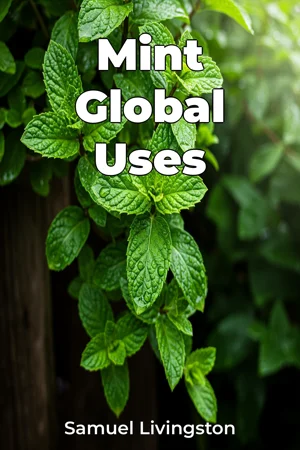
"Mint Global Uses" explores the world of mint, moving beyond its common use as a breath freshener to reveal its diverse medicinal and therapeutic applications. The book delves into various mint varieties, such as peppermint and spearmint, highlighting their unique chemical compositions and associated health benefits. It emphasizes that the therapeutic effects of mint are species-specific, a detail often overlooked. The book begins with mint's biology and taxonomy, then transitions into its historical uses in traditional medicine, comparing these practices with modern scientific research. It explores active compounds like menthol and their effects on conditions such as irritable bowel syndrome (IBS), nausea, and the common cold, supported by clinical trials. The book takes a scholarly yet accessible approach, presenting evidence-based insights for healthcare professionals, researchers, and informed consumers.
Book Details
ISBN
9788233973117
Publisher
Publifye AS
Your Licenses
You don't own any licenses for this book
Purchase a license below to unlock this book and download the EPUB.
Purchase License
Select a tier to unlock this book
Need bulk licensing?
Contact us for enterprise agreements.