
About This Book
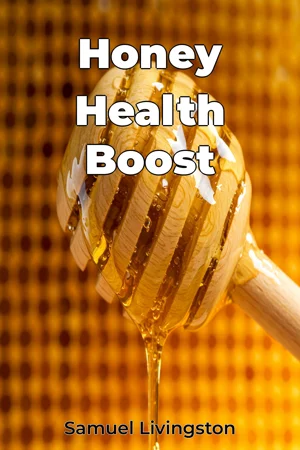
Did you know that the sweet substance we call honey has been used for both sustenance and healing for millennia? "Honey Health Boost" delves into the multifaceted world of honey, exploring its potent antibacterial and antioxidant properties, as well as its rich cultural significance across diverse global practices. These topics are important because they reveal honey’s potential as a natural remedy and its deep-rooted connection to human history and traditions. This book provides a comprehensive examination of honey, beginning with its historical uses in ancient civilizations, tracing its role in traditional medicine, and culminating with a review of modern scientific research. Understanding honey requires a multidisciplinary approach, connecting the biological sciences with cultural history and contemporary health practices. The central argument of "Honey Health Boost" is that honey is more than just a sweetener; it is a complex natural substance with significant pharmacological potential and enduring cultural relevance. This argument is important because it challenges simplistic views of honey and advocates for a deeper understanding of its benefits and uses. The book is structured to provide a thorough understanding of honey's properties and applications. It begins by introducing the basic composition of honey, detailing the various sugars, enzymes, and other compounds that contribute to its unique characteristics. The book then explores the antibacterial properties of honey, examining the mechanisms by which it inhibits bacterial growth and its potential use in treating infections. A dedicated section is devoted to the antioxidant capabilities of honey, explaining how it combats free radicals and reduces oxidative stress in the body. Furthermore, the cultural significance of honey is explored through various cultural practices, from ancient rituals to culinary traditions. The development culminates in a discussion of the practical applications of honey in modern healthcare and everyday life, offering guidelines for its safe and effective use. The evidence presented in this book is drawn from a wide range of scientific studies, including in vitro experiments, clinical trials, and epidemiological research. Unique data sources, such as analyses of honey from different geographical regions and botanical origins, are also included. "Honey Health Boost" connects to several other fields of study, including microbiology, biochemistry, and ethnobotany. These connections enhance the book's argument by providing a holistic view of honey, considering its biological activity, chemical composition, and cultural context. This book takes a comprehensive approach, integrating scientific findings with cultural perspectives to provide a nuanced understanding of honey. The book is written in an accessible style, aiming to bridge the gap between scientific research and practical knowledge. It is targeted towards health enthusiasts, natural remedy advocates, and anyone interested in the science and culture of food. This book will be valuable to readers seeking to understand the potential health benefits of honey and its role in diverse cultural practices. As a work of non-fiction, "Honey Health Boost" adheres to the conventions of evidence-based writing, providing accurate information and citing credible sources. The scope of the book is broad, covering the antibacterial, antioxidant, and cultural aspects of honey. However, it is limited to the study of honey itself, without delving into other bee products such as propolis or royal jelly. The information in "Honey Health Boost" can be applied practically by readers through informed dietary choices, home remedies, and a greater appreciation for the cultural significance of honey in different societies. While honey is generally recognized as safe, the book addresses potential controversies, such as the risk of botulism in infants and the importance of sourcing honey from reputable suppliers to ensure purity and quality. It also acknowledges the ongoing debates surrounding the optimal use of honey in specific health conditions.
Did you know that the sweet substance we call honey has been used for both sustenance and healing for millennia? "Honey Health Boost" delves into the multifaceted world of honey, exploring its potent antibacterial and antioxidant properties, as well as its rich cultural significance across diverse global practices. These topics are important because they reveal honey’s potential as a natural remedy and its deep-rooted connection to human history and traditions. This book provides a comprehensive examination of honey, beginning with its historical uses in ancient civilizations, tracing its role in traditional medicine, and culminating with a review of modern scientific research. Understanding honey requires a multidisciplinary approach, connecting the biological sciences with cultural history and contemporary health practices. The central argument of "Honey Health Boost" is that honey is more than just a sweetener; it is a complex natural substance with significant pharmacological potential and enduring cultural relevance. This argument is important because it challenges simplistic views of honey and advocates for a deeper understanding of its benefits and uses. The book is structured to provide a thorough understanding of honey's properties and applications. It begins by introducing the basic composition of honey, detailing the various sugars, enzymes, and other compounds that contribute to its unique characteristics. The book then explores the antibacterial properties of honey, examining the mechanisms by which it inhibits bacterial growth and its potential use in treating infections. A dedicated section is devoted to the antioxidant capabilities of honey, explaining how it combats free radicals and reduces oxidative stress in the body. Furthermore, the cultural significance of honey is explored through various cultural practices, from ancient rituals to culinary traditions. The development culminates in a discussion of the practical applications of honey in modern healthcare and everyday life, offering guidelines for its safe and effective use. The evidence presented in this book is drawn from a wide range of scientific studies, including in vitro experiments, clinical trials, and epidemiological research. Unique data sources, such as analyses of honey from different geographical regions and botanical origins, are also included. "Honey Health Boost" connects to several other fields of study, including microbiology, biochemistry, and ethnobotany. These connections enhance the book's argument by providing a holistic view of honey, considering its biological activity, chemical composition, and cultural context. This book takes a comprehensive approach, integrating scientific findings with cultural perspectives to provide a nuanced understanding of honey. The book is written in an accessible style, aiming to bridge the gap between scientific research and practical knowledge. It is targeted towards health enthusiasts, natural remedy advocates, and anyone interested in the science and culture of food. This book will be valuable to readers seeking to understand the potential health benefits of honey and its role in diverse cultural practices. As a work of non-fiction, "Honey Health Boost" adheres to the conventions of evidence-based writing, providing accurate information and citing credible sources. The scope of the book is broad, covering the antibacterial, antioxidant, and cultural aspects of honey. However, it is limited to the study of honey itself, without delving into other bee products such as propolis or royal jelly. The information in "Honey Health Boost" can be applied practically by readers through informed dietary choices, home remedies, and a greater appreciation for the cultural significance of honey in different societies. While honey is generally recognized as safe, the book addresses potential controversies, such as the risk of botulism in infants and the importance of sourcing honey from reputable suppliers to ensure purity and quality. It also acknowledges the ongoing debates surrounding the optimal use of honey in specific health conditions.
"Honey Health Boost" explores the fascinating world of honey, revealing it as more than just a sweetener. This book examines honey's remarkable antibacterial and antioxidant properties, highlighting its potential as a natural remedy. Readers will discover how honey has been used across cultures for millennia, playing a significant role in traditional medicine and ancient rituals. The book emphasizes honey's pharmacological potential, arguing for a deeper understanding of its health benefits beyond simple sweetness. The book begins by detailing honey's composition, including sugars, enzymes, and other key compounds, before diving into its antibacterial and antioxidant capabilities. It explores how honey combats oxidative stress and inhibits bacterial growth, referencing scientific research and clinical trials. Furthermore, it explores honey's cultural significance, tracing its use in ancient civilizations and various cultural practices. The book progresses systematically, bridging scientific findings with practical knowledge in an accessible style. It integrates biological sciences with cultural history, appealing to health enthusiasts interested in natural remedies and the science of food. By the end, readers gain a comprehensive understanding of honey's health benefits, its role in diverse cultural practices, and its potential applications in modern healthcare.
Book Details
ISBN
9788233973032
Publisher
Publifye AS
Your Licenses
You don't own any licenses for this book
Purchase a license below to unlock this book and download the EPUB.
Purchase License
Select a tier to unlock this book
Need bulk licensing?
Contact us for enterprise agreements.