
About This Book
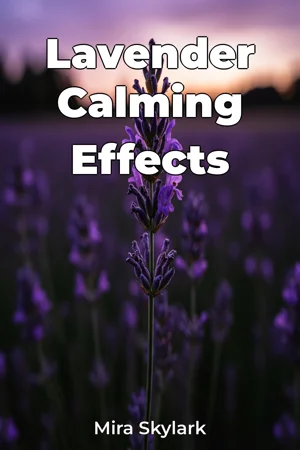
Can the gentle fragrance of lavender truly offer solace in our increasingly stressful world? "Lavender Calming Effects" delves into the science and history behind lavender's reputation as a natural remedy for stress and anxiety, meticulously examining its potential benefits and limitations. This book explores the multifaceted relationship between lavender and relaxation, providing a comprehensive overview grounded in both traditional uses and modern scientific inquiry. We will explore the primary active compounds in lavender, particularly linalool and linalyl acetate, and how they interact with the central nervous system. Understanding this mechanism of action is crucial to assessing lavender's potential effectiveness. We will then investigate the historical context of lavender use, tracing its applications from ancient civilizations to contemporary aromatherapy practices, providing the social backdrop for its enduring popularity. The central argument of "Lavender Calming Effects" is that while anecdotal evidence and historical use strongly suggest a calming effect, modern scientific trials offer only mild supportive evidence. The book aims to bridge the gap between traditional wisdom and empirical research, offering a balanced perspective on lavender's true potential. This argument is significant because it encourages a critical evaluation of natural remedies, promoting informed decision-making based on current understanding. The book is structured in four parts. First, we introduce the chemical composition of lavender oil and its purported mechanisms of action, including effects on neurotransmitters like GABA. Second, it examines the historical and cultural uses of lavender for relaxation and stress reduction, drawing from archival records and ethnobotanical studies. Third, "Lavender Calming Effects" analyzes the existing body of scientific research, including randomized controlled trials, observational studies, and meta-analyses. This section scrutinizes the methodologies, findings, and limitations of each study to provide a critical assessment of the current evidence. Fourth, we discuss practical applications of lavender, such as aromatherapy, massage therapy, and herbal remedies, while emphasizing the importance of consulting healthcare professionals before using lavender as a treatment. The book relies on a range of evidence, including peer-reviewed scientific publications, historical texts, and expert opinions from aromatherapy practitioners and medical professionals. Special attention is given to randomized controlled trials investigating lavender's effects on anxiety, sleep quality, and mood. The book’s analysis incorporates studies using various methods of administration, such as inhalation, topical application, and oral consumption, to compare their effectiveness. "Lavender Calming Effects" connects to several related fields, including pharmacology, psychology, and complementary and alternative medicine. By exploring lavender's potential pharmacological effects, the book bridges the gap between natural remedies and conventional treatments. It also considers the psychological aspects of aromatherapy, examining how scent can influence mood and behavior. Furthermore, it addresses ethical considerations within complementary and alternative medicine, emphasizing the importance of evidence-based practices and patient safety. A unique aspect of this book is its balanced approach, acknowledging both the potential benefits and limitations of lavender. It does not promote lavender as a miracle cure but rather presents a nuanced perspective based on current scientific understanding. The tone is informative and accessible, making complex scientific concepts understandable to a broad audience. The target audience includes individuals interested in natural remedies, healthcare professionals seeking to understand the evidence behind complementary therapies, and students in health-related fields. This book is valuable to them because it provides a comprehensive and critical review of the scientific literature on lavender, enabling informed decision-making. As a health and fitness book, "Lavender Calming Effects" adheres to standard practices of citing sources, presenting data objectively, and avoiding unsubstantiated claims. It acknowledges the ongoing debates surrounding the efficacy of aromatherapy and emphasizes the need for further research. Although the book provides practical information on using lavender, it is not intended to replace medical advice from qualified healthcare professionals. The scope is limited to the calming effects of lavender and does not extensively cover other potential uses, such as wound healing or pain relief. This intentional limitation allows for a more focused and in-depth analysis of the primary topic. The information can be applied practically by readers seeking to incorporate lavender into their wellness routines, with the understanding of its effects, both real and perceived.
Can the gentle fragrance of lavender truly offer solace in our increasingly stressful world? "Lavender Calming Effects" delves into the science and history behind lavender's reputation as a natural remedy for stress and anxiety, meticulously examining its potential benefits and limitations. This book explores the multifaceted relationship between lavender and relaxation, providing a comprehensive overview grounded in both traditional uses and modern scientific inquiry. We will explore the primary active compounds in lavender, particularly linalool and linalyl acetate, and how they interact with the central nervous system. Understanding this mechanism of action is crucial to assessing lavender's potential effectiveness. We will then investigate the historical context of lavender use, tracing its applications from ancient civilizations to contemporary aromatherapy practices, providing the social backdrop for its enduring popularity. The central argument of "Lavender Calming Effects" is that while anecdotal evidence and historical use strongly suggest a calming effect, modern scientific trials offer only mild supportive evidence. The book aims to bridge the gap between traditional wisdom and empirical research, offering a balanced perspective on lavender's true potential. This argument is significant because it encourages a critical evaluation of natural remedies, promoting informed decision-making based on current understanding. The book is structured in four parts. First, we introduce the chemical composition of lavender oil and its purported mechanisms of action, including effects on neurotransmitters like GABA. Second, it examines the historical and cultural uses of lavender for relaxation and stress reduction, drawing from archival records and ethnobotanical studies. Third, "Lavender Calming Effects" analyzes the existing body of scientific research, including randomized controlled trials, observational studies, and meta-analyses. This section scrutinizes the methodologies, findings, and limitations of each study to provide a critical assessment of the current evidence. Fourth, we discuss practical applications of lavender, such as aromatherapy, massage therapy, and herbal remedies, while emphasizing the importance of consulting healthcare professionals before using lavender as a treatment. The book relies on a range of evidence, including peer-reviewed scientific publications, historical texts, and expert opinions from aromatherapy practitioners and medical professionals. Special attention is given to randomized controlled trials investigating lavender's effects on anxiety, sleep quality, and mood. The book’s analysis incorporates studies using various methods of administration, such as inhalation, topical application, and oral consumption, to compare their effectiveness. "Lavender Calming Effects" connects to several related fields, including pharmacology, psychology, and complementary and alternative medicine. By exploring lavender's potential pharmacological effects, the book bridges the gap between natural remedies and conventional treatments. It also considers the psychological aspects of aromatherapy, examining how scent can influence mood and behavior. Furthermore, it addresses ethical considerations within complementary and alternative medicine, emphasizing the importance of evidence-based practices and patient safety. A unique aspect of this book is its balanced approach, acknowledging both the potential benefits and limitations of lavender. It does not promote lavender as a miracle cure but rather presents a nuanced perspective based on current scientific understanding. The tone is informative and accessible, making complex scientific concepts understandable to a broad audience. The target audience includes individuals interested in natural remedies, healthcare professionals seeking to understand the evidence behind complementary therapies, and students in health-related fields. This book is valuable to them because it provides a comprehensive and critical review of the scientific literature on lavender, enabling informed decision-making. As a health and fitness book, "Lavender Calming Effects" adheres to standard practices of citing sources, presenting data objectively, and avoiding unsubstantiated claims. It acknowledges the ongoing debates surrounding the efficacy of aromatherapy and emphasizes the need for further research. Although the book provides practical information on using lavender, it is not intended to replace medical advice from qualified healthcare professionals. The scope is limited to the calming effects of lavender and does not extensively cover other potential uses, such as wound healing or pain relief. This intentional limitation allows for a more focused and in-depth analysis of the primary topic. The information can be applied practically by readers seeking to incorporate lavender into their wellness routines, with the understanding of its effects, both real and perceived.
"Lavender Calming Effects" explores the widely-held belief in lavender's ability to reduce stress and anxiety, diving into both the history and science behind this popular natural remedy. From ancient civilizations to modern aromatherapy, lavender has been used for its calming effects, attributed to compounds like linalool and linalyl acetate. These compounds are thought to interact with the central nervous system, possibly influencing neurotransmitters like GABA, which play a role in relaxation. The book examines the existing scientific research, including randomized controlled trials, to assess the true effectiveness of lavender. While anecdotal evidence is abundant, scientific studies offer only mild supportive evidence, highlighting a need to bridge the gap between traditional wisdom and empirical findings. Structured in four parts, the book progresses from the chemical composition and historical uses of lavender to a critical analysis of scientific research and practical applications, such as aromatherapy and massage therapy. What sets this book apart is its balanced approach, acknowledging both the potential benefits and limitations of lavender. It emphasizes informed decision-making, encouraging readers to consider the evidence before incorporating lavender into their health routines. The book presents information in an accessible manner, making it valuable for anyone interested in natural remedies, health professionals, and students in related fields.
Book Details
ISBN
9788233973025
Publisher
Publifye AS
Your Licenses
You don't own any licenses for this book
Purchase a license below to unlock this book and download the EPUB.
Purchase License
Select a tier to unlock this book
Need bulk licensing?
Contact us for enterprise agreements.