
About This Book
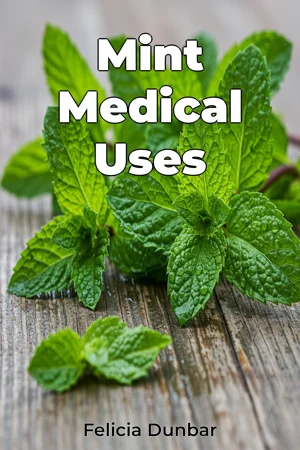
Have you ever considered the multifaceted medicinal properties residing within the humble mint leaf? "Mint Medical Uses" delves into the surprisingly extensive history and scientifically validated benefits of this common herb, moving beyond its culinary applications to reveal its potential as a therapeutic agent. This book explores mint's traditional uses across various cultures and its modern applications in treating digestive and respiratory ailments. We will examine two primary areas: the historical context of mint in traditional medicine and the contemporary scientific research validating (or refuting) these traditional uses. Why is this important? Because understanding the historical uses of natural remedies like mint offers insights into potential therapeutic avenues, while rigorous scientific investigation ensures safety and efficacy. The book serves as a crucial bridge between ancestral wisdom and modern healthcare practices. Historically, mint has appeared in numerous pharmacopeias and traditional healing systems, from ancient Egypt to traditional Chinese medicine. Its purported benefits ranged from soothing digestive upset to clearing respiratory congestion and promoting mental clarity. However, only recently have modern scientific methods been applied to dissect these claims, isolating active compounds and investigating their mechanisms of action. The central argument of "Mint Medical Uses" is that while traditional use provides a valuable starting point, a comprehensive understanding of mint's therapeutic potential requires rigorous scientific validation. This blend of historical context and contemporary research leads to a more informed and responsible approach to utilizing mint for health benefits. The book is structured to first introduce the various species of mint and their unique chemical compositions. Subsequent sections then delve into specific ailments and conditions where mint has been traditionally employed. This is followed by a thorough review of relevant scientific literature, including clinical trials and in-vitro studies, assessing the evidence for each application. Major areas covered include mint's role in alleviating Irritable Bowel Syndrome (IBS) symptoms, its efficacy as an expectorant and decongestant, and its potential anti-inflammatory properties. The book culminates by exploring the practical implications of these findings, offering evidence-based recommendations for using mint safely and effectively in various forms, such as teas, essential oils, and dietary supplements, while clearly outlining potential risks and contraindications. Evidence presented throughout the book includes analyses of peer-reviewed scientific studies, meta-analyses of clinical trials, and historical records from traditional medicine literature. Particular attention is paid to the methodologies employed in these studies, highlighting both strengths and limitations. "Mint Medical Uses" connects to several interdisciplinary fields, including botany (the study of plant properties), pharmacology (the study of drug actions), and gastroenterology (the study of the digestive system). These connections enrich the understanding of mint's effects by providing diverse perspectives on its potential therapeutic mechanisms. This book distinguishes itself by its balanced approach, avoiding unsubstantiated claims while remaining open to the potential of traditional remedies. It provides a critical analysis of available data and presents a nuanced perspective on the role of mint in modern healthcare. The tone is authoritative yet accessible, aiming to make complex scientific information understandable to a broad audience. This book is targeted towards health professionals (doctors, nurses, pharmacists), complementary medicine practitioners, and informed individuals interested in natural remedies and evidence-based healthcare. It is valuable for anyone seeking a comprehensive and unbiased overview of the medical uses of mint. As a work in the health and fitness/medical genre, this book adheres to the expectations of accuracy, objectivity, and evidence-based information. Claims are carefully referenced and supported by scientific research, and potential conflicts of interest are disclosed. The book focuses specifically on the medicinal properties of mint, excluding detailed coverage of its horticultural aspects or culinary uses beyond their direct impact on health. While acknowledging the broad range of mint species, the book primarily concentrates on peppermint (Mentha piperita) and spearmint (Mentha spicata) due to the depth of available research. The information presented in "Mint Medical Uses" can be directly applied by readers to make informed decisions about incorporating mint into their health regimens. This includes using mint tea for digestive support, employing peppermint oil for tension headaches, or utilizing mint-based inhalants for respiratory relief. The book addresses ongoing debates regarding the efficacy of herbal remedies in general, and the standardization and regulation of herbal products. It acknowledges the limitations of current research and advocates for further investigation to fully elucidate the potential of mint in various medical applications.
Have you ever considered the multifaceted medicinal properties residing within the humble mint leaf? "Mint Medical Uses" delves into the surprisingly extensive history and scientifically validated benefits of this common herb, moving beyond its culinary applications to reveal its potential as a therapeutic agent. This book explores mint's traditional uses across various cultures and its modern applications in treating digestive and respiratory ailments. We will examine two primary areas: the historical context of mint in traditional medicine and the contemporary scientific research validating (or refuting) these traditional uses. Why is this important? Because understanding the historical uses of natural remedies like mint offers insights into potential therapeutic avenues, while rigorous scientific investigation ensures safety and efficacy. The book serves as a crucial bridge between ancestral wisdom and modern healthcare practices. Historically, mint has appeared in numerous pharmacopeias and traditional healing systems, from ancient Egypt to traditional Chinese medicine. Its purported benefits ranged from soothing digestive upset to clearing respiratory congestion and promoting mental clarity. However, only recently have modern scientific methods been applied to dissect these claims, isolating active compounds and investigating their mechanisms of action. The central argument of "Mint Medical Uses" is that while traditional use provides a valuable starting point, a comprehensive understanding of mint's therapeutic potential requires rigorous scientific validation. This blend of historical context and contemporary research leads to a more informed and responsible approach to utilizing mint for health benefits. The book is structured to first introduce the various species of mint and their unique chemical compositions. Subsequent sections then delve into specific ailments and conditions where mint has been traditionally employed. This is followed by a thorough review of relevant scientific literature, including clinical trials and in-vitro studies, assessing the evidence for each application. Major areas covered include mint's role in alleviating Irritable Bowel Syndrome (IBS) symptoms, its efficacy as an expectorant and decongestant, and its potential anti-inflammatory properties. The book culminates by exploring the practical implications of these findings, offering evidence-based recommendations for using mint safely and effectively in various forms, such as teas, essential oils, and dietary supplements, while clearly outlining potential risks and contraindications. Evidence presented throughout the book includes analyses of peer-reviewed scientific studies, meta-analyses of clinical trials, and historical records from traditional medicine literature. Particular attention is paid to the methodologies employed in these studies, highlighting both strengths and limitations. "Mint Medical Uses" connects to several interdisciplinary fields, including botany (the study of plant properties), pharmacology (the study of drug actions), and gastroenterology (the study of the digestive system). These connections enrich the understanding of mint's effects by providing diverse perspectives on its potential therapeutic mechanisms. This book distinguishes itself by its balanced approach, avoiding unsubstantiated claims while remaining open to the potential of traditional remedies. It provides a critical analysis of available data and presents a nuanced perspective on the role of mint in modern healthcare. The tone is authoritative yet accessible, aiming to make complex scientific information understandable to a broad audience. This book is targeted towards health professionals (doctors, nurses, pharmacists), complementary medicine practitioners, and informed individuals interested in natural remedies and evidence-based healthcare. It is valuable for anyone seeking a comprehensive and unbiased overview of the medical uses of mint. As a work in the health and fitness/medical genre, this book adheres to the expectations of accuracy, objectivity, and evidence-based information. Claims are carefully referenced and supported by scientific research, and potential conflicts of interest are disclosed. The book focuses specifically on the medicinal properties of mint, excluding detailed coverage of its horticultural aspects or culinary uses beyond their direct impact on health. While acknowledging the broad range of mint species, the book primarily concentrates on peppermint (Mentha piperita) and spearmint (Mentha spicata) due to the depth of available research. The information presented in "Mint Medical Uses" can be directly applied by readers to make informed decisions about incorporating mint into their health regimens. This includes using mint tea for digestive support, employing peppermint oil for tension headaches, or utilizing mint-based inhalants for respiratory relief. The book addresses ongoing debates regarding the efficacy of herbal remedies in general, and the standardization and regulation of herbal products. It acknowledges the limitations of current research and advocates for further investigation to fully elucidate the potential of mint in various medical applications.
"Mint Medical Uses" explores the surprising therapeutic potential of mint, an herb often relegated to culinary uses. The book bridges traditional knowledge with modern science, examining mint's historical applications in various cultures and analyzing its scientifically validated benefits for conditions like digestive upset and respiratory ailments. Readers will discover how ancient civilizations utilized mint for mental clarity and digestive health, while modern research investigates mint's active compounds and mechanisms of action. The book progresses systematically, starting with an introduction to different mint species and their chemical compositions. It then delves into specific ailments traditionally treated with mint, followed by a critical review of scientific literature, including clinical trials assessing mint's efficacy. The book emphasizes a balanced approach, carefully analyzing available data to offer evidence-based recommendations for safely and effectively using mint in various forms, such as teas, essential oils, and supplements, while outlining potential risks and contraindications.
Book Details
ISBN
9788233972936
Publisher
Publifye AS
Your Licenses
You don't own any licenses for this book
Purchase a license below to unlock this book and download the EPUB.
Purchase License
Select a tier to unlock this book
Need bulk licensing?
Contact us for enterprise agreements.