
About This Book
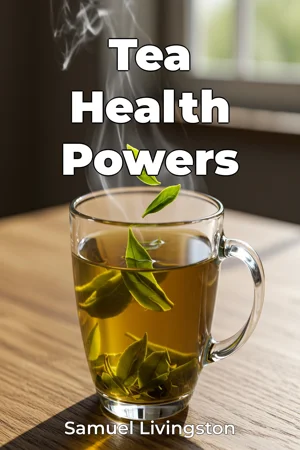
Could a simple cup of tea hold the key to enhanced health and well-being? This book, "Tea Health Powers," delves into the remarkable antioxidant properties and diverse health impacts of various tea types, drawing upon a comprehensive analysis of research data from both Asian and European studies. The core focus is to provide readers with a fact-based understanding of how tea, a beverage consumed for centuries, can contribute to overall health. The book explores two fundamental themes: the specific antioxidant compounds found in different teas and the correlation between tea consumption and various health outcomes. Understanding the specific antioxidants, such as catechins, theaflavins, and thearubigins, is important because each compound interacts uniquely within the body. Furthermore, investigating the health outcomes associated with tea consumption provides crucial insights into the potential benefits and limitations of incorporating tea into a healthy lifestyle. Historically, tea has held a prominent place in Asian cultures, recognized not only as a beverage but also as a medicinal aid. More recently, European researchers have begun to explore these ancient traditions, applying scientific methodologies to validate or refute traditional claims. This confluence of Eastern and Western perspectives forms a robust foundation for our exploration, which requires readers to have a basic understanding of biological and chemical processes within the human body. The central argument of "Tea Health Powers" asserts that regular consumption of certain teas can offer measurable health benefits, attributable to their unique antioxidant profiles. This claim is supported by a rigorous analysis of epidemiological studies, clinical trials, and in vitro experiments. The importance of this argument lies in its potential to empower individuals to make informed choices about their health and well-being, backed by scientific evidence rather than anecdotal claims. The book is structured to systematically guide the reader through the complexities of tea and its health implications. It begins with an introduction to the history, cultivation, and processing of various tea types, including green, black, white, and oolong teas. The second part focuses on the chemical composition of each tea type, detailing the specific antioxidant compounds and their potential mechanisms of action within the human body. The third part synthesizes the scientific evidence, evaluating studies that link tea consumption to specific health outcomes such as cardiovascular health, cognitive function, weight management, and cancer prevention. The conclusion reinforces the major findings and discusses practical applications for incorporating tea into a healthy diet. To substantiate its claims, "Tea Health Powers" relies on a wealth of scientific literature, including peer-reviewed research articles, meta-analyses, and reports from reputable health organizations. It examines data from large-scale epidemiological studies conducted in both Asia and Europe, providing a comparative analysis of findings. Furthermore, the book discusses the methodologies used in these studies, addressing potential biases and limitations to ensure a balanced and transparent presentation of the evidence. The content of this book integrates aspects of Health & Fitness, Biology, and Science, creating a holistic perspective. By connecting to areas such as nutrition science, pharmacology, and public health, this book emphasizes the multifaceted nature of tea’s impact. These connections reinforce the book’s central argument by illustrating how tea interacts with various physiological systems and contributes to overall wellness. "Tea Health Powers" takes a novel approach by comparing and contrasting research findings from both Asian and European studies, highlighting cultural and methodological differences. It emphasizes the practical applications of the research findings, providing readers with actionable advice on choosing and preparing teas to maximize their health benefits. The book employs a fact-based writing style, prioritizing accuracy and clarity. The information is accessible and easy to understand, even for readers without a strong scientific background. The target audience includes health-conscious individuals, tea enthusiasts, and healthcare professionals looking for evidence-based information on the health benefits of tea. This book would be valuable to anyone seeking to understand the scientific basis for tea's health-promoting properties and incorporate it strategically into their lifestyle. As a work of nonfiction, "Tea Health Powers" strives to meet the expectations of accuracy, objectivity, and thoroughness. It distinguishes itself through its rigorous analysis of existing research and its practical focus on real-world applications. The scope of "Tea Health Powers" is limited to the health effects of traditional teas derived from the Camellia sinensis plant. It does not cover herbal infusions or other beverages marketed as "tea." Readers can apply the information in "Tea Health Powers" to make more informed decisions about their tea consumption habits. By understanding the antioxidant profiles of different teas and their potential health benefits, readers can choose teas that align with their individual health goals. Finally, the book addresses ongoing debates within the scientific community regarding the optimal dosage of tea consumption and the potential interactions with medications or other dietary factors. By acknowledging these controversies, "Tea Health Powers" aims to provide a balanced and nuanced perspective on the subject.
Could a simple cup of tea hold the key to enhanced health and well-being? This book, "Tea Health Powers," delves into the remarkable antioxidant properties and diverse health impacts of various tea types, drawing upon a comprehensive analysis of research data from both Asian and European studies. The core focus is to provide readers with a fact-based understanding of how tea, a beverage consumed for centuries, can contribute to overall health. The book explores two fundamental themes: the specific antioxidant compounds found in different teas and the correlation between tea consumption and various health outcomes. Understanding the specific antioxidants, such as catechins, theaflavins, and thearubigins, is important because each compound interacts uniquely within the body. Furthermore, investigating the health outcomes associated with tea consumption provides crucial insights into the potential benefits and limitations of incorporating tea into a healthy lifestyle. Historically, tea has held a prominent place in Asian cultures, recognized not only as a beverage but also as a medicinal aid. More recently, European researchers have begun to explore these ancient traditions, applying scientific methodologies to validate or refute traditional claims. This confluence of Eastern and Western perspectives forms a robust foundation for our exploration, which requires readers to have a basic understanding of biological and chemical processes within the human body. The central argument of "Tea Health Powers" asserts that regular consumption of certain teas can offer measurable health benefits, attributable to their unique antioxidant profiles. This claim is supported by a rigorous analysis of epidemiological studies, clinical trials, and in vitro experiments. The importance of this argument lies in its potential to empower individuals to make informed choices about their health and well-being, backed by scientific evidence rather than anecdotal claims. The book is structured to systematically guide the reader through the complexities of tea and its health implications. It begins with an introduction to the history, cultivation, and processing of various tea types, including green, black, white, and oolong teas. The second part focuses on the chemical composition of each tea type, detailing the specific antioxidant compounds and their potential mechanisms of action within the human body. The third part synthesizes the scientific evidence, evaluating studies that link tea consumption to specific health outcomes such as cardiovascular health, cognitive function, weight management, and cancer prevention. The conclusion reinforces the major findings and discusses practical applications for incorporating tea into a healthy diet. To substantiate its claims, "Tea Health Powers" relies on a wealth of scientific literature, including peer-reviewed research articles, meta-analyses, and reports from reputable health organizations. It examines data from large-scale epidemiological studies conducted in both Asia and Europe, providing a comparative analysis of findings. Furthermore, the book discusses the methodologies used in these studies, addressing potential biases and limitations to ensure a balanced and transparent presentation of the evidence. The content of this book integrates aspects of Health & Fitness, Biology, and Science, creating a holistic perspective. By connecting to areas such as nutrition science, pharmacology, and public health, this book emphasizes the multifaceted nature of tea’s impact. These connections reinforce the book’s central argument by illustrating how tea interacts with various physiological systems and contributes to overall wellness. "Tea Health Powers" takes a novel approach by comparing and contrasting research findings from both Asian and European studies, highlighting cultural and methodological differences. It emphasizes the practical applications of the research findings, providing readers with actionable advice on choosing and preparing teas to maximize their health benefits. The book employs a fact-based writing style, prioritizing accuracy and clarity. The information is accessible and easy to understand, even for readers without a strong scientific background. The target audience includes health-conscious individuals, tea enthusiasts, and healthcare professionals looking for evidence-based information on the health benefits of tea. This book would be valuable to anyone seeking to understand the scientific basis for tea's health-promoting properties and incorporate it strategically into their lifestyle. As a work of nonfiction, "Tea Health Powers" strives to meet the expectations of accuracy, objectivity, and thoroughness. It distinguishes itself through its rigorous analysis of existing research and its practical focus on real-world applications. The scope of "Tea Health Powers" is limited to the health effects of traditional teas derived from the Camellia sinensis plant. It does not cover herbal infusions or other beverages marketed as "tea." Readers can apply the information in "Tea Health Powers" to make more informed decisions about their tea consumption habits. By understanding the antioxidant profiles of different teas and their potential health benefits, readers can choose teas that align with their individual health goals. Finally, the book addresses ongoing debates within the scientific community regarding the optimal dosage of tea consumption and the potential interactions with medications or other dietary factors. By acknowledging these controversies, "Tea Health Powers" aims to provide a balanced and nuanced perspective on the subject.
"Tea Health Powers" explores the science-backed health benefits of tea, delving into its rich antioxidant properties and their impact on well-being. This exploration draws on research from both Asian and European studies, providing a comprehensive look at tea's potential to enhance cardiovascular health, cognitive function, and even play a role in cancer prevention. Understanding the specific antioxidant compounds, such as catechins, is key to unlocking tea's full potential. The book systematically guides readers through the history, cultivation, and chemical composition of various tea types, including green, black, and oolong. It synthesizes scientific evidence linking tea consumption to specific health outcomes, empowering individuals to make informed choices about their health. By comparing and contrasting findings from different regions and emphasizing practical applications, "Tea Health Powers" offers a unique and valuable resource for health-conscious individuals and healthcare professionals alike.
Book Details
ISBN
9788233972929
Publisher
Publifye AS
Your Licenses
You don't own any licenses for this book
Purchase a license below to unlock this book and download the EPUB.
Purchase License
Select a tier to unlock this book
Need bulk licensing?
Contact us for enterprise agreements.