
About This Book
Could a single plant hold the key to unlocking nature's potential for healing and skin revitalization? "Aloe Vera Science" delves into the multifaceted world of *Aloe vera*, exploring its scientifically validated properties and its impact on human health. This book bridges the gap between traditional uses and evidence-based applications, examining the plant's complex chemistry and its biological effects. The primary focus revolves around two crucial topics: the wound-healing capabilities of *Aloe vera* and its role in maintaining skin health. Understanding these aspects is vital given the increasing interest in natural remedies and the need for effective treatments for various dermatological conditions. The book also addresses the context of *Aloe vera's* historical use across different cultures and examines its modern scientific exploration. While the plant has been used for centuries, this book centers on the chemical and clinical evidence, separating fact from folklore. The central argument posits that *Aloe vera's* therapeutic effects are attributable to its unique composition, where synergistic interactions between its various components mediate observed biological responses. It underscores the importance of understanding these mechanisms to optimize *Aloe vera's* use in clinical and cosmetic applications. This book systematically unfolds the science of *Aloe vera*. It begins by introducing the plant’s botanical origins, cultivation, and chemical composition. The second section details the mechanisms by which *Aloe vera* promotes wound healing, supported by in-vitro and in-vivo studies. This section also investigates the roles of specific compounds, such as polysaccharides and growth factors, in tissue regeneration. The third section examines *Aloe vera's* impact on skin health, exploring its anti-inflammatory, antioxidant, and moisturizing properties. The book then culminates by consolidating the evidence, addressing potential risks and side effects, and highlighting possible future research directions. Practical applications are discussed, ranging from formulating effective topical treatments to exploring *Aloe vera's* potential in regenerative medicine. Evidence is drawn from a wide spectrum of scientific research, including peer-reviewed articles, clinical trials, and laboratory experiments. The book compiles data from diverse sources, including dermatological studies, biochemical analyses, and pharmacological investigations. Emphasis is placed on studies with robust methodologies and statistically significant results. "Aloe Vera Science" also explores connections to other fields, such as dermatology, biochemistry, and pharmacology. By integrating knowledge from these disciplines, a holistic view of *Aloe vera's* therapeutic potential emerges. For example, understanding its biochemical pathways sheds light on its pharmacological effects, thereby informing dermatological applications. What sets this book apart is its rigorous scientific approach. It provides a balanced perspective, acknowledging both the benefits and limitations of *Aloe vera* as a therapeutic agent. This involves critical evaluation of existing research, careful consideration of methodological limitations, and the proposal of avenues for future investigation. The tone is academic yet accessible, designed to appeal to a broad audience. Complex scientific concepts are explained clearly and concisely. The writing style reflects a commitment to accuracy, objectivity, and intellectual rigor. The target audience includes healthcare professionals, researchers, students, and anyone interested in learning about the science behind *Aloe vera*. It would also be valuable to formulators of cosmetic and pharmaceutical products. As a work of non-fiction in the health and science genres, the book adheres to principles of accuracy, impartiality, and transparency. Claims are supported by credible evidence, and sources are properly cited. The scope of this book is deliberately focused. While it acknowledges the traditional uses of *Aloe vera*, the emphasis is on modern scientific research. It does not delve into the cultural significance of the plant or its history in detail, other than to provide necessary context. Knowledge from the book can be immediately applied by healthcare professionals seeking evidence-based natural treatments, researchers investigating novel therapeutic agents, and consumers looking to make informed choices about skincare products. The book addresses some controversies surrounding *Aloe vera*, such as the variability in product quality, the potential for allergic reactions, and conflicting results in research studies. These issues are examined objectively, with emphasis on the need for further research and standardized testing.
Could a single plant hold the key to unlocking nature's potential for healing and skin revitalization? "Aloe Vera Science" delves into the multifaceted world of *Aloe vera*, exploring its scientifically validated properties and its impact on human health. This book bridges the gap between traditional uses and evidence-based applications, examining the plant's complex chemistry and its biological effects. The primary focus revolves around two crucial topics: the wound-healing capabilities of *Aloe vera* and its role in maintaining skin health. Understanding these aspects is vital given the increasing interest in natural remedies and the need for effective treatments for various dermatological conditions. The book also addresses the context of *Aloe vera's* historical use across different cultures and examines its modern scientific exploration. While the plant has been used for centuries, this book centers on the chemical and clinical evidence, separating fact from folklore. The central argument posits that *Aloe vera's* therapeutic effects are attributable to its unique composition, where synergistic interactions between its various components mediate observed biological responses. It underscores the importance of understanding these mechanisms to optimize *Aloe vera's* use in clinical and cosmetic applications. This book systematically unfolds the science of *Aloe vera*. It begins by introducing the plant’s botanical origins, cultivation, and chemical composition. The second section details the mechanisms by which *Aloe vera* promotes wound healing, supported by in-vitro and in-vivo studies. This section also investigates the roles of specific compounds, such as polysaccharides and growth factors, in tissue regeneration. The third section examines *Aloe vera's* impact on skin health, exploring its anti-inflammatory, antioxidant, and moisturizing properties. The book then culminates by consolidating the evidence, addressing potential risks and side effects, and highlighting possible future research directions. Practical applications are discussed, ranging from formulating effective topical treatments to exploring *Aloe vera's* potential in regenerative medicine. Evidence is drawn from a wide spectrum of scientific research, including peer-reviewed articles, clinical trials, and laboratory experiments. The book compiles data from diverse sources, including dermatological studies, biochemical analyses, and pharmacological investigations. Emphasis is placed on studies with robust methodologies and statistically significant results. "Aloe Vera Science" also explores connections to other fields, such as dermatology, biochemistry, and pharmacology. By integrating knowledge from these disciplines, a holistic view of *Aloe vera's* therapeutic potential emerges. For example, understanding its biochemical pathways sheds light on its pharmacological effects, thereby informing dermatological applications. What sets this book apart is its rigorous scientific approach. It provides a balanced perspective, acknowledging both the benefits and limitations of *Aloe vera* as a therapeutic agent. This involves critical evaluation of existing research, careful consideration of methodological limitations, and the proposal of avenues for future investigation. The tone is academic yet accessible, designed to appeal to a broad audience. Complex scientific concepts are explained clearly and concisely. The writing style reflects a commitment to accuracy, objectivity, and intellectual rigor. The target audience includes healthcare professionals, researchers, students, and anyone interested in learning about the science behind *Aloe vera*. It would also be valuable to formulators of cosmetic and pharmaceutical products. As a work of non-fiction in the health and science genres, the book adheres to principles of accuracy, impartiality, and transparency. Claims are supported by credible evidence, and sources are properly cited. The scope of this book is deliberately focused. While it acknowledges the traditional uses of *Aloe vera*, the emphasis is on modern scientific research. It does not delve into the cultural significance of the plant or its history in detail, other than to provide necessary context. Knowledge from the book can be immediately applied by healthcare professionals seeking evidence-based natural treatments, researchers investigating novel therapeutic agents, and consumers looking to make informed choices about skincare products. The book addresses some controversies surrounding *Aloe vera*, such as the variability in product quality, the potential for allergic reactions, and conflicting results in research studies. These issues are examined objectively, with emphasis on the need for further research and standardized testing.
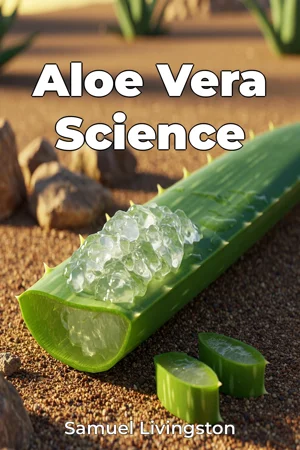
"Aloe Vera Science" explores the scientifically validated properties of Aloe vera, bridging traditional uses with evidence-based applications in health and skin care. This book examines the plant's complex chemistry and biological effects, focusing on wound healing and skin health. Readers will discover how Aloe vera's unique composition, including polysaccharides, contributes to its therapeutic effects, impacting tissue regeneration and offering anti-inflammatory benefits. The book begins by introducing Aloe vera's botanical origins and chemical makeup. It then details the mechanisms behind its wound-healing capabilities, supported by scientific studies. A key insight is the synergistic interaction between Aloe vera's components, which mediates its observed biological responses. The book also explores Aloe vera's impact on skin health, highlighting its antioxidant and moisturizing properties. Culminating in a consolidation of evidence, the book addresses potential risks and future research directions. This approach of systematically unfolding the science of Aloe vera, combined with a balanced perspective on its benefits and limitations, makes this book a valuable resource for healthcare professionals, researchers, and anyone interested in natural remedies and regenerative medicine.
Book Details
ISBN
9788233972912
Publisher
Publifye AS
Your Licenses
You don't own any licenses for this book
Purchase a license below to unlock this book and download the EPUB.
Purchase License
Select a tier to unlock this book
Need bulk licensing?
Contact us for enterprise agreements.