
About This Book
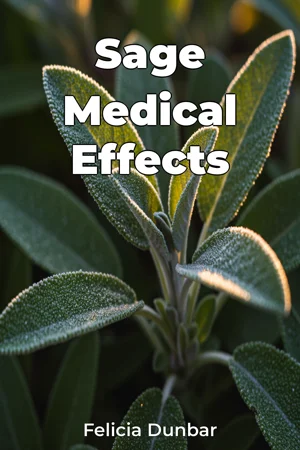
Can a humble herb offer more than just culinary appeal? “Sage Medical Effects” delves into the surprisingly robust cognitive and antimicrobial properties of sage (Salvia officinalis), meticulously examining its potential as a therapeutic agent. This book bridges the gap between traditional European herbal medicine and modern scientific validation through rigorous research and clinical trials. The primary focus rests on two pivotal areas: sage's cognitive-enhancing capabilities and its potent antimicrobial effects. Understanding these properties is significant because it offers potential natural alternatives or adjuncts to conventional treatments for cognitive decline and infections, which are increasingly relevant in aging populations and the face of antibiotic resistance. Crucial context lies in the long-standing use of sage in European folk medicine, where it has been employed for centuries to treat various ailments, from memory problems to skin infections. This historical context provides a foundation upon which modern scientific inquiry can build and either validate or refine traditional uses. The central argument of "Sage Medical Effects" is that specific compounds within sage possess demonstrable therapeutic benefits that warrant further investigation and potential integration into contemporary medical practices. This argument is vital because it encourages a more holistic approach to healthcare, exploring the potential of natural remedies alongside conventional pharmaceuticals. The book's structure begins with an introduction to the botanical aspects of sage, detailing its various species, cultivation, and chemical composition. It then progressively explores its effects on cognitive function, dedicating chapters to the mechanisms by which sage may improve memory, concentration, and overall cognitive performance, referencing clinical trials evaluating sage extracts on individuals with mild cognitive impairment and Alzheimer’s disease. Another section extensively covers sage's antimicrobial properties, analyzing its effectiveness against various bacteria, fungi, and viruses. This section includes details on in vitro studies and clinical trials examining sage's efficacy in treating oral infections, skin conditions, and respiratory ailments. The culmination of the argument ties these findings together, proposing potential therapeutic applications and future research directions. Finally, practical implications are discussed, offering guidance on safe usage, dosage considerations, and potential interactions with other medications. The book's evidence base comprises a thorough review of existing scientific literature, including clinical trials, in vitro studies, and pharmacological analyses. It also draws upon traditional herbal medicine texts and databases to provide a comprehensive overview of sage's historical uses. Unique data sources include meta-analyses and systematic reviews of clinical trials, providing a robust statistical assessment of sage's efficacy. "Sage Medical Effects" intersects with several disciplines, including pharmacology, neuroscience, and microbiology. Its exploration of cognitive enhancement connects with the field of neuroscience, informing our understanding of how natural compounds can modulate brain function. Its antimicrobial focus links it to microbiology, contributing to the search for novel antimicrobial agents. Its grounding in traditional herbal medicine forges a vital link to ethnobotany, emphasizing the importance of preserving and studying traditional knowledge. A unique approach of this book is its emphasis on translating traditional knowledge into evidence-based medical applications. Unlike purely scientific treatises, it balances scientific rigor with an appreciation for the historical use of sage, offering a holistic perspective. The tone is professional and informative, aiming to present complex scientific information in an accessible manner for a broad audience. The intended readership includes healthcare professionals, researchers, herbalists, and anyone interested in natural remedies and cognitive enhancement. The book would be valuable to them because it provides a comprehensive and evidence-based overview of sage's potential therapeutic benefits, enabling informed decisions about its use. As a work within the medical general, biology, and science life sciences genres, "Sage Medical Effects" adheres to the conventions of presenting factual information supported by scientific evidence. This includes proper citation of sources, clear articulation of methodologies, and transparent discussion of limitations. The scope is limited to the medicinal effects of Salvia officinalis, with a primary emphasis on cognitive and antimicrobial properties. It does not delve extensively into other potential uses or explore the broader context of herbal medicine in detail. The information within the book can be applied practically by readers in several ways. Healthcare professionals can use it to inform their recommendations for patients seeking natural remedies. Researchers can use it to identify promising areas for future investigation. Individuals can use it to make informed decisions about incorporating sage into their healthcare regimen, always in consultation with a qualified healthcare provider. The book addresses the ongoing debates surrounding the efficacy and safety of herbal remedies, acknowledging the need for rigorous scientific validation and cautious application. By presenting a balanced assessment of the available evidence, it contributes to a more informed discussion about the role of sage in contemporary healthcare.
Can a humble herb offer more than just culinary appeal? “Sage Medical Effects” delves into the surprisingly robust cognitive and antimicrobial properties of sage (Salvia officinalis), meticulously examining its potential as a therapeutic agent. This book bridges the gap between traditional European herbal medicine and modern scientific validation through rigorous research and clinical trials. The primary focus rests on two pivotal areas: sage's cognitive-enhancing capabilities and its potent antimicrobial effects. Understanding these properties is significant because it offers potential natural alternatives or adjuncts to conventional treatments for cognitive decline and infections, which are increasingly relevant in aging populations and the face of antibiotic resistance. Crucial context lies in the long-standing use of sage in European folk medicine, where it has been employed for centuries to treat various ailments, from memory problems to skin infections. This historical context provides a foundation upon which modern scientific inquiry can build and either validate or refine traditional uses. The central argument of "Sage Medical Effects" is that specific compounds within sage possess demonstrable therapeutic benefits that warrant further investigation and potential integration into contemporary medical practices. This argument is vital because it encourages a more holistic approach to healthcare, exploring the potential of natural remedies alongside conventional pharmaceuticals. The book's structure begins with an introduction to the botanical aspects of sage, detailing its various species, cultivation, and chemical composition. It then progressively explores its effects on cognitive function, dedicating chapters to the mechanisms by which sage may improve memory, concentration, and overall cognitive performance, referencing clinical trials evaluating sage extracts on individuals with mild cognitive impairment and Alzheimer’s disease. Another section extensively covers sage's antimicrobial properties, analyzing its effectiveness against various bacteria, fungi, and viruses. This section includes details on in vitro studies and clinical trials examining sage's efficacy in treating oral infections, skin conditions, and respiratory ailments. The culmination of the argument ties these findings together, proposing potential therapeutic applications and future research directions. Finally, practical implications are discussed, offering guidance on safe usage, dosage considerations, and potential interactions with other medications. The book's evidence base comprises a thorough review of existing scientific literature, including clinical trials, in vitro studies, and pharmacological analyses. It also draws upon traditional herbal medicine texts and databases to provide a comprehensive overview of sage's historical uses. Unique data sources include meta-analyses and systematic reviews of clinical trials, providing a robust statistical assessment of sage's efficacy. "Sage Medical Effects" intersects with several disciplines, including pharmacology, neuroscience, and microbiology. Its exploration of cognitive enhancement connects with the field of neuroscience, informing our understanding of how natural compounds can modulate brain function. Its antimicrobial focus links it to microbiology, contributing to the search for novel antimicrobial agents. Its grounding in traditional herbal medicine forges a vital link to ethnobotany, emphasizing the importance of preserving and studying traditional knowledge. A unique approach of this book is its emphasis on translating traditional knowledge into evidence-based medical applications. Unlike purely scientific treatises, it balances scientific rigor with an appreciation for the historical use of sage, offering a holistic perspective. The tone is professional and informative, aiming to present complex scientific information in an accessible manner for a broad audience. The intended readership includes healthcare professionals, researchers, herbalists, and anyone interested in natural remedies and cognitive enhancement. The book would be valuable to them because it provides a comprehensive and evidence-based overview of sage's potential therapeutic benefits, enabling informed decisions about its use. As a work within the medical general, biology, and science life sciences genres, "Sage Medical Effects" adheres to the conventions of presenting factual information supported by scientific evidence. This includes proper citation of sources, clear articulation of methodologies, and transparent discussion of limitations. The scope is limited to the medicinal effects of Salvia officinalis, with a primary emphasis on cognitive and antimicrobial properties. It does not delve extensively into other potential uses or explore the broader context of herbal medicine in detail. The information within the book can be applied practically by readers in several ways. Healthcare professionals can use it to inform their recommendations for patients seeking natural remedies. Researchers can use it to identify promising areas for future investigation. Individuals can use it to make informed decisions about incorporating sage into their healthcare regimen, always in consultation with a qualified healthcare provider. The book addresses the ongoing debates surrounding the efficacy and safety of herbal remedies, acknowledging the need for rigorous scientific validation and cautious application. By presenting a balanced assessment of the available evidence, it contributes to a more informed discussion about the role of sage in contemporary healthcare.
"Sage Medical Effects" explores the therapeutic potential of sage (Salvia officinalis), focusing on its cognitive-enhancing and antimicrobial properties. This book bridges traditional herbal medicine with modern science, examining how sage, long used in European folk medicine, might offer natural solutions for cognitive decline and infections. Intriguingly, research suggests sage compounds could improve memory and concentration, offering hope for those with cognitive impairments. The book also investigates sage's effectiveness against various bacteria and fungi, relevant in the face of increasing antibiotic resistance. The book starts with sage's botanical aspects and chemical composition, then progresses to its effects on cognitive function, referencing clinical trials on Alzheimer's disease. It extensively covers its antimicrobial properties, detailing studies on infections. By presenting a balanced assessment of scientific evidence and historical use, "Sage Medical Effects" provides a valuable resource for healthcare professionals, researchers, and anyone interested in natural remedies and the potential of this herb in modern healthcare.
Book Details
ISBN
9788233972905
Publisher
Publifye AS
Your Licenses
You don't own any licenses for this book
Purchase a license below to unlock this book and download the EPUB.
Purchase License
Select a tier to unlock this book
Need bulk licensing?
Contact us for enterprise agreements.