
About This Book
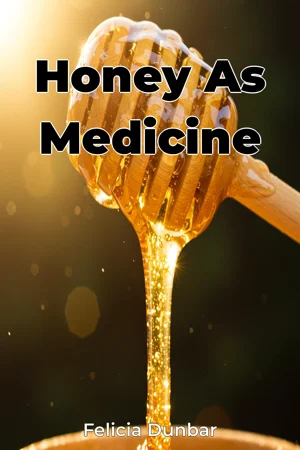
Could the sweet treat we’ve enjoyed for millennia hold the key to combating modern medical challenges? "Honey As Medicine" delves into the scientifically validated antimicrobial properties and diverse therapeutic applications of honey, revealing its potential as a significant tool in contemporary healthcare. This book explores honey's journey from ancient remedy to evidence-based medicine, offering a comprehensive analysis supported by clinical studies from respected medical institutions worldwide. The core themes explored are honey's antimicrobial capabilities, its effectiveness in wound care and healing, and its potential role in addressing antibiotic resistance. These topics are paramount in an era facing increasing bacterial resistance to conventional antibiotics and a growing need for alternative therapeutic strategies. Understanding honey’s multifaceted medicinal properties provides a pathway towards more holistic and sustainable healthcare practices. To fully appreciate honey's medicinal value, we will explore its historical use in traditional medicine across various cultures, dating back to ancient civilizations. We will also examine the complex biochemical composition of different honey varieties, highlighting the key compounds responsible for their therapeutic effects. No prior advanced scientific knowledge is required; the book is written to be accessible to anyone with an interest in health and natural remedies. "Honey As Medicine" puts forth the argument that honey is not merely a folk remedy, but a legitimate therapeutic agent with scientifically proven benefits. This argument challenges the prevailing reliance on synthetic pharmaceuticals and advocates for a more integrated approach to medicine, where natural products like honey are given due consideration. This is particularly relevant in the context of rising healthcare costs and the search for more affordable and accessible treatment options. The book is structured to provide a thorough and informative exploration of honey's medicinal properties. First, we introduce the historical context and the fundamental concepts of honey's composition and antimicrobial activity. We then develop these ideas through three major sections: (1) the science of honey's antimicrobial action against various pathogens; (2) clinical evidence supporting honey's effectiveness in wound healing, burn treatment, and cough suppression; and (3) an examination of honey's potential in combating antibiotic-resistant infections. The argument culminates in a discussion of the practical applications of honey in clinical settings, emphasizing its potential to complement or even replace conventional treatments in certain situations. The evidence presented in this book draws from a wide range of scientific studies, clinical trials, and meta-analyses published in peer-reviewed medical journals. We analyze data from global medical institutions, systematically evaluating the efficacy and safety of honey in diverse patient populations. Studies involving in vitro experiments, animal models, and human clinical trials will be presented. "Honey As Medicine" intersects with several disciplines, including microbiology, pharmacology, and nutrition. Its insights into honey's antibacterial mechanisms provide valuable information for microbiologists studying microbial resistance. Its examination of honey's therapeutic effects connects with pharmacological research on natural product drug discovery. Furthermore, its exploration of honey's nutritional composition ties into the field of nutrition and its impact on overall health. This book distinguishes itself by providing a balanced perspective that acknowledges both the potential benefits and limitations of honey as a therapeutic agent. By critically evaluating the existing scientific literature and highlighting areas where further research is needed, it offers a nuanced and objective assessment of honey's medicinal value. The book adopts a factual, evidence-based tone, prioritizing clarity and accuracy in the presentation of information. The writing style is professional yet accessible, aiming to convey complex scientific concepts in a manner that is easily understood by a wide audience. The target audience includes healthcare professionals (doctors, nurses, pharmacists), researchers in the fields of microbiology and pharmacology, and individuals interested in natural remedies and alternative medicine. This book would be valuable to readers seeking evidence-based information on the therapeutic potential of honey and its role in promoting health and well-being. As a work in the 'Health Fitness, Health & Fitness, Medical General' genres, the book aims to provide reliable, scientifically grounded information that empowers readers to make informed decisions about their health. It adheres to the conventions of evidence-based non-fiction, emphasizing factual accuracy, objectivity, and transparency. The scope of "Honey As Medicine" centers on the antimicrobial and wound-healing properties of honey. While the book touches on other potential health benefits, its primary focus remains on these two key areas. The information presented can be applied in daily life. Practical guidance is offered on selecting high-quality honey, using honey for minor wound care, and incorporating honey into a balanced diet. The text addresses the debates surrounding the standardization of honey products for medicinal use and the need for further research to fully elucidate honey's mechanisms of action.
Could the sweet treat we’ve enjoyed for millennia hold the key to combating modern medical challenges? "Honey As Medicine" delves into the scientifically validated antimicrobial properties and diverse therapeutic applications of honey, revealing its potential as a significant tool in contemporary healthcare. This book explores honey's journey from ancient remedy to evidence-based medicine, offering a comprehensive analysis supported by clinical studies from respected medical institutions worldwide. The core themes explored are honey's antimicrobial capabilities, its effectiveness in wound care and healing, and its potential role in addressing antibiotic resistance. These topics are paramount in an era facing increasing bacterial resistance to conventional antibiotics and a growing need for alternative therapeutic strategies. Understanding honey’s multifaceted medicinal properties provides a pathway towards more holistic and sustainable healthcare practices. To fully appreciate honey's medicinal value, we will explore its historical use in traditional medicine across various cultures, dating back to ancient civilizations. We will also examine the complex biochemical composition of different honey varieties, highlighting the key compounds responsible for their therapeutic effects. No prior advanced scientific knowledge is required; the book is written to be accessible to anyone with an interest in health and natural remedies. "Honey As Medicine" puts forth the argument that honey is not merely a folk remedy, but a legitimate therapeutic agent with scientifically proven benefits. This argument challenges the prevailing reliance on synthetic pharmaceuticals and advocates for a more integrated approach to medicine, where natural products like honey are given due consideration. This is particularly relevant in the context of rising healthcare costs and the search for more affordable and accessible treatment options. The book is structured to provide a thorough and informative exploration of honey's medicinal properties. First, we introduce the historical context and the fundamental concepts of honey's composition and antimicrobial activity. We then develop these ideas through three major sections: (1) the science of honey's antimicrobial action against various pathogens; (2) clinical evidence supporting honey's effectiveness in wound healing, burn treatment, and cough suppression; and (3) an examination of honey's potential in combating antibiotic-resistant infections. The argument culminates in a discussion of the practical applications of honey in clinical settings, emphasizing its potential to complement or even replace conventional treatments in certain situations. The evidence presented in this book draws from a wide range of scientific studies, clinical trials, and meta-analyses published in peer-reviewed medical journals. We analyze data from global medical institutions, systematically evaluating the efficacy and safety of honey in diverse patient populations. Studies involving in vitro experiments, animal models, and human clinical trials will be presented. "Honey As Medicine" intersects with several disciplines, including microbiology, pharmacology, and nutrition. Its insights into honey's antibacterial mechanisms provide valuable information for microbiologists studying microbial resistance. Its examination of honey's therapeutic effects connects with pharmacological research on natural product drug discovery. Furthermore, its exploration of honey's nutritional composition ties into the field of nutrition and its impact on overall health. This book distinguishes itself by providing a balanced perspective that acknowledges both the potential benefits and limitations of honey as a therapeutic agent. By critically evaluating the existing scientific literature and highlighting areas where further research is needed, it offers a nuanced and objective assessment of honey's medicinal value. The book adopts a factual, evidence-based tone, prioritizing clarity and accuracy in the presentation of information. The writing style is professional yet accessible, aiming to convey complex scientific concepts in a manner that is easily understood by a wide audience. The target audience includes healthcare professionals (doctors, nurses, pharmacists), researchers in the fields of microbiology and pharmacology, and individuals interested in natural remedies and alternative medicine. This book would be valuable to readers seeking evidence-based information on the therapeutic potential of honey and its role in promoting health and well-being. As a work in the 'Health Fitness, Health & Fitness, Medical General' genres, the book aims to provide reliable, scientifically grounded information that empowers readers to make informed decisions about their health. It adheres to the conventions of evidence-based non-fiction, emphasizing factual accuracy, objectivity, and transparency. The scope of "Honey As Medicine" centers on the antimicrobial and wound-healing properties of honey. While the book touches on other potential health benefits, its primary focus remains on these two key areas. The information presented can be applied in daily life. Practical guidance is offered on selecting high-quality honey, using honey for minor wound care, and incorporating honey into a balanced diet. The text addresses the debates surrounding the standardization of honey products for medicinal use and the need for further research to fully elucidate honey's mechanisms of action.
"Honey As Medicine" explores the scientifically validated therapeutic applications of honey, positioning it as more than just a natural sweetener. This book aims to bridge the gap between traditional remedies and evidence-based medicine, highlighting honey's potential in contemporary healthcare. Readers will discover how honey's antimicrobial properties, rivaling some conventional treatments, make it a promising agent in combating antibiotic resistance. The book emphasizes honey's effectiveness in wound healing, citing clinical studies that support its use in treating burns and promoting tissue regeneration, showcasing honey's multifaceted role in health fitness. The book progresses systematically, beginning with the historical uses of honey and its biochemical composition. It then delves into the science behind honey's action against pathogens, followed by clinical evidence supporting its use in wound care and antibiotic-resistant infections. By examining honey's antibacterial mechanisms, the book provides valuable insights for those interested in microbiology and natural product drug discovery. It distinguishes itself by offering a balanced perspective, acknowledging both the benefits and limitations of honey as a therapeutic agent, making it a unique and valuable resource for healthcare professionals and anyone keen on exploring natural remedies.
Book Details
ISBN
9788233972868
Publisher
Publifye AS
Your Licenses
You don't own any licenses for this book
Purchase a license below to unlock this book and download the EPUB.
Purchase License
Select a tier to unlock this book
Need bulk licensing?
Contact us for enterprise agreements.