
About This Book
In the sweltering heat of summer, is there anything more satisfying than a bowl of cool, refreshing soup? This book, "Cool Summer Soups," explores the world of chilled soups, going beyond simple recipes to delve into the science of flavor retention, the history of warm-weather culinary practices, and the global traditions that have shaped this delightful cuisine. Our focus is not merely on providing instructions, but on fostering a true understanding of how to create consistently delicious and revitalizing chilled soups. Two key topics form the core of this exploration: the preservation of flavor in cold preparations and the diverse cultural adaptations of soup-making in hot climates. Understanding how chilling affects flavor compounds is crucial for crafting soups that are vibrant and nuanced, rather than bland imitations of their hot counterparts. Simultaneously, examining the diverse global approaches reveals a wealth of techniques and ingredients optimized for summer consumption that expands the possibilities for individual culinary creativity. These topics matter because they bridge the gap between simply following a recipe and truly mastering the art of chilled soup creation. Historically, chilled soups have emerged as a response to both climate and available resources. From the sun-drenched fields of Andalusia, Spain, to the tropical gardens of Southeast Asia, cultures have developed unique methods for transforming seasonal produce into refreshing meals. Knowledge of basic cooking techniques, such as blanching and puréeing, will be beneficial, but the book is designed to be accessible to cooks of all skill levels. The central argument of "Cool Summer Soups" is that the creation of exceptional chilled soups requires a thoughtful balance of culinary technique, scientific understanding, and cultural awareness. By embracing this holistic approach, cooks can unlock the full potential of seasonal ingredients and create soups that are not only refreshing, but also deeply flavorful and culturally significant. This argument is important because it challenges the common perception of chilled soups as mere afterthoughts or simplified versions of hot soups, and presents them as culinary creations worthy of respect and exploration. The book is structured to provide a comprehensive learning experience. It begins with an introduction to the fundamental principles of flavor retention and the techniques used to prevent dullness in chilled dishes. The book then progresses through focused chapters. One chapter examines the iconic gazpacho, dissecting its regional variations and exploring the science behind its refreshing qualities. Another chapter examines global traditions in chilled soups, touching on Vietnamese pho, Scandinavian fruit soups, and other global examples, providing a comprehensive view of techniques and ingredients. Finally, the book culminates with practical guidance on recipe development, ingredient selection, and presentation, encouraging readers to experiment and create their own signature chilled soups. The evidence and research presented in "Cool Summer Soups" draw upon a combination of culinary history, food science, and ethnographic studies. We present data on the volatile compounds in various vegetables and fruits, explaining how chilling affects their perception. Expert interviews with chefs specializing in summer cuisine are also included. The book connects to other fields such as nutrition, anthropology, and botany. Nutritional science is touched on as the book will discuss the inherent vitamin and mineral retention achieved in chilled soups as opposed to cooked soups. Anthropological insights add depth to the exploration of global soup traditions, while botanical knowledge informs the selection and preparation of seasonal ingredients. "Cool Summer Soups" offers a unique perspective by integrating scientific understanding with culinary practice. The book’s tone is informative and engaging, blending detailed explanations with approachable language. It is aimed at home cooks, culinary students, and food enthusiasts who are eager to expand their knowledge of summer cuisine. The book's value to readers lies in its ability to empower them with the knowledge and skills to create truly exceptional chilled soups that showcase the flavors of the season. As a cookbook with food writing elements, the book uses recipes to demonstrate specific techniques and insights and to inspire readers to explore their own culinary creativity. The book intentionally limits its scope to soups designed for warm-weather consumption, excluding broths or stocks intended as a base for hot dishes. The practical applications of the information are numerous. Readers can use the techniques and principles discussed to enhance their existing repertoire of soup recipes, create new and innovative dishes, or simply elevate their everyday cooking. While there may be disagreement on the “best” method for preparing gazpacho, this book refrains from taking a position on such debates, instead presenting various perspectives and encouraging readers to formulate their own preferences. The work focuses on foundational knowledge.
In the sweltering heat of summer, is there anything more satisfying than a bowl of cool, refreshing soup? This book, "Cool Summer Soups," explores the world of chilled soups, going beyond simple recipes to delve into the science of flavor retention, the history of warm-weather culinary practices, and the global traditions that have shaped this delightful cuisine. Our focus is not merely on providing instructions, but on fostering a true understanding of how to create consistently delicious and revitalizing chilled soups. Two key topics form the core of this exploration: the preservation of flavor in cold preparations and the diverse cultural adaptations of soup-making in hot climates. Understanding how chilling affects flavor compounds is crucial for crafting soups that are vibrant and nuanced, rather than bland imitations of their hot counterparts. Simultaneously, examining the diverse global approaches reveals a wealth of techniques and ingredients optimized for summer consumption that expands the possibilities for individual culinary creativity. These topics matter because they bridge the gap between simply following a recipe and truly mastering the art of chilled soup creation. Historically, chilled soups have emerged as a response to both climate and available resources. From the sun-drenched fields of Andalusia, Spain, to the tropical gardens of Southeast Asia, cultures have developed unique methods for transforming seasonal produce into refreshing meals. Knowledge of basic cooking techniques, such as blanching and puréeing, will be beneficial, but the book is designed to be accessible to cooks of all skill levels. The central argument of "Cool Summer Soups" is that the creation of exceptional chilled soups requires a thoughtful balance of culinary technique, scientific understanding, and cultural awareness. By embracing this holistic approach, cooks can unlock the full potential of seasonal ingredients and create soups that are not only refreshing, but also deeply flavorful and culturally significant. This argument is important because it challenges the common perception of chilled soups as mere afterthoughts or simplified versions of hot soups, and presents them as culinary creations worthy of respect and exploration. The book is structured to provide a comprehensive learning experience. It begins with an introduction to the fundamental principles of flavor retention and the techniques used to prevent dullness in chilled dishes. The book then progresses through focused chapters. One chapter examines the iconic gazpacho, dissecting its regional variations and exploring the science behind its refreshing qualities. Another chapter examines global traditions in chilled soups, touching on Vietnamese pho, Scandinavian fruit soups, and other global examples, providing a comprehensive view of techniques and ingredients. Finally, the book culminates with practical guidance on recipe development, ingredient selection, and presentation, encouraging readers to experiment and create their own signature chilled soups. The evidence and research presented in "Cool Summer Soups" draw upon a combination of culinary history, food science, and ethnographic studies. We present data on the volatile compounds in various vegetables and fruits, explaining how chilling affects their perception. Expert interviews with chefs specializing in summer cuisine are also included. The book connects to other fields such as nutrition, anthropology, and botany. Nutritional science is touched on as the book will discuss the inherent vitamin and mineral retention achieved in chilled soups as opposed to cooked soups. Anthropological insights add depth to the exploration of global soup traditions, while botanical knowledge informs the selection and preparation of seasonal ingredients. "Cool Summer Soups" offers a unique perspective by integrating scientific understanding with culinary practice. The book’s tone is informative and engaging, blending detailed explanations with approachable language. It is aimed at home cooks, culinary students, and food enthusiasts who are eager to expand their knowledge of summer cuisine. The book's value to readers lies in its ability to empower them with the knowledge and skills to create truly exceptional chilled soups that showcase the flavors of the season. As a cookbook with food writing elements, the book uses recipes to demonstrate specific techniques and insights and to inspire readers to explore their own culinary creativity. The book intentionally limits its scope to soups designed for warm-weather consumption, excluding broths or stocks intended as a base for hot dishes. The practical applications of the information are numerous. Readers can use the techniques and principles discussed to enhance their existing repertoire of soup recipes, create new and innovative dishes, or simply elevate their everyday cooking. While there may be disagreement on the “best” method for preparing gazpacho, this book refrains from taking a position on such debates, instead presenting various perspectives and encouraging readers to formulate their own preferences. The work focuses on foundational knowledge.
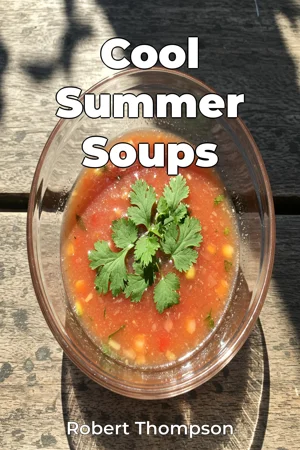
"Cool Summer Soups" explores the refreshing world of chilled soups, offering more than just recipes. It delves into the science behind flavor retention in cold preparations and examines the diverse global traditions that have shaped summer cuisine. The book uniquely emphasizes understanding how chilling affects flavor compounds, ensuring vibrant and nuanced soups, not bland imitations. Discover how cultures worldwide, from Spain to Southeast Asia, have adapted soup-making to hot climates, transforming seasonal produce into revitalizing meals, and learn to create refreshing dishes. The book progresses logically, starting with fundamental principles of flavor retention before examining iconic recipes like gazpacho and exploring chilled soup traditions from around the globe. It culminates with practical guidance on recipe development and ingredient selection, encouraging culinary creativity. By blending culinary technique, scientific understanding, and cultural awareness, "Cool Summer Soups" empowers readers to unlock the full potential of seasonal ingredients and create soups that are both flavorful and culturally significant.
Book Details
ISBN
9788233972837
Publisher
Publifye AS
Your Licenses
You don't own any licenses for this book
Purchase a license below to unlock this book and download the EPUB.
Purchase License
Select a tier to unlock this book
Need bulk licensing?
Contact us for enterprise agreements.