
About This Book
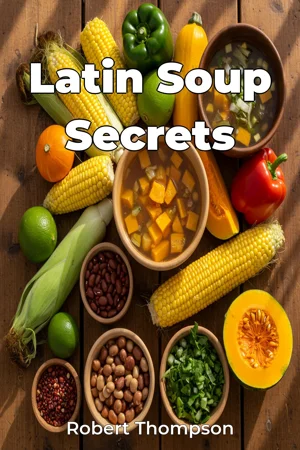
Have you ever truly tasted Latin America? Beyond the tacos and empanadas lies a world of culinary depth, particularly in its diverse and comforting soups. "Latin Soup Secrets" is a journey into the heart of Latin American cuisine, exploring the fundamental ingredients, regional variations, and cultural significance of soups across the continent. This book delves into the staple produce and seasonings that define Latin American soups, offering a comprehensive understanding for both home cooks and culinary enthusiasts eager to expand their knowledge. The primary focus rests on three key pillars: understanding the vital role of regional produce, mastering essential seasonings and techniques, and appreciating the cultural and historical context of these soups. Understanding these elements is crucial because Latin American cuisine is often perceived as a monolith when, in reality, it's a vibrant tapestry woven from countless regional traditions and indigenous ingredients. Grasping these nuances elevates cooking from mere recipe following to a genuine appreciation of Latin American foodways. To fully appreciate the diversity presented, the book provides foundational information on the pre-Columbian culinary traditions that shaped modern Latin American gastronomy. It also examines the influence of European and African ingredients and techniques brought during the colonial era. No prior expertise is needed; the book is designed for anyone with a passion for food and a curiosity to explore new flavors. The central argument of "Latin Soup Secrets" is that Latin American soups are far more than simple comfort food; they are cultural narratives condensed into a bowl. Each ingredient, each cooking method, and each regional variation tells a story of history, adaptation, and community. By understanding these narratives, we can gain a deeper appreciation for the richness and complexity of Latin American culture. The book unfolds in a structured manner. It begins with an introduction to the basic building blocks of Latin American soups, exploring the core ingredients like corn, beans, potatoes, and various squashes. The subsequent section focuses on the diverse range of seasonings, from the ubiquitous sofrito to the more exotic ají peppers, and the techniques used to extract maximum flavor from them. The book then delves into regional variations, showcasing iconic soups from Mexico, Central America, the Andes, and the Southern Cone. It culminates in practical applications, offering detailed recipes and guidance on how to adapt traditional techniques to modern kitchens using readily available ingredients. The book's claims are supported by extensive research drawn from culinary history, ethnobotanical studies, and firsthand accounts from cooks and chefs across Latin America. Unique data sources include historical cookbooks, anthropological field notes, and oral histories collected from communities throughout the region. "Latin Soup Secrets" connects to other fields, notably anthropology, history, and nutrition. The analysis of foodways provides insights into cultural identity and social structures. Examining the historical evolution of recipes illuminates patterns of migration and cultural exchange. The nutritional profiles of different soups underscore the importance of traditional diets for health and well-being. A unique and insightful view offered in this book is the deconstruction of common misconceptions about Latin American cuisine. It moves beyond the simplistic notion of "spicy" food to reveal a nuanced understanding of flavor profiles and regional specialities. The book adopts a conversational and engaging style that balances culinary expertise with accessibility for a wide range of readers. The intended audience includes home cooks, food bloggers, culinary students, and anyone interested in exploring the diverse flavors and cultural richness of Latin American cuisine. It appeals to readers seeking authentic recipes, culinary insights, and a deeper understanding of Latin American culture. As a work of food writing, "Latin Soup Secrets" adheres to the genre's conventions by combining detailed recipes with compelling narratives and cultural context. While the book aims to be comprehensive, it acknowledges the vastness of Latin American cuisine and focuses primarily on the most representative and accessible soups from each region. The information can be applied by readers to experiment with new flavors, adapt traditional recipes to their own tastes and dietary needs, and ultimately, gain a greater appreciation for the cultural significance of Latin American food. While there are ongoing debates about the authenticity and appropriation of cultural cuisines, this book seeks to promote understanding and respect for Latin American foodways by acknowledging the historical and cultural context of each dish, demonstrating a commitment to responsible and informed culinary exploration.
Have you ever truly tasted Latin America? Beyond the tacos and empanadas lies a world of culinary depth, particularly in its diverse and comforting soups. "Latin Soup Secrets" is a journey into the heart of Latin American cuisine, exploring the fundamental ingredients, regional variations, and cultural significance of soups across the continent. This book delves into the staple produce and seasonings that define Latin American soups, offering a comprehensive understanding for both home cooks and culinary enthusiasts eager to expand their knowledge. The primary focus rests on three key pillars: understanding the vital role of regional produce, mastering essential seasonings and techniques, and appreciating the cultural and historical context of these soups. Understanding these elements is crucial because Latin American cuisine is often perceived as a monolith when, in reality, it's a vibrant tapestry woven from countless regional traditions and indigenous ingredients. Grasping these nuances elevates cooking from mere recipe following to a genuine appreciation of Latin American foodways. To fully appreciate the diversity presented, the book provides foundational information on the pre-Columbian culinary traditions that shaped modern Latin American gastronomy. It also examines the influence of European and African ingredients and techniques brought during the colonial era. No prior expertise is needed; the book is designed for anyone with a passion for food and a curiosity to explore new flavors. The central argument of "Latin Soup Secrets" is that Latin American soups are far more than simple comfort food; they are cultural narratives condensed into a bowl. Each ingredient, each cooking method, and each regional variation tells a story of history, adaptation, and community. By understanding these narratives, we can gain a deeper appreciation for the richness and complexity of Latin American culture. The book unfolds in a structured manner. It begins with an introduction to the basic building blocks of Latin American soups, exploring the core ingredients like corn, beans, potatoes, and various squashes. The subsequent section focuses on the diverse range of seasonings, from the ubiquitous sofrito to the more exotic ají peppers, and the techniques used to extract maximum flavor from them. The book then delves into regional variations, showcasing iconic soups from Mexico, Central America, the Andes, and the Southern Cone. It culminates in practical applications, offering detailed recipes and guidance on how to adapt traditional techniques to modern kitchens using readily available ingredients. The book's claims are supported by extensive research drawn from culinary history, ethnobotanical studies, and firsthand accounts from cooks and chefs across Latin America. Unique data sources include historical cookbooks, anthropological field notes, and oral histories collected from communities throughout the region. "Latin Soup Secrets" connects to other fields, notably anthropology, history, and nutrition. The analysis of foodways provides insights into cultural identity and social structures. Examining the historical evolution of recipes illuminates patterns of migration and cultural exchange. The nutritional profiles of different soups underscore the importance of traditional diets for health and well-being. A unique and insightful view offered in this book is the deconstruction of common misconceptions about Latin American cuisine. It moves beyond the simplistic notion of "spicy" food to reveal a nuanced understanding of flavor profiles and regional specialities. The book adopts a conversational and engaging style that balances culinary expertise with accessibility for a wide range of readers. The intended audience includes home cooks, food bloggers, culinary students, and anyone interested in exploring the diverse flavors and cultural richness of Latin American cuisine. It appeals to readers seeking authentic recipes, culinary insights, and a deeper understanding of Latin American culture. As a work of food writing, "Latin Soup Secrets" adheres to the genre's conventions by combining detailed recipes with compelling narratives and cultural context. While the book aims to be comprehensive, it acknowledges the vastness of Latin American cuisine and focuses primarily on the most representative and accessible soups from each region. The information can be applied by readers to experiment with new flavors, adapt traditional recipes to their own tastes and dietary needs, and ultimately, gain a greater appreciation for the cultural significance of Latin American food. While there are ongoing debates about the authenticity and appropriation of cultural cuisines, this book seeks to promote understanding and respect for Latin American foodways by acknowledging the historical and cultural context of each dish, demonstrating a commitment to responsible and informed culinary exploration.
"Latin Soup Secrets" invites readers on a flavorful expedition through Latin America, revealing the cultural narratives simmering within its diverse soups. Far from being a monolithic cuisine, Latin American food boasts a rich tapestry of regional traditions and indigenous ingredients. The book emphasizes the pivotal role of regional produce and seasonings, such as the foundational use of corn, beans and potatoes, and the mastery of techniques like sofrito to unlock maximum flavor. The book explores iconic soups from Mexico, Central America, the Andes, and the Southern Cone, showcasing how each dish tells a story of history, adaptation, and community. For instance, the influence of pre-Columbian traditions, as well as European and African ingredients, significantly shaped modern Latin American gastronomy. By understanding these influences, the book argues, we gain a deeper appreciation for the complexity of Latin American culture, moving beyond common misconceptions to reveal nuanced regional specialities. "Latin Soup Secrets" unfolds with an introduction to essential ingredients, progresses to diverse seasonings and techniques, and culminates in regional variations and practical recipes. This approach allows readers to adapt traditional techniques to modern kitchens, experiment with new flavors, and ultimately, appreciate the cultural significance of Latin American food.
Book Details
ISBN
9788233972790
Publisher
Publifye AS
Your Licenses
You don't own any licenses for this book
Purchase a license below to unlock this book and download the EPUB.
Purchase License
Select a tier to unlock this book
Need bulk licensing?
Contact us for enterprise agreements.