
About This Book
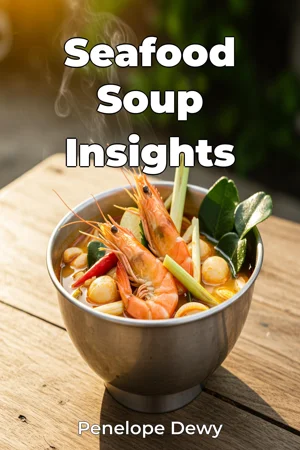
What unites a rustic bouillabaisse from Marseilles, a spicy tom yum goong from Thailand, and a creamy chowder from New England? *Seafood Soup Insights* delves into the fascinating world of fish and shellfish-based broths, exploring their cultural significance, culinary diversity, and nutritional value across continents. This book examines how coastal environments have shaped local ingredients and cooking techniques, influencing the creation of a vast array of seafood soups enjoyed globally. This exploration is vital as it demonstrates how culinary traditions preserve cultural identity and transmit knowledge about sustainable resource utilization. The core argument of *Seafood Soup Insights* is that seafood soups, far from being simple dishes, are complex reflections of regional ecosystems, historical trade routes, and evolving nutritional understanding. The book asserts that by studying these broths, we can gain valuable insights into the interplay between food, environment, and culture. This is an important perspective because it moves beyond mere recipes to examine the broader context of food production and consumption. The book begins by introducing the fundamental concepts of broth-making, including the use of various fish and shellfish, the importance of mirepoix and other aromatic vegetables, and the role of different cooking methods. It emphasizes the scientific principles behind extracting flavor and nutrients from seafood. The book is then organized into three major sections: 1. **Regional Variations:** This section embarks on a global culinary journey, highlighting iconic seafood soups from different coastal regions. Each chapter focuses on a specific soup, examining its history, ingredients, preparation methods, and cultural context. Specific examples include consideration of the cioppino of San Fransisco, the moqueca of Brazil, and the ukha of Russia. 2. **Nutritional Composition:** This section shifts focus to the nutritional aspects of seafood soups. It provides an overview of the vitamins, minerals, and omega-3 fatty acids found in different types of fish and shellfish, explaining how these nutrients contribute to overall health. It presents data on the nutritional content of various soups, comparing and contrasting the health benefits of each. 3. **Sustainability and the Future of Seafood Soups:** The final section addresses the challenges of overfishing and environmental degradation. It explores sustainable seafood sourcing practices and discusses innovative approaches to preserving marine ecosystems. It examines the role of aquaculture and other alternative sources of seafood in ensuring the future availability of ingredients for these traditional dishes. The evidence presented in *Seafood Soup Insights* draws from a diverse range of sources, including historical cookbooks, scientific journals, ethnographic studies, and interviews with chefs and fishermen from around the world. It also includes original nutritional analyses of selected soup recipes, offering readers concrete data to support the book's claims. *Seafood Soup Insights* connects to several other fields, including anthropology (the study of food cultures), environmental science (the impact of fishing on marine ecosystems), and nutrition science (the health benefits of seafood). These interdisciplinary connections enhance the book's argument by providing a more holistic understanding of the complex factors that shape the world of seafood soups. This book adopts a conversational yet informative tone, making it accessible to a wide audience while maintaining a high level of scientific rigor. The intended readership includes food enthusiasts, culinary students, nutritionists, and anyone interested in exploring the intersection of food, culture, and the environment. As a book of food writing, *Seafood Soup Insights* incorporates elements of travel writing and narrative non-fiction, weaving personal anecdotes and historical accounts into the discussion of soup recipes and nutritional data. The book's scope is limited to fish and shellfish-based broths, excluding meat or vegetable-only soups. The book also focuses primarily on traditional soups, rather than modern interpretations or fusion dishes. The information in *Seafood Soup Insights* can be applied practically by readers in several ways. It can inspire them to experiment with new recipes, make more informed choices about seafood sourcing, and understand the health benefits of incorporating these soups into their diets. The book addresses ongoing debates about the sustainability of fishing practices and the environmental impact of aquaculture. It presents different perspectives on these issues, encouraging readers to think critically about the challenges facing the world's oceans and the future of seafood consumption.
What unites a rustic bouillabaisse from Marseilles, a spicy tom yum goong from Thailand, and a creamy chowder from New England? *Seafood Soup Insights* delves into the fascinating world of fish and shellfish-based broths, exploring their cultural significance, culinary diversity, and nutritional value across continents. This book examines how coastal environments have shaped local ingredients and cooking techniques, influencing the creation of a vast array of seafood soups enjoyed globally. This exploration is vital as it demonstrates how culinary traditions preserve cultural identity and transmit knowledge about sustainable resource utilization. The core argument of *Seafood Soup Insights* is that seafood soups, far from being simple dishes, are complex reflections of regional ecosystems, historical trade routes, and evolving nutritional understanding. The book asserts that by studying these broths, we can gain valuable insights into the interplay between food, environment, and culture. This is an important perspective because it moves beyond mere recipes to examine the broader context of food production and consumption. The book begins by introducing the fundamental concepts of broth-making, including the use of various fish and shellfish, the importance of mirepoix and other aromatic vegetables, and the role of different cooking methods. It emphasizes the scientific principles behind extracting flavor and nutrients from seafood. The book is then organized into three major sections: 1. **Regional Variations:** This section embarks on a global culinary journey, highlighting iconic seafood soups from different coastal regions. Each chapter focuses on a specific soup, examining its history, ingredients, preparation methods, and cultural context. Specific examples include consideration of the cioppino of San Fransisco, the moqueca of Brazil, and the ukha of Russia. 2. **Nutritional Composition:** This section shifts focus to the nutritional aspects of seafood soups. It provides an overview of the vitamins, minerals, and omega-3 fatty acids found in different types of fish and shellfish, explaining how these nutrients contribute to overall health. It presents data on the nutritional content of various soups, comparing and contrasting the health benefits of each. 3. **Sustainability and the Future of Seafood Soups:** The final section addresses the challenges of overfishing and environmental degradation. It explores sustainable seafood sourcing practices and discusses innovative approaches to preserving marine ecosystems. It examines the role of aquaculture and other alternative sources of seafood in ensuring the future availability of ingredients for these traditional dishes. The evidence presented in *Seafood Soup Insights* draws from a diverse range of sources, including historical cookbooks, scientific journals, ethnographic studies, and interviews with chefs and fishermen from around the world. It also includes original nutritional analyses of selected soup recipes, offering readers concrete data to support the book's claims. *Seafood Soup Insights* connects to several other fields, including anthropology (the study of food cultures), environmental science (the impact of fishing on marine ecosystems), and nutrition science (the health benefits of seafood). These interdisciplinary connections enhance the book's argument by providing a more holistic understanding of the complex factors that shape the world of seafood soups. This book adopts a conversational yet informative tone, making it accessible to a wide audience while maintaining a high level of scientific rigor. The intended readership includes food enthusiasts, culinary students, nutritionists, and anyone interested in exploring the intersection of food, culture, and the environment. As a book of food writing, *Seafood Soup Insights* incorporates elements of travel writing and narrative non-fiction, weaving personal anecdotes and historical accounts into the discussion of soup recipes and nutritional data. The book's scope is limited to fish and shellfish-based broths, excluding meat or vegetable-only soups. The book also focuses primarily on traditional soups, rather than modern interpretations or fusion dishes. The information in *Seafood Soup Insights* can be applied practically by readers in several ways. It can inspire them to experiment with new recipes, make more informed choices about seafood sourcing, and understand the health benefits of incorporating these soups into their diets. The book addresses ongoing debates about the sustainability of fishing practices and the environmental impact of aquaculture. It presents different perspectives on these issues, encouraging readers to think critically about the challenges facing the world's oceans and the future of seafood consumption.
*Seafood Soup Insights* explores the global tapestry of fish and shellfish soups, revealing how these dishes reflect regional ecosystems and cultural identities. From the bouillabaisse of France to Thailand's tom yum goong, the book examines the cultural significance and culinary diversity found in coastal cuisines worldwide. These soups, often perceived as simple fare, are complex reflections of history, trade routes, and nutritional understanding. Did you know that many traditional seafood soups are packed with essential vitamins, minerals, and omega-3 fatty acids? Or that the ingredients and preparation methods are deeply rooted in sustainable practices passed down through generations? The book progresses from introducing fundamental broth-making techniques to exploring regional variations, nutritional composition, and sustainability concerns. It highlights how coastal environments shape local ingredients and cooking methods, influencing the creation of countless seafood soups. By studying these broths, readers gain valuable insights into the interplay between food, environment, and culture. The final section addresses overfishing and environmental degradation, advocating for sustainable seafood sourcing to preserve marine ecosystems.
Book Details
ISBN
9788233972776
Publisher
Publifye AS
Your Licenses
You don't own any licenses for this book
Purchase a license below to unlock this book and download the EPUB.
Purchase License
Select a tier to unlock this book
Need bulk licensing?
Contact us for enterprise agreements.