
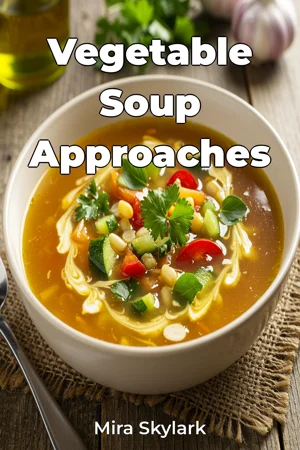
About This Book
Are you ready to unlock the full potential of plant-based eating and discover how to nourish your body with delicious, accessible meals? "Vegetable Soup Approaches" delves into the world of vegetarian cuisine, offering a comprehensive guide to creating flavorful and nutritious vegetable-focused meals while remaining cognizant of public dietary recommendations. This book addresses two significant, intertwined topics: the art of crafting diverse and satisfying vegetarian recipes, and the science of ensuring optimal nutrient intake on a plant-based diet. These topics are of paramount importance as more individuals explore vegetarianism for ethical, environmental, and health reasons, often lacking a structured approach. The book does not delve into the history of vegetarianism broadly but focuses instead on the modern context, where access to diverse ingredients and nutritional information is readily available. We acknowledge that readers might have basic cooking skills and a general understanding of nutrition, but no prior expertise is assumed. The central argument of "Vegetable Soup Approaches" is that a well-planned vegetarian diet, rich in a variety of vegetables, legumes, grains, and fruits, can provide all the necessary nutrients for optimal health. The book provides practical steps for achieving this, emphasizing the importance of informed food choices and skillful recipe development. We aim to empower readers to confidently navigate the world of vegetarian cooking and nutrition. The book is structured to provide a clear and progressive learning experience. The early chapters introduce fundamental concepts, like essential nutrients often associated with meat-inclusive diets (iron, B12, omega-3 fatty acids, etc.) and how to obtain them through plant sources. The heart of the book is dedicated to recipe creation, demonstrating how to combine ingredients to achieve both culinary satisfaction and nutritional balance. Recipes are categorized by both preparation method and primary nutrient profile. A later section focuses on adapting recipes to meet specific dietary needs or preferences (gluten-free, soy-free, etc.). The book culminates in a chapter on meal planning, offering sample menus and strategies for long-term success in maintaining a vegetarian lifestyle. The book supports its arguments with evidence-based information drawn from nutritional science and culinary arts. Publicly available dietary recommendations from organizations like the USDA and the World Health Organization are referenced in the context of vegetarian application. The recipes themselves are the result of extensive recipe testing, ensuring they are both delicious and nutritionally sound. We are not performing original clinical research, but synthesizing existing data. "Vegetable Soup Approaches" has interdisciplinary connections to health and wellness, environmental studies, and culinary arts. The health and wellness aspect is evident in the discussion of nutrition and its impact on overall well-being. The environmental connection comes from highlighting the sustainability of plant-based diets. Ties to culinary arts are expressed through creative and accessible recipes. What sets this book apart is its practical approach. The focus is not just on theory but on providing readers with actionable steps and delicious recipes they can easily incorporate into their daily lives. The tone is conversational, encouraging, and informative, designed to make vegetarian cooking accessible to everyone. The target audience includes individuals who are new to vegetarianism, those looking to expand their plant-based cooking skills, and anyone interested in improving their health through diet. This book offers a valuable resource for anyone seeking a practical and balanced approach to vegetarian eating. As a cookbook with a strong focus on health and fitness, "Vegetable Soup Approaches" balances culinary creativity with science-backed nutritional information, adhering to the expectations of both genres. The scope of the book is deliberately focused on practical application, and therefore, the book does not cover the ethics of animal consumption or the detailed biochemistry of nutrient metabolism. Instead, the book concentrates on providing the reader with the tools and knowledge needed to create a healthy and enjoyable vegetarian diet. The information in this book can be directly applied to improve dietary habits, plan meals, and create delicious vegetarian dishes that support health and well-being. While vegetarianism generally has widespread support from healthcare professionals and organizations, the book notes debates about the necessity of supplementation. The book recommends supplementation as a precaution for some nutrients. We suggest readers consult their healthcare provider for personalized advice.
Are you ready to unlock the full potential of plant-based eating and discover how to nourish your body with delicious, accessible meals? "Vegetable Soup Approaches" delves into the world of vegetarian cuisine, offering a comprehensive guide to creating flavorful and nutritious vegetable-focused meals while remaining cognizant of public dietary recommendations. This book addresses two significant, intertwined topics: the art of crafting diverse and satisfying vegetarian recipes, and the science of ensuring optimal nutrient intake on a plant-based diet. These topics are of paramount importance as more individuals explore vegetarianism for ethical, environmental, and health reasons, often lacking a structured approach. The book does not delve into the history of vegetarianism broadly but focuses instead on the modern context, where access to diverse ingredients and nutritional information is readily available. We acknowledge that readers might have basic cooking skills and a general understanding of nutrition, but no prior expertise is assumed. The central argument of "Vegetable Soup Approaches" is that a well-planned vegetarian diet, rich in a variety of vegetables, legumes, grains, and fruits, can provide all the necessary nutrients for optimal health. The book provides practical steps for achieving this, emphasizing the importance of informed food choices and skillful recipe development. We aim to empower readers to confidently navigate the world of vegetarian cooking and nutrition. The book is structured to provide a clear and progressive learning experience. The early chapters introduce fundamental concepts, like essential nutrients often associated with meat-inclusive diets (iron, B12, omega-3 fatty acids, etc.) and how to obtain them through plant sources. The heart of the book is dedicated to recipe creation, demonstrating how to combine ingredients to achieve both culinary satisfaction and nutritional balance. Recipes are categorized by both preparation method and primary nutrient profile. A later section focuses on adapting recipes to meet specific dietary needs or preferences (gluten-free, soy-free, etc.). The book culminates in a chapter on meal planning, offering sample menus and strategies for long-term success in maintaining a vegetarian lifestyle. The book supports its arguments with evidence-based information drawn from nutritional science and culinary arts. Publicly available dietary recommendations from organizations like the USDA and the World Health Organization are referenced in the context of vegetarian application. The recipes themselves are the result of extensive recipe testing, ensuring they are both delicious and nutritionally sound. We are not performing original clinical research, but synthesizing existing data. "Vegetable Soup Approaches" has interdisciplinary connections to health and wellness, environmental studies, and culinary arts. The health and wellness aspect is evident in the discussion of nutrition and its impact on overall well-being. The environmental connection comes from highlighting the sustainability of plant-based diets. Ties to culinary arts are expressed through creative and accessible recipes. What sets this book apart is its practical approach. The focus is not just on theory but on providing readers with actionable steps and delicious recipes they can easily incorporate into their daily lives. The tone is conversational, encouraging, and informative, designed to make vegetarian cooking accessible to everyone. The target audience includes individuals who are new to vegetarianism, those looking to expand their plant-based cooking skills, and anyone interested in improving their health through diet. This book offers a valuable resource for anyone seeking a practical and balanced approach to vegetarian eating. As a cookbook with a strong focus on health and fitness, "Vegetable Soup Approaches" balances culinary creativity with science-backed nutritional information, adhering to the expectations of both genres. The scope of the book is deliberately focused on practical application, and therefore, the book does not cover the ethics of animal consumption or the detailed biochemistry of nutrient metabolism. Instead, the book concentrates on providing the reader with the tools and knowledge needed to create a healthy and enjoyable vegetarian diet. The information in this book can be directly applied to improve dietary habits, plan meals, and create delicious vegetarian dishes that support health and well-being. While vegetarianism generally has widespread support from healthcare professionals and organizations, the book notes debates about the necessity of supplementation. The book recommends supplementation as a precaution for some nutrients. We suggest readers consult their healthcare provider for personalized advice.
"Vegetable Soup Approaches" offers a comprehensive guide to plant-based eating, focusing on creating flavorful vegetarian recipes while ensuring optimal nutrition. It tackles the modern context of vegetarianism, where diverse ingredients and nutritional information are readily available, empowering readers to confidently navigate the world of vegetarian cooking. The book emphasizes that a well-planned vegetarian diet, rich in vegetables, legumes, grains, and fruits, can provide all the necessary nutrients for optimal health. The book begins by introducing fundamental concepts, such as obtaining essential nutrients often associated with meat-inclusive diets like iron and B12 from plant sources. Demonstrating recipe creation, recipes are categorized by preparation method and primary nutrient profile. The later sections focus on adapting recipes to meet specific dietary needs and culminate in a chapter on meal planning, offering sample menus for long-term success in maintaining a vegetarian lifestyle. This practical approach, with its actionable steps and delicious recipes, sets this book apart, making vegetarian cooking accessible to everyone.
Book Details
ISBN
9788233972769
Publisher
Publifye AS
Your Licenses
You don't own any licenses for this book
Purchase a license below to unlock this book and download the EPUB.
Purchase License
Select a tier to unlock this book
Need bulk licensing?
Contact us for enterprise agreements.