
About This Book
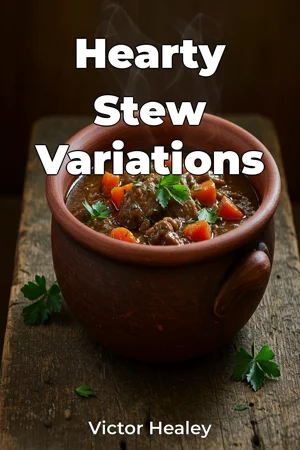
Have you ever considered the rich tapestry of culinary traditions woven around the humble stew? "Hearty Stew Variations" invites you on a global exploration of these comforting, slow-cooked dishes, revealing their diverse forms and cultural significance. This book delves into the fascinating world of thick, soup-like dishes, exploring the history, preparation, and regional variations that make each stew a unique reflection of its origin. The key topics addressed are the historical evolution of stews, the impact of regional ingredients on flavor profiles, and the slow-cooking techniques employed across different cultures. Understanding these elements is crucial for anyone seeking to truly appreciate the depth and complexity of stew-making, from the rustic simplicity of a peasant dish to the refined elegance of a gourmet creation. Historically, stews emerged as a practical solution for utilizing tougher cuts of meat and available vegetables, transforming them into nourishing and flavorful meals through extended simmering. Social and economic factors heavily influenced the development of regional variations, with local ingredients shaping the distinctive character of each stew. Slow-cooking is examined not merely as a culinary technique, but as a cultural tradition passed down through generations, reflecting a connection to the land and a respect for ingredients. "Hearty Stew Variations" argues that stews are not simply meals, but embodiments of cultural heritage, reflecting the history, environment, and ingenuity of the people who created them. This argument is significant because it elevates the consideration of stews from mere recipes to cultural artifacts worthy of study and appreciation, showcasing how culinary traditions can offer insight into society. The book begins by introducing the fundamental concepts of stew-making, defining key terms, and exploring the historical origins of stews around the world. We then proceed to examine stews from different regions, such as the hearty beef stews of Europe, the flavorful curries of Asia, and the rich tagines of North Africa. Each region is examined through the lens of its unique ingredients, cooking techniques, and cultural context. Particular attention will be paid to the crucial role of slow-cooking's impact. The culmination of the book focuses on the modern relevance of stews, exploring how they can be adapted to contemporary diets and lifestyles, including vegetarian and vegan options, while remaining respectful of traditional methods. We include practical applications through adapted recipes, showing the reader how to recreate and adapt these traditional dishes. The evidence presented throughout relies on extensive research into culinary history, anthropological studies of food culture, and detailed analysis of traditional recipes. Primary sources, such as historical cookbooks and travelogues, will be consulted, alongside contemporary culinary research. Unique methodological aspects include comparative flavor profiling and analysis of slow-cooking techniques. The study connects to fields such as anthropology through the analysis of cultural foodways; history, by tracing the evolution of recipes over time; and agricultural science, by analyzing the impact of local crops and livestock on stew compositions. These interdisciplinary connections enrich the book's argument by providing a broader understanding of the social, historical, and environmental factors that shape culinary traditions. A unique aspect of "Hearty Stew Variations" is its emphasis on the philosophical dimension of slow-cooking. It champions the idea of patience and mindfulness in cooking, contrasting it with the fast-paced nature of modern food preparation. The tone is informative and engaging, blending historical insights with practical culinary advice. It’s designed to be accessible to both home cooks and culinary enthusiasts. The target audience includes food lovers, home cooks, culinary students, and anyone interested in exploring the cultural dimensions of food. The book will be valuable to them as a comprehensive resource for understanding and appreciating hearty stews from around the world. As a work of food writing, the book adheres to the conventions of recipe analysis, cultural commentary, and historical accuracy and expands upon them by deeply exploring the anthropological significance of a single dish. The scope is broad, encompassing stews from diverse regions and cultures, but it is intentionally limited to thicker, soup-like dishes that are slow-cooked, excluding thinner soups and quick-cooking broths. Readers will learn how to adapt traditional stew recipes to their own kitchens, experiment with different flavor combinations, and incorporate stews into their weekly meal plans. While the core concept of stews is almost universally loved, debates exist around the precise definition of a "stew" versus a "soup," a discussion which this book touches upon by defining the boundaries of our subject. We acknowledge and explore the ongoing evolution of stew recipes and the challenges of adapting them to modern dietary needs and preferences.
Have you ever considered the rich tapestry of culinary traditions woven around the humble stew? "Hearty Stew Variations" invites you on a global exploration of these comforting, slow-cooked dishes, revealing their diverse forms and cultural significance. This book delves into the fascinating world of thick, soup-like dishes, exploring the history, preparation, and regional variations that make each stew a unique reflection of its origin. The key topics addressed are the historical evolution of stews, the impact of regional ingredients on flavor profiles, and the slow-cooking techniques employed across different cultures. Understanding these elements is crucial for anyone seeking to truly appreciate the depth and complexity of stew-making, from the rustic simplicity of a peasant dish to the refined elegance of a gourmet creation. Historically, stews emerged as a practical solution for utilizing tougher cuts of meat and available vegetables, transforming them into nourishing and flavorful meals through extended simmering. Social and economic factors heavily influenced the development of regional variations, with local ingredients shaping the distinctive character of each stew. Slow-cooking is examined not merely as a culinary technique, but as a cultural tradition passed down through generations, reflecting a connection to the land and a respect for ingredients. "Hearty Stew Variations" argues that stews are not simply meals, but embodiments of cultural heritage, reflecting the history, environment, and ingenuity of the people who created them. This argument is significant because it elevates the consideration of stews from mere recipes to cultural artifacts worthy of study and appreciation, showcasing how culinary traditions can offer insight into society. The book begins by introducing the fundamental concepts of stew-making, defining key terms, and exploring the historical origins of stews around the world. We then proceed to examine stews from different regions, such as the hearty beef stews of Europe, the flavorful curries of Asia, and the rich tagines of North Africa. Each region is examined through the lens of its unique ingredients, cooking techniques, and cultural context. Particular attention will be paid to the crucial role of slow-cooking's impact. The culmination of the book focuses on the modern relevance of stews, exploring how they can be adapted to contemporary diets and lifestyles, including vegetarian and vegan options, while remaining respectful of traditional methods. We include practical applications through adapted recipes, showing the reader how to recreate and adapt these traditional dishes. The evidence presented throughout relies on extensive research into culinary history, anthropological studies of food culture, and detailed analysis of traditional recipes. Primary sources, such as historical cookbooks and travelogues, will be consulted, alongside contemporary culinary research. Unique methodological aspects include comparative flavor profiling and analysis of slow-cooking techniques. The study connects to fields such as anthropology through the analysis of cultural foodways; history, by tracing the evolution of recipes over time; and agricultural science, by analyzing the impact of local crops and livestock on stew compositions. These interdisciplinary connections enrich the book's argument by providing a broader understanding of the social, historical, and environmental factors that shape culinary traditions. A unique aspect of "Hearty Stew Variations" is its emphasis on the philosophical dimension of slow-cooking. It champions the idea of patience and mindfulness in cooking, contrasting it with the fast-paced nature of modern food preparation. The tone is informative and engaging, blending historical insights with practical culinary advice. It’s designed to be accessible to both home cooks and culinary enthusiasts. The target audience includes food lovers, home cooks, culinary students, and anyone interested in exploring the cultural dimensions of food. The book will be valuable to them as a comprehensive resource for understanding and appreciating hearty stews from around the world. As a work of food writing, the book adheres to the conventions of recipe analysis, cultural commentary, and historical accuracy and expands upon them by deeply exploring the anthropological significance of a single dish. The scope is broad, encompassing stews from diverse regions and cultures, but it is intentionally limited to thicker, soup-like dishes that are slow-cooked, excluding thinner soups and quick-cooking broths. Readers will learn how to adapt traditional stew recipes to their own kitchens, experiment with different flavor combinations, and incorporate stews into their weekly meal plans. While the core concept of stews is almost universally loved, debates exist around the precise definition of a "stew" versus a "soup," a discussion which this book touches upon by defining the boundaries of our subject. We acknowledge and explore the ongoing evolution of stew recipes and the challenges of adapting them to modern dietary needs and preferences.
"Hearty Stew Variations" explores the world of slow-cooked stews, revealing their cultural significance and regional diversity. These dishes, often born from necessity to utilize tougher cuts of meat and available vegetables, showcase how culinary traditions reflect a region's history and environment. The book champions the philosophical dimension of slow-cooking, contrasting it with the fast-paced nature of modern food preparation. The book journeys through various regions, examining the hearty beef stews of Europe, the flavorful curries of Asia, and the rich tagines of North Africa, each shaped by unique ingredients and techniques. By exploring the historical evolution, impact of regional ingredients, and slow-cooking methods, "Hearty Stew Variations" elevates stews from simple recipes to cultural artifacts. The book progresses from fundamental concepts to regional variations, culminating in adapting these traditional dishes for contemporary diets and lifestyles.
Book Details
ISBN
9788233972738
Publisher
Publifye AS
Your Licenses
You don't own any licenses for this book
Purchase a license below to unlock this book and download the EPUB.
Purchase License
Select a tier to unlock this book
Need bulk licensing?
Contact us for enterprise agreements.