
About This Book
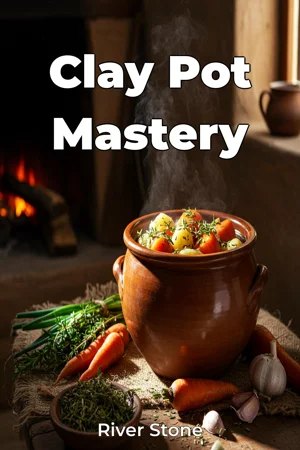
Have you ever considered that the secret to truly flavorful and nutritious cooking might be hidden in the very earth beneath our feet? This book, *Clay Pot Mastery*, delves into the overlooked world of earthenware cooking, revealing its profound benefits for heat retention, moisture control, and ultimately, the quality of your culinary creations. We will explore two central themes, the unique thermal properties of clay and the enduring legacy of clay pot cooking across cultures. Understanding how clay interacts with heat and moisture is crucial to unlocking its potential in the kitchen, allowing for dishes that are both deeply flavorful and retain essential nutrients. Equally important is appreciating the historical context, recognizing that clay pots have been integral to human diets for millennia and that practices developed over generations offer valuable insights. Before exploring the practical applications, it is important to understand the basic principles of heat transfer and the porosity of different types of clay. A brief overview of ceramic materials and their properties provides a foundation for understanding the advantages of earthenware. The central argument of *Clay Pot Mastery* is that earthenware cooking offers a superior method for preparing food, enhancing flavor, preserving nutrients, and connecting us to a rich culinary heritage. This is a bold claim we support with evidence from material science, culinary arts, and archaeological studies. The book unfolds in three distinct sections. First, we introduce the science behind earthenware cooking, covering the specific heat capacity of clay, its ability to distribute heat evenly, and its role in maintaining optimal moisture levels within the cooking vessel. Second, we travel through time and across continents, examining the historical use of clay pots in various cultures, drawing on anthropological data to illustrate the versatility and significance of this ancient cooking method. Featured are cooking techniques from different cultures, focusing on regional variations, traditional recipes, and cultural contexts. The third, culmination section translates theory into practice, offering detailed guidance on selecting, seasoning, using, and maintaining clay pots of various types. This section features a collection of recipes designed to showcase earthenware cooking techniques. Our arguments are bolstered by a diverse range of evidence. Scientific data from material science journals and culinary studies demonstrates the superior heat retention and moisture regulation of clay compared to other cooking materials. Anthropological data, gleaned from archaeological reports and ethnographic studies, reveals the widespread use and cultural significance of clay pot cooking across diverse societies. We also use experimental cooking trials, comparing dishes prepared in earthenware with those cooked in metal pots. *Clay Pot Mastery* intersects with several disciplines, including materials science, anthropology, and culinary history. The connection to materials science provides a scientific basis for understanding the properties of clay. Anthropological insights offer a cultural perspective, highlighting the enduring role of earthenware in human societies. Finally, culinary history contextualizes the evolution of cooking techniques and the role of clay pots in shaping regional cuisines. Our approach combines scientific rigor with historical context and practical application. We present information in a clear and accessible style, avoiding technical jargon where possible and providing detailed explanations of key concepts. The goal is to empower readers with the knowledge and skills to confidently incorporate earthenware cooking into their own kitchens. This book is aimed at food enthusiasts, home cooks, and anyone interested in exploring the intersection of food, culture, and science. It will be particularly valuable to those seeking to enhance their cooking skills, improve the nutritional value of their meals, and connect with culinary traditions. As a work of non-fiction within the cooking and history genres, *Clay Pot Mastery* blends historical narrative with practical cooking advice. We focus on presenting factual information in an engaging and informative way, avoiding overly subjective opinions or unsubstantiated claims. The scope of *Clay Pot Mastery* is intentionally broad, covering a wide range of earthenware cooking techniques and traditions. However, we focus primarily on unglazed or minimally glazed clay pots, recognizing their superior heat retention and moisture regulation properties. The benefits of earthenware cooking extend beyond improved flavor and nutrition. By using clay pots, cooks can reduce their reliance on processed foods, embrace more sustainable cooking practices, and connect with a rich culinary heritage. While earthenware cooking has a long and storied history, it is not without its challenges. There are ongoing debates about the safety of using certain types of clay and the potential for lead contamination. We address these concerns head-on, providing guidance on selecting safe and reliable clay pots and offering practical tips for minimizing any potential risks.
Have you ever considered that the secret to truly flavorful and nutritious cooking might be hidden in the very earth beneath our feet? This book, *Clay Pot Mastery*, delves into the overlooked world of earthenware cooking, revealing its profound benefits for heat retention, moisture control, and ultimately, the quality of your culinary creations. We will explore two central themes, the unique thermal properties of clay and the enduring legacy of clay pot cooking across cultures. Understanding how clay interacts with heat and moisture is crucial to unlocking its potential in the kitchen, allowing for dishes that are both deeply flavorful and retain essential nutrients. Equally important is appreciating the historical context, recognizing that clay pots have been integral to human diets for millennia and that practices developed over generations offer valuable insights. Before exploring the practical applications, it is important to understand the basic principles of heat transfer and the porosity of different types of clay. A brief overview of ceramic materials and their properties provides a foundation for understanding the advantages of earthenware. The central argument of *Clay Pot Mastery* is that earthenware cooking offers a superior method for preparing food, enhancing flavor, preserving nutrients, and connecting us to a rich culinary heritage. This is a bold claim we support with evidence from material science, culinary arts, and archaeological studies. The book unfolds in three distinct sections. First, we introduce the science behind earthenware cooking, covering the specific heat capacity of clay, its ability to distribute heat evenly, and its role in maintaining optimal moisture levels within the cooking vessel. Second, we travel through time and across continents, examining the historical use of clay pots in various cultures, drawing on anthropological data to illustrate the versatility and significance of this ancient cooking method. Featured are cooking techniques from different cultures, focusing on regional variations, traditional recipes, and cultural contexts. The third, culmination section translates theory into practice, offering detailed guidance on selecting, seasoning, using, and maintaining clay pots of various types. This section features a collection of recipes designed to showcase earthenware cooking techniques. Our arguments are bolstered by a diverse range of evidence. Scientific data from material science journals and culinary studies demonstrates the superior heat retention and moisture regulation of clay compared to other cooking materials. Anthropological data, gleaned from archaeological reports and ethnographic studies, reveals the widespread use and cultural significance of clay pot cooking across diverse societies. We also use experimental cooking trials, comparing dishes prepared in earthenware with those cooked in metal pots. *Clay Pot Mastery* intersects with several disciplines, including materials science, anthropology, and culinary history. The connection to materials science provides a scientific basis for understanding the properties of clay. Anthropological insights offer a cultural perspective, highlighting the enduring role of earthenware in human societies. Finally, culinary history contextualizes the evolution of cooking techniques and the role of clay pots in shaping regional cuisines. Our approach combines scientific rigor with historical context and practical application. We present information in a clear and accessible style, avoiding technical jargon where possible and providing detailed explanations of key concepts. The goal is to empower readers with the knowledge and skills to confidently incorporate earthenware cooking into their own kitchens. This book is aimed at food enthusiasts, home cooks, and anyone interested in exploring the intersection of food, culture, and science. It will be particularly valuable to those seeking to enhance their cooking skills, improve the nutritional value of their meals, and connect with culinary traditions. As a work of non-fiction within the cooking and history genres, *Clay Pot Mastery* blends historical narrative with practical cooking advice. We focus on presenting factual information in an engaging and informative way, avoiding overly subjective opinions or unsubstantiated claims. The scope of *Clay Pot Mastery* is intentionally broad, covering a wide range of earthenware cooking techniques and traditions. However, we focus primarily on unglazed or minimally glazed clay pots, recognizing their superior heat retention and moisture regulation properties. The benefits of earthenware cooking extend beyond improved flavor and nutrition. By using clay pots, cooks can reduce their reliance on processed foods, embrace more sustainable cooking practices, and connect with a rich culinary heritage. While earthenware cooking has a long and storied history, it is not without its challenges. There are ongoing debates about the safety of using certain types of clay and the potential for lead contamination. We address these concerns head-on, providing guidance on selecting safe and reliable clay pots and offering practical tips for minimizing any potential risks.
*Clay Pot Mastery* explores the time-honored tradition of earthenware cooking, revealing how clay pots enhance flavor, retain nutrients, and connect us to culinary history. This book explains how the unique thermal properties of clay, such as its exceptional heat retention, create superior cooking conditions compared to other materials. Did you know that clay pots have been used for millennia, and that each culture has developed distinct techniques? The book examines the science behind clay's effectiveness, delving into its heat capacity and ability to distribute heat evenly. It navigates through history, showcasing diverse cultural uses of clay pots and offering regional recipes. Finally, *Clay Pot Mastery* provides practical guidance on selecting, seasoning, and maintaining clay pots, enabling readers to confidently integrate this ancient cooking method into their modern kitchens.
Book Details
ISBN
9788233972707
Publisher
Publifye AS
Your Licenses
You don't own any licenses for this book
Purchase a license below to unlock this book and download the EPUB.
Purchase License
Select a tier to unlock this book
Need bulk licensing?
Contact us for enterprise agreements.