
About This Book
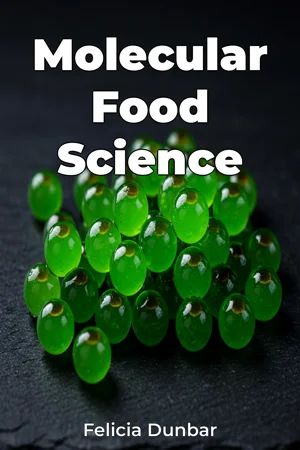
Can the manipulation of matter at the molecular level truly revolutionize our culinary experience? "Molecular Food Science" delves into this question, offering a comprehensive exploration of the scientific principles that underpin modern cooking techniques. This book bridges the gap between the laboratory and the kitchen, revealing the hidden chemistry driving the textures, flavors, and aesthetics of contemporary cuisine. The book's central argument is that a deeper understanding of molecular gastronomy enables chefs and food enthusiasts alike to precisely control and innovate within the culinary arts. Molecular gastronomy isn't merely about creating unusual dishes; it's about harnessing scientific knowledge to enhance and refine the cooking process, leading to consistent, reproducible, and often surprising results. This knowledge empowers culinary professionals to design novel food experiences and solve practical challenges in food preparation and preservation. "Molecular Food Science" is structured to provide a progressive understanding of the field. It begins by introducing the fundamental concepts of food chemistry, including the structure and behavior of proteins, carbohydrates, and lipids. It lays the groundwork by explaining how these molecules interact with each other and with water under various conditions. This section also discusses the role of temperature, pH, and mechanical forces in altering food's molecular structure. The book then moves to explore specific culinary transformations, focusing primarily on foams and gels. Chapters dedicated to foams examine the science of gas incorporation and stabilization, exploring the use of different hydrocolloids and emulsifiers. It explains the principles behind creating stable foams from various liquids, including aqueous solutions and oil-based mixtures. Gels are explored in similar depth, covering the mechanisms of gelation and the properties of different gelling agents such as gelatin, agar-agar, and gellan gum. We detail the effects of factors such as concentration, temperature, and ionic strength on gel texture and stability. Later chapters delve into other advanced techniques, such as spherification, sous vide cooking, and the use of enzymes in food processing. Each technique is explained through the lens of molecular interactions, with detailed discussions of the underlying chemical reactions and physical processes. The book also investigates the sensory aspects of molecular cuisine, exploring how texture, aroma, and visual presentation influence the perception of flavor. The evidence presented throughout the book is drawn from academic research papers in food science, chemistry, and physics. It includes experimental data, molecular simulations, and sensory evaluations that support the theoretical explanations. Detailed case studies of specific culinary applications illustrate the practical implications of the scientific principles discussed. "Molecular Food Science" draws connections to several other fields, including materials science, chemical engineering, and sensory science. These interdisciplinary connections highlight the multifaceted nature of food and the importance of integrating knowledge from different disciplines to advance culinary innovation. The book is written in an accessible style, assuming a basic understanding of chemistry but avoiding overly technical jargon. It aims to be informative and engaging for both culinary professionals and food enthusiasts with an interest in the science behind cooking. Its target audience includes chefs, culinary students, food scientists, and anyone curious about the molecular basis of culinary techniques. While the book covers a broad range of topics within molecular gastronomy, it primarily focuses on the scientific principles underlying specific culinary transformations, rather than providing endless recipes. The goal is to equip readers with a fundamental understanding of the science, allowing them to apply this knowledge creatively in their own culinary endeavors. The real-world applications of the information presented in "Molecular Food Science" extend beyond the realm of fine dining. The principles of food stabilization, texture modification, and flavor enhancement have implications for food manufacturing, preservation, and nutrition. Understanding these principles can lead to the development of healthier, more sustainable, and more appealing food products. Furthermore, the book touches upon the ongoing debates surrounding the use of artificial additives and genetically modified ingredients in food. By providing a scientific perspective on these issues, it aims to inform and empower readers to make informed decisions about the food they consume.
Can the manipulation of matter at the molecular level truly revolutionize our culinary experience? "Molecular Food Science" delves into this question, offering a comprehensive exploration of the scientific principles that underpin modern cooking techniques. This book bridges the gap between the laboratory and the kitchen, revealing the hidden chemistry driving the textures, flavors, and aesthetics of contemporary cuisine. The book's central argument is that a deeper understanding of molecular gastronomy enables chefs and food enthusiasts alike to precisely control and innovate within the culinary arts. Molecular gastronomy isn't merely about creating unusual dishes; it's about harnessing scientific knowledge to enhance and refine the cooking process, leading to consistent, reproducible, and often surprising results. This knowledge empowers culinary professionals to design novel food experiences and solve practical challenges in food preparation and preservation. "Molecular Food Science" is structured to provide a progressive understanding of the field. It begins by introducing the fundamental concepts of food chemistry, including the structure and behavior of proteins, carbohydrates, and lipids. It lays the groundwork by explaining how these molecules interact with each other and with water under various conditions. This section also discusses the role of temperature, pH, and mechanical forces in altering food's molecular structure. The book then moves to explore specific culinary transformations, focusing primarily on foams and gels. Chapters dedicated to foams examine the science of gas incorporation and stabilization, exploring the use of different hydrocolloids and emulsifiers. It explains the principles behind creating stable foams from various liquids, including aqueous solutions and oil-based mixtures. Gels are explored in similar depth, covering the mechanisms of gelation and the properties of different gelling agents such as gelatin, agar-agar, and gellan gum. We detail the effects of factors such as concentration, temperature, and ionic strength on gel texture and stability. Later chapters delve into other advanced techniques, such as spherification, sous vide cooking, and the use of enzymes in food processing. Each technique is explained through the lens of molecular interactions, with detailed discussions of the underlying chemical reactions and physical processes. The book also investigates the sensory aspects of molecular cuisine, exploring how texture, aroma, and visual presentation influence the perception of flavor. The evidence presented throughout the book is drawn from academic research papers in food science, chemistry, and physics. It includes experimental data, molecular simulations, and sensory evaluations that support the theoretical explanations. Detailed case studies of specific culinary applications illustrate the practical implications of the scientific principles discussed. "Molecular Food Science" draws connections to several other fields, including materials science, chemical engineering, and sensory science. These interdisciplinary connections highlight the multifaceted nature of food and the importance of integrating knowledge from different disciplines to advance culinary innovation. The book is written in an accessible style, assuming a basic understanding of chemistry but avoiding overly technical jargon. It aims to be informative and engaging for both culinary professionals and food enthusiasts with an interest in the science behind cooking. Its target audience includes chefs, culinary students, food scientists, and anyone curious about the molecular basis of culinary techniques. While the book covers a broad range of topics within molecular gastronomy, it primarily focuses on the scientific principles underlying specific culinary transformations, rather than providing endless recipes. The goal is to equip readers with a fundamental understanding of the science, allowing them to apply this knowledge creatively in their own culinary endeavors. The real-world applications of the information presented in "Molecular Food Science" extend beyond the realm of fine dining. The principles of food stabilization, texture modification, and flavor enhancement have implications for food manufacturing, preservation, and nutrition. Understanding these principles can lead to the development of healthier, more sustainable, and more appealing food products. Furthermore, the book touches upon the ongoing debates surrounding the use of artificial additives and genetically modified ingredients in food. By providing a scientific perspective on these issues, it aims to inform and empower readers to make informed decisions about the food they consume.
"Molecular Food Science" explores the fascinating intersection of science and cooking, revealing how understanding molecular gastronomy can revolutionize our culinary experiences. The book unveils the hidden chemistry behind textures, flavors, and aesthetics in modern cuisine, emphasizing precise control and innovation. For instance, manipulating proteins, carbohydrates, and lipids at a molecular level can lead to surprising results, like stable foams or perfectly textured gels. The book progresses from basic food chemistry to advanced techniques like spherification and sous vide, explaining the underlying chemical reactions and physical processes. It uniquely bridges the gap between the lab and the kitchen, offering practical insights for chefs and food enthusiasts. By focusing on the science behind culinary transformations, "Molecular Food Science" empowers readers to creatively apply this knowledge, moving beyond simple recipes to truly understand the art of cooking.
Book Details
ISBN
9788233972684
Publisher
Publifye AS
Your Licenses
You don't own any licenses for this book
Purchase a license below to unlock this book and download the EPUB.
Purchase License
Select a tier to unlock this book
Need bulk licensing?
Contact us for enterprise agreements.