
About This Book
Have you ever wondered how our ancestors preserved meat before the advent of refrigeration? This book, 'Meat Curing Methods', explores the science, art, and safety protocols behind the age-old techniques of curing meat, focusing primarily on salting and brining. These methods, when applied correctly, transform perishable raw meat into safe and flavorful products with extended shelf lives. The significance of understanding these processes lies not only in preserving culinary traditions but also in ensuring food safety in both home and commercial settings. We will delve into the core principles of meat curing, namely: the science of salt's interaction with meat proteins and moisture; the role of brining in enhancing flavor and texture; and the critical importance of adhering to established food safety guidelines to prevent the growth of harmful bacteria like Clostridium botulinum. These topics are relevant because they offer a practical bridge between historical practices and modern scientific understanding, enabling readers to confidently cure meat at home while mitigating potential health risks. Historically, meat curing was essential for survival, especially in colder climates or during periods of scarcity. Socially, it became ingrained in various cultures, leading to a diverse range of cured meat products, each reflecting local ingredients and preferences. Scientifically, the process relies on osmosis, dehydration, and protein denaturation, concepts rooted in biology and chemistry. A basic understanding of microbial growth and foodborne illnesses is beneficial but not mandatory, as we will cover essential food safety aspects directly. The central argument of 'Meat Curing Methods' is that a successful and safe meat-curing process relies on a balanced understanding of scientific principles, traditional techniques, and strict adherence to food safety protocols. This argument is important because inconsistent curing practices can lead to spoilage or, more seriously, foodborne illnesses. The book is structured to provide a comprehensive understanding of meat curing. It begins with an introduction to the fundamentals of meat science, exploring the composition of meat and the changes that occur during curing. We will cover the specific functions of salt and other curing agents, such as nitrates and nitrites and their permitted usage. Subsequent chapters will detail the salting and brining processes, explaining the various methods, including dry curing, wet curing, and equilibrium curing. These sections will include detailed, step-by-step instructions and recipes for a range of meat types, such as pork, beef, and poultry. Food safety is emphasized, with detailed guidelines on proper handling, storage, and temperature control, referencing established food safety guidelines. The concluding chapters address practical applications, where readers will be able to apply their knowledge of curing and apply it in the kitchen, followed by a consideration of common problems and troubleshooting techniques. The evidence presented will draw upon scientific research on meat science, microbiology, and food preservation. Government regulations and food safety guidelines, from organizations such as the USDA and FDA will be referenced. Practical demonstrations and recipe testing will provide empirical support for the recommended techniques. 'Meat Curing Methods' connects to other fields, including microbiology (understanding microbial growth and control), chemistry (understanding the interactions of curing agents with meat), and food science (understanding the principles of food preservation). These connections deepen the understanding of the curing process. This book distinguishes itself by integrating scientific explanations with practical, hands-on guidance, ensuring that readers not only understand *how* to cure meat but also *why* specific steps are crucial for safety and quality. The writing style will be informative and accessible, balancing scientific rigor with practical advice. Complex concepts will be explained in plain language, making the book suitable for both novice and experienced home cooks. The target audience includes home cooks, chefs, food enthusiasts, and anyone interested in learning the art and science of meat curing. It will be valuable to those seeking to preserve meat safely and create flavorful, artisanal products. As a non-fiction work in the cooking and science genres, this book emphasizes accuracy, clarity, and practicality. Recipes are tested; scientific claims are supported by evidence; and food safety guidelines are strictly adhered to. The scope of the book is limited to salting and brining as primary curing methods, with a focus on safety and quality. Other curing methods, like smoking or fermentation, may be mentioned briefly for context but are not the primary focus. The information presented in 'Meat Curing Methods' can be applied in the home kitchen or on a larger scale in small-batch commercial settings. Readers will gain the skills and knowledge to confidently produce cured meats while adhering to safety standards. There are ongoing discussions in the food industry regarding the use of nitrates and nitrites in curing, with some concerns about their potential health effects. This book will address these concerns, presenting a balanced perspective based on current scientific evidence and regulatory guidelines.
Have you ever wondered how our ancestors preserved meat before the advent of refrigeration? This book, 'Meat Curing Methods', explores the science, art, and safety protocols behind the age-old techniques of curing meat, focusing primarily on salting and brining. These methods, when applied correctly, transform perishable raw meat into safe and flavorful products with extended shelf lives. The significance of understanding these processes lies not only in preserving culinary traditions but also in ensuring food safety in both home and commercial settings. We will delve into the core principles of meat curing, namely: the science of salt's interaction with meat proteins and moisture; the role of brining in enhancing flavor and texture; and the critical importance of adhering to established food safety guidelines to prevent the growth of harmful bacteria like Clostridium botulinum. These topics are relevant because they offer a practical bridge between historical practices and modern scientific understanding, enabling readers to confidently cure meat at home while mitigating potential health risks. Historically, meat curing was essential for survival, especially in colder climates or during periods of scarcity. Socially, it became ingrained in various cultures, leading to a diverse range of cured meat products, each reflecting local ingredients and preferences. Scientifically, the process relies on osmosis, dehydration, and protein denaturation, concepts rooted in biology and chemistry. A basic understanding of microbial growth and foodborne illnesses is beneficial but not mandatory, as we will cover essential food safety aspects directly. The central argument of 'Meat Curing Methods' is that a successful and safe meat-curing process relies on a balanced understanding of scientific principles, traditional techniques, and strict adherence to food safety protocols. This argument is important because inconsistent curing practices can lead to spoilage or, more seriously, foodborne illnesses. The book is structured to provide a comprehensive understanding of meat curing. It begins with an introduction to the fundamentals of meat science, exploring the composition of meat and the changes that occur during curing. We will cover the specific functions of salt and other curing agents, such as nitrates and nitrites and their permitted usage. Subsequent chapters will detail the salting and brining processes, explaining the various methods, including dry curing, wet curing, and equilibrium curing. These sections will include detailed, step-by-step instructions and recipes for a range of meat types, such as pork, beef, and poultry. Food safety is emphasized, with detailed guidelines on proper handling, storage, and temperature control, referencing established food safety guidelines. The concluding chapters address practical applications, where readers will be able to apply their knowledge of curing and apply it in the kitchen, followed by a consideration of common problems and troubleshooting techniques. The evidence presented will draw upon scientific research on meat science, microbiology, and food preservation. Government regulations and food safety guidelines, from organizations such as the USDA and FDA will be referenced. Practical demonstrations and recipe testing will provide empirical support for the recommended techniques. 'Meat Curing Methods' connects to other fields, including microbiology (understanding microbial growth and control), chemistry (understanding the interactions of curing agents with meat), and food science (understanding the principles of food preservation). These connections deepen the understanding of the curing process. This book distinguishes itself by integrating scientific explanations with practical, hands-on guidance, ensuring that readers not only understand *how* to cure meat but also *why* specific steps are crucial for safety and quality. The writing style will be informative and accessible, balancing scientific rigor with practical advice. Complex concepts will be explained in plain language, making the book suitable for both novice and experienced home cooks. The target audience includes home cooks, chefs, food enthusiasts, and anyone interested in learning the art and science of meat curing. It will be valuable to those seeking to preserve meat safely and create flavorful, artisanal products. As a non-fiction work in the cooking and science genres, this book emphasizes accuracy, clarity, and practicality. Recipes are tested; scientific claims are supported by evidence; and food safety guidelines are strictly adhered to. The scope of the book is limited to salting and brining as primary curing methods, with a focus on safety and quality. Other curing methods, like smoking or fermentation, may be mentioned briefly for context but are not the primary focus. The information presented in 'Meat Curing Methods' can be applied in the home kitchen or on a larger scale in small-batch commercial settings. Readers will gain the skills and knowledge to confidently produce cured meats while adhering to safety standards. There are ongoing discussions in the food industry regarding the use of nitrates and nitrites in curing, with some concerns about their potential health effects. This book will address these concerns, presenting a balanced perspective based on current scientific evidence and regulatory guidelines.
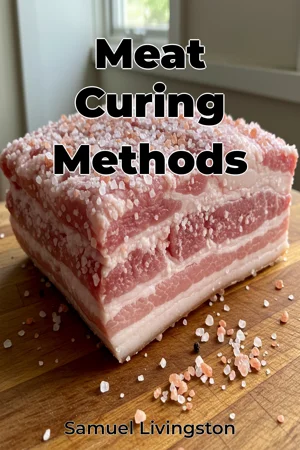
"Meat Curing Methods" explores the time-honored techniques of preserving meat through salting and brining, bridging historical practices with modern science to ensure both flavor and safety. The book highlights how curing transforms perishable raw meat into safe, flavorful products with extended shelf lives, a process that was once essential for survival. It reveals intriguing facts, such as how salt interacts with meat proteins at a biological level, and how brining enhances both flavor and texture. The book progresses systematically, starting with the fundamentals of meat science and the roles of curing agents. It then details the salting and brining processes, offering step-by-step instructions and recipes for various meats like pork, beef, and poultry. A key emphasis is placed on food safety, with detailed guidelines on handling, storage, and temperature control. What sets this book apart is its integration of scientific explanations with hands-on guidance, enabling readers to understand not just *how* to cure meat, but *why* each step is crucial for safety and quality, making it an invaluable resource for both novice and experienced cooks interested in artisanal food.
Book Details
ISBN
9788233972653
Publisher
Publifye AS
Your Licenses
You don't own any licenses for this book
Purchase a license below to unlock this book and download the EPUB.
Purchase License
Select a tier to unlock this book
Need bulk licensing?
Contact us for enterprise agreements.