
About This Book
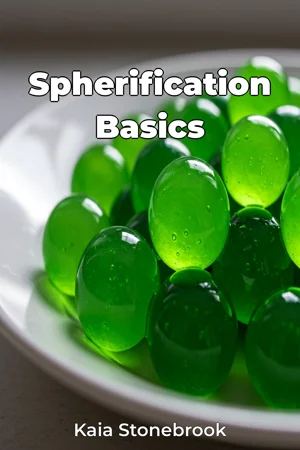
Ever wondered how chefs create those captivating spheres of flavor that burst in your mouth? "Spherification Basics" unravels the science and art behind this technique, a cornerstone of molecular gastronomy, explaining how a simple reaction between sodium alginate and calcium chloride can transform ordinary liquids into culinary marvels. This book bridges the gap between scientific understanding and culinary application, making spherification accessible to both amateur cooks and seasoned professionals. This book explores three key areas: the fundamental chemistry of spherification, the practical application of spherification techniques, and the creative potential of spherification in modern cuisine. Understanding the ionic interactions between sodium alginate and calcium is crucial for successful spherification. This book delves into the chemical processes at play, offering insights into how variables like pH, viscosity, and ingredient concentration affect the final product. The book underscores the importance of mastering these principles for predictable and repeatable results. The practice of molecular gastronomy provides the context for spherification, framing it as a technique rooted in scientific inquiry applied to culinary creation. While spherification techniques are relatively new, inspired by other encapsulation processes, the underlying scientific principles have been understood for decades. The reader should have a basic understanding of kitchen practices and measurements, but no prior chemistry knowledge is required, as the book explains all concepts clearly. The central argument of "Spherification Basics" is that a firm grasp of the underlying chemical principles, coupled with methodical technique, empowers anyone to create consistent and innovative spheres. This book argues that spherification is not just a novelty but a versatile tool that elevates dishes through unique textures and concentrated flavors. The book begins by introducing the core concepts of molecular gastronomy and the specific reactions that drive spherification. It then progresses through detailed explanations of both basic and reverse spherification, outlining the necessary equipment, ingredients, and procedural steps. Subsequent chapters cover troubleshooting common issues, adapting recipes for spherification, and exploring advanced techniques like frozen and flavored spheres. The book culminates in a collection of recipes demonstrating the versatility of spherification across a range of culinary applications, from appetizers to desserts. The book relies on a combination of scientific literature, experimental data, and practical observations derived from years of culinary practice. Diagrams and photographs illustrate key concepts and techniques, while carefully controlled experiments demonstrate the effects of varying parameters within the spherification process. "Spherification Basics" connects the fields of chemistry, food science, and culinary arts. It also touches on material science, as the alginate spheres are a type of hydrogel, and sensory science, as spherification significantly impacts the textural and flavor experience of food. These connections underscore the multifaceted nature of spherification. The book stands out by providing not only the "how" but also the "why" behind spherification. It goes beyond simple recipes to explain the science that makes it work allowing the reader to adapt the process to a wide variety of ingredients. The tone is informative and conversational, aiming to demystify a complex process without sacrificing scientific accuracy. Complex concepts are explained simply, making them accessible to a broad audience. The target audience includes home cooks interested in exploring molecular gastronomy, culinary students seeking a deeper understanding of food science, and professional chefs looking to incorporate spherification into their menus. The book will be valuable to anyone who wants to understand and master this exciting culinary technique. As a cooking and science book, "Spherification Basics" includes recipes, step-by-step instructions, and scientific explanations. It provides a complete overview of the topic, offering a balance between theory and practice. The scope of the book is limited to spherification techniques using sodium alginate and calcium chloride, focusing primarily on liquids. Other encapsulation methods and gelling agents are not covered in depth. The information in this book can be applied directly to create visually stunning and flavorful dishes. Readers can use spherification to encapsulate sauces, juices, purees, and even cocktails, adding an unexpected element of surprise and delight to their culinary creations. While the basic principles of spherification are well-established, some debate exists concerning the optimal ratios of ingredients and the long-term stability of spheres. The book acknowledges these debates and presents different perspectives, encouraging readers to experiment and draw their conclusions.
Ever wondered how chefs create those captivating spheres of flavor that burst in your mouth? "Spherification Basics" unravels the science and art behind this technique, a cornerstone of molecular gastronomy, explaining how a simple reaction between sodium alginate and calcium chloride can transform ordinary liquids into culinary marvels. This book bridges the gap between scientific understanding and culinary application, making spherification accessible to both amateur cooks and seasoned professionals. This book explores three key areas: the fundamental chemistry of spherification, the practical application of spherification techniques, and the creative potential of spherification in modern cuisine. Understanding the ionic interactions between sodium alginate and calcium is crucial for successful spherification. This book delves into the chemical processes at play, offering insights into how variables like pH, viscosity, and ingredient concentration affect the final product. The book underscores the importance of mastering these principles for predictable and repeatable results. The practice of molecular gastronomy provides the context for spherification, framing it as a technique rooted in scientific inquiry applied to culinary creation. While spherification techniques are relatively new, inspired by other encapsulation processes, the underlying scientific principles have been understood for decades. The reader should have a basic understanding of kitchen practices and measurements, but no prior chemistry knowledge is required, as the book explains all concepts clearly. The central argument of "Spherification Basics" is that a firm grasp of the underlying chemical principles, coupled with methodical technique, empowers anyone to create consistent and innovative spheres. This book argues that spherification is not just a novelty but a versatile tool that elevates dishes through unique textures and concentrated flavors. The book begins by introducing the core concepts of molecular gastronomy and the specific reactions that drive spherification. It then progresses through detailed explanations of both basic and reverse spherification, outlining the necessary equipment, ingredients, and procedural steps. Subsequent chapters cover troubleshooting common issues, adapting recipes for spherification, and exploring advanced techniques like frozen and flavored spheres. The book culminates in a collection of recipes demonstrating the versatility of spherification across a range of culinary applications, from appetizers to desserts. The book relies on a combination of scientific literature, experimental data, and practical observations derived from years of culinary practice. Diagrams and photographs illustrate key concepts and techniques, while carefully controlled experiments demonstrate the effects of varying parameters within the spherification process. "Spherification Basics" connects the fields of chemistry, food science, and culinary arts. It also touches on material science, as the alginate spheres are a type of hydrogel, and sensory science, as spherification significantly impacts the textural and flavor experience of food. These connections underscore the multifaceted nature of spherification. The book stands out by providing not only the "how" but also the "why" behind spherification. It goes beyond simple recipes to explain the science that makes it work allowing the reader to adapt the process to a wide variety of ingredients. The tone is informative and conversational, aiming to demystify a complex process without sacrificing scientific accuracy. Complex concepts are explained simply, making them accessible to a broad audience. The target audience includes home cooks interested in exploring molecular gastronomy, culinary students seeking a deeper understanding of food science, and professional chefs looking to incorporate spherification into their menus. The book will be valuable to anyone who wants to understand and master this exciting culinary technique. As a cooking and science book, "Spherification Basics" includes recipes, step-by-step instructions, and scientific explanations. It provides a complete overview of the topic, offering a balance between theory and practice. The scope of the book is limited to spherification techniques using sodium alginate and calcium chloride, focusing primarily on liquids. Other encapsulation methods and gelling agents are not covered in depth. The information in this book can be applied directly to create visually stunning and flavorful dishes. Readers can use spherification to encapsulate sauces, juices, purees, and even cocktails, adding an unexpected element of surprise and delight to their culinary creations. While the basic principles of spherification are well-established, some debate exists concerning the optimal ratios of ingredients and the long-term stability of spheres. The book acknowledges these debates and presents different perspectives, encouraging readers to experiment and draw their conclusions.
"Spherification Basics" demystifies the captivating culinary technique of spherification, a cornerstone of molecular gastronomy. It reveals how the reaction between sodium alginate and calcium chloride transforms liquids into flavor-packed spheres. A key insight is understanding the ionic interactions at play, as variables such as pH and ingredient concentration significantly impact the outcome. This book uniquely bridges the gap between the scientific "why" and the culinary "how," empowering readers to create consistent and innovative dishes. The book explores the chemistry, application, and creative potential of spherification. It explains both basic and reverse spherification, providing step-by-step instructions and troubleshooting tips. The book progresses from core concepts to advanced techniques like frozen spheres, culminating in a collection of recipes. With its blend of scientific explanations, practical advice, and recipes, "Spherification Basics" is an invaluable resource for anyone eager to master this exciting culinary technique.
Book Details
ISBN
9788233972646
Publisher
Publifye AS
Your Licenses
You don't own any licenses for this book
Purchase a license below to unlock this book and download the EPUB.
Purchase License
Select a tier to unlock this book
Need bulk licensing?
Contact us for enterprise agreements.