
About This Book
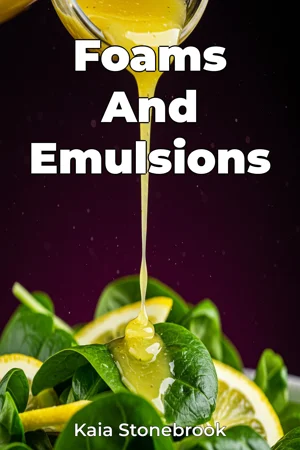
Have you ever wondered how chefs create those delicate foams and stable emulsions that elevate cuisine to an art form? “Foams and Emulsions” provides a comprehensive exploration into the science and techniques behind these culinary marvels, revealing the secrets to achieving perfect texture and flavor combinations. This book delves into the heart of food science, focusing on two fundamental topics: the creation and stabilization of foams and emulsions in a culinary context. These processes are critical for numerous dishes, from airy mousses and fluffy meringues to creamy sauces and stable dressings. Understanding the underlying principles allows cooks of all levels to innovate and improve their culinary creations. The context of this book is deeply rooted in the intersection of culinary arts and colloid science. It builds upon established scientific principles regarding surface tension, phase behavior, and molecular interactions, while simultaneously providing practical guidance accessible to chefs and food enthusiasts. While some familiarity with basic chemistry is helpful, the explanations are designed to be understandable for readers without advanced scientific training. The central argument of "Foams and Emulsions" is that a scientific understanding of the components and processes involved in foam and emulsion formation is essential for achieving consistent and desirable culinary results. By understanding the roles of various ingredients, such as emulsifiers and stabilizers, cooks can control the textures, flavors, and visual appeal of their dishes with greater precision. This book is structured to guide the reader from foundational concepts to advanced techniques. First, it introduces the core concepts of foams and emulsions, defining their unique characteristics and explaining the principles of their formation. It details the molecular mechanisms through which ingredients like lecithin, xanthan gum, and proteins contribute to stability. It then explores the properties of different liquids and gasses, surface tension, and the energetic requirements for mixture. The book then develops these ideas through discussions of specific techniques, including: 1. Foam Creation Methods: Whipping, blending, and aeration techniques are examined, along with the impact of factors like temperature and equipment on foam quality. 2. Emulsion Stabilization Strategies: The roles of different emulsifiers (e.g., lecithin, mustard, egg yolk) and stabilizers (e.g., xanthan gum, guar gum) are thoroughly investigated. 3. Flavor Incorporation and Release: Methods for incorporating flavors into foams and emulsions and controlling their release during consumption are described. The book culminates in a section dedicated to the practical applications of these principles, offering recipes and examples that showcase the techniques discussed. It provides guidelines for troubleshooting common problems encountered in foam and emulsion preparation and inspires experimentation. The arguments presented are supported by scientific research, drawing from studies in food science, colloid chemistry, and materials science. It synthesizes data from published research papers, ingredient manufacturer specifications, and hands-on experimentation. The book also includes unique microscopic imaging of foam and emulsion structures. “Foams and Emulsions” also connects to other fields, including: 1. Materials Science: The principles of foam and emulsion stability are relevant to the production of other materials, such as cosmetics, paints, and pharmaceuticals. 2. Chemical Engineering: The processes of emulsification and foaming are widely used in chemical industries, and understanding these techniques is crucial for optimizing chemical reactions and product formulations. 3. Sensory Science: The book explores the relationship between the structural properties of foams and emulsions and their sensory attributes, such as texture, mouthfeel, and flavor perception. This book stands out by taking a holistic approach, blending scientific rigor with practical culinary applications. It provides a comprehensive resource for anyone interested in understanding and mastering the art of creating foams and emulsions. The tone is informative and accessible, designed to bridge the gap between scientific literature and culinary practice. While grounded in scientific principles, the writing style is engaging and avoids unnecessary jargon, making it accessible to a broad audience. "Foams and Emulsions" is intended for chefs, culinary students, food scientists, and enthusiastic home cooks who seek a deeper understanding of the science behind their creations. It is valuable for anyone who wants to elevate their culinary skills by mastering the techniques of foam and emulsion preparation. As a book in the cooking and science genres, it balances practical recipes and techniques with theoretical explanations. It is a resource for not only *how* to create foams and emulsions, but *why* particular methods and ingredients lead to success. The scope of the book encompasses a wide range of foams and emulsions commonly encountered in cuisine. The book does not cover industrial-scale food production or specialized applications outside of the culinary realm. Readers can apply the information in the book to create a wide range of dishes, from simple vinaigrettes to elaborate desserts. They can troubleshoot and find solutions to common problems. One ongoing debate in the field concerns the health implications of certain emulsifiers and stabilizers. The book addresses these concerns by providing information on the potential risks and benefits of different ingredients, allowing readers to make informed choices based on their individual needs and preferences.
Have you ever wondered how chefs create those delicate foams and stable emulsions that elevate cuisine to an art form? “Foams and Emulsions” provides a comprehensive exploration into the science and techniques behind these culinary marvels, revealing the secrets to achieving perfect texture and flavor combinations. This book delves into the heart of food science, focusing on two fundamental topics: the creation and stabilization of foams and emulsions in a culinary context. These processes are critical for numerous dishes, from airy mousses and fluffy meringues to creamy sauces and stable dressings. Understanding the underlying principles allows cooks of all levels to innovate and improve their culinary creations. The context of this book is deeply rooted in the intersection of culinary arts and colloid science. It builds upon established scientific principles regarding surface tension, phase behavior, and molecular interactions, while simultaneously providing practical guidance accessible to chefs and food enthusiasts. While some familiarity with basic chemistry is helpful, the explanations are designed to be understandable for readers without advanced scientific training. The central argument of "Foams and Emulsions" is that a scientific understanding of the components and processes involved in foam and emulsion formation is essential for achieving consistent and desirable culinary results. By understanding the roles of various ingredients, such as emulsifiers and stabilizers, cooks can control the textures, flavors, and visual appeal of their dishes with greater precision. This book is structured to guide the reader from foundational concepts to advanced techniques. First, it introduces the core concepts of foams and emulsions, defining their unique characteristics and explaining the principles of their formation. It details the molecular mechanisms through which ingredients like lecithin, xanthan gum, and proteins contribute to stability. It then explores the properties of different liquids and gasses, surface tension, and the energetic requirements for mixture. The book then develops these ideas through discussions of specific techniques, including: 1. Foam Creation Methods: Whipping, blending, and aeration techniques are examined, along with the impact of factors like temperature and equipment on foam quality. 2. Emulsion Stabilization Strategies: The roles of different emulsifiers (e.g., lecithin, mustard, egg yolk) and stabilizers (e.g., xanthan gum, guar gum) are thoroughly investigated. 3. Flavor Incorporation and Release: Methods for incorporating flavors into foams and emulsions and controlling their release during consumption are described. The book culminates in a section dedicated to the practical applications of these principles, offering recipes and examples that showcase the techniques discussed. It provides guidelines for troubleshooting common problems encountered in foam and emulsion preparation and inspires experimentation. The arguments presented are supported by scientific research, drawing from studies in food science, colloid chemistry, and materials science. It synthesizes data from published research papers, ingredient manufacturer specifications, and hands-on experimentation. The book also includes unique microscopic imaging of foam and emulsion structures. “Foams and Emulsions” also connects to other fields, including: 1. Materials Science: The principles of foam and emulsion stability are relevant to the production of other materials, such as cosmetics, paints, and pharmaceuticals. 2. Chemical Engineering: The processes of emulsification and foaming are widely used in chemical industries, and understanding these techniques is crucial for optimizing chemical reactions and product formulations. 3. Sensory Science: The book explores the relationship between the structural properties of foams and emulsions and their sensory attributes, such as texture, mouthfeel, and flavor perception. This book stands out by taking a holistic approach, blending scientific rigor with practical culinary applications. It provides a comprehensive resource for anyone interested in understanding and mastering the art of creating foams and emulsions. The tone is informative and accessible, designed to bridge the gap between scientific literature and culinary practice. While grounded in scientific principles, the writing style is engaging and avoids unnecessary jargon, making it accessible to a broad audience. "Foams and Emulsions" is intended for chefs, culinary students, food scientists, and enthusiastic home cooks who seek a deeper understanding of the science behind their creations. It is valuable for anyone who wants to elevate their culinary skills by mastering the techniques of foam and emulsion preparation. As a book in the cooking and science genres, it balances practical recipes and techniques with theoretical explanations. It is a resource for not only *how* to create foams and emulsions, but *why* particular methods and ingredients lead to success. The scope of the book encompasses a wide range of foams and emulsions commonly encountered in cuisine. The book does not cover industrial-scale food production or specialized applications outside of the culinary realm. Readers can apply the information in the book to create a wide range of dishes, from simple vinaigrettes to elaborate desserts. They can troubleshoot and find solutions to common problems. One ongoing debate in the field concerns the health implications of certain emulsifiers and stabilizers. The book addresses these concerns by providing information on the potential risks and benefits of different ingredients, allowing readers to make informed choices based on their individual needs and preferences.
Foams and Emulsions explores the captivating science behind culinary foams and emulsions, essential elements in everything from light mousses to rich sauces. This book reveals how chefs achieve perfect textures and flavor combinations by understanding the underlying principles of food science. Did you know that emulsifiers like lecithin or mustard, along with stabilizers such as xanthan gum, play a crucial role in ensuring the stability of these culinary creations? Foams and Emulsions uniquely blends culinary arts with colloid science, providing accessible explanations of complex concepts like surface tension without overwhelming jargon. Foams and Emulsions begins by introducing the core concepts of foams and emulsions, detailing their unique characteristics and formation principles. It then progresses to specific techniques, such as different whipping and blending methods for foams, and explores how to incorporate and control flavor release. Foams and Emulsions's value lies in its practical approach, offering recipes and examples that showcase these techniques, making it a valuable resource for chefs, culinary students, and home cooks alike who want to elevate their skills.
Book Details
ISBN
9788233972608
Publisher
Publifye AS
Your Licenses
You don't own any licenses for this book
Purchase a license below to unlock this book and download the EPUB.
Purchase License
Select a tier to unlock this book
Need bulk licensing?
Contact us for enterprise agreements.