
About This Book
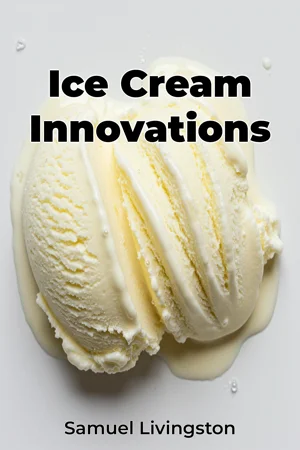
Have you ever wondered what makes one scoop of ice cream heavenly while another falls flat? "Ice Cream Innovations" delves into the science and art of creating the perfect frozen dessert, exploring the critical role of texture control and its underlying principles. This book is essential for anyone seeking a deeper understanding of the processes that transform simple ingredients into a delightful sensory experience. We will unravel the complexities of texture formation in ice cream, focusing on aeration, fat distribution, and the pivotal contributions of dairy science. These aren't just buzzwords; they're the cornerstone of a successful product. Aeration dictates the lightness and creaminess, fat distribution impacts smoothness and stability, and dairy science provides the framework for understanding ingredient interactions. This book argues that a comprehensive understanding of these elements is crucial for both industrial production and artisanal creation of high-quality frozen desserts. To fully appreciate modern ice cream technology, we'll briefly trace the history of frozen desserts, highlighting key milestones in ingredient discovery and processing techniques. While not requiring advanced scientific knowledge, a basic understanding of chemistry and food science principles will enhance the reader's experience. The book is structured to provide a comprehensive exploration of the topic. First, we introduce the fundamental concepts of ice cream composition and thermodynamics, establishing a solid scientific base. Next, we dedicate individual sections to the critical aspects of texture control: aeration, examining the role of overrun and bubble size; fat destabilization, focusing on the formation of fat networks; and ice crystal growth, analyzing the impact of stabilizers and freezing rates. Each section presents the latest research findings in dairy science, connecting them to practical applications. The book culminates in a discussion of novel ingredients and processing techniques, including plant-based alternatives and advanced freezing methods, with an eye toward future innovations. The arguments presented are substantiated by an analysis of peer-reviewed scientific literature, industrial research reports, and data gathered from sensory evaluations of different ice cream formulations. We will explore various methodologies to evaluate texture, including microscopy, rheology, and consumer testing. "Ice Cream Innovations" also draws connections to several related fields. It examines aspects of chemical engineering linked to process optimization, explores the sensory science behind consumer preferences, and discusses the nutritional science associated with ingredient selection, enriching the holistic understanding of ice cream production. This book distinguishes itself by offering an integrated approach, combining theoretical knowledge with practical applications. It presents a thorough examination of the science behind texture, going beyond basic recipes to provide a deep understanding of the underlying mechanisms. The book is written in a clear and accessible style, suitable for professionals in the food industry, students of food science, and serious home enthusiasts. It aims to bridge the gap between scientific research and practical application, making complex information understandable and actionable. Our target audience includes food scientists, dairy technologists, culinary professionals, and advanced home cooks interested in the science of ice cream. It will be particularly valuable for those involved in product development, quality control, or research and development in the frozen dessert industry. As a work of non-fiction, the book adheres to the highest standards of accuracy and clarity, maintaining a formal tone while remaining engaging. The scope of the book is limited to the science of ice cream texture, with a focus on the physicochemical properties and processes that influence it. While we touch upon flavor and formulation, these are not the primary focus. The knowledge gained from this book can be directly applied to improve ice cream formulations, optimize production processes, and create novel frozen dessert products. It also equips readers with the tools to troubleshoot texture-related issues in ice cream production. Finally, we will address some of the ongoing debates in the field, such as the use of different stabilizers, the optimization of freezing processes, and the latest trends in plant-based ice cream alternatives, providing a balanced perspective on these important issues.
Have you ever wondered what makes one scoop of ice cream heavenly while another falls flat? "Ice Cream Innovations" delves into the science and art of creating the perfect frozen dessert, exploring the critical role of texture control and its underlying principles. This book is essential for anyone seeking a deeper understanding of the processes that transform simple ingredients into a delightful sensory experience. We will unravel the complexities of texture formation in ice cream, focusing on aeration, fat distribution, and the pivotal contributions of dairy science. These aren't just buzzwords; they're the cornerstone of a successful product. Aeration dictates the lightness and creaminess, fat distribution impacts smoothness and stability, and dairy science provides the framework for understanding ingredient interactions. This book argues that a comprehensive understanding of these elements is crucial for both industrial production and artisanal creation of high-quality frozen desserts. To fully appreciate modern ice cream technology, we'll briefly trace the history of frozen desserts, highlighting key milestones in ingredient discovery and processing techniques. While not requiring advanced scientific knowledge, a basic understanding of chemistry and food science principles will enhance the reader's experience. The book is structured to provide a comprehensive exploration of the topic. First, we introduce the fundamental concepts of ice cream composition and thermodynamics, establishing a solid scientific base. Next, we dedicate individual sections to the critical aspects of texture control: aeration, examining the role of overrun and bubble size; fat destabilization, focusing on the formation of fat networks; and ice crystal growth, analyzing the impact of stabilizers and freezing rates. Each section presents the latest research findings in dairy science, connecting them to practical applications. The book culminates in a discussion of novel ingredients and processing techniques, including plant-based alternatives and advanced freezing methods, with an eye toward future innovations. The arguments presented are substantiated by an analysis of peer-reviewed scientific literature, industrial research reports, and data gathered from sensory evaluations of different ice cream formulations. We will explore various methodologies to evaluate texture, including microscopy, rheology, and consumer testing. "Ice Cream Innovations" also draws connections to several related fields. It examines aspects of chemical engineering linked to process optimization, explores the sensory science behind consumer preferences, and discusses the nutritional science associated with ingredient selection, enriching the holistic understanding of ice cream production. This book distinguishes itself by offering an integrated approach, combining theoretical knowledge with practical applications. It presents a thorough examination of the science behind texture, going beyond basic recipes to provide a deep understanding of the underlying mechanisms. The book is written in a clear and accessible style, suitable for professionals in the food industry, students of food science, and serious home enthusiasts. It aims to bridge the gap between scientific research and practical application, making complex information understandable and actionable. Our target audience includes food scientists, dairy technologists, culinary professionals, and advanced home cooks interested in the science of ice cream. It will be particularly valuable for those involved in product development, quality control, or research and development in the frozen dessert industry. As a work of non-fiction, the book adheres to the highest standards of accuracy and clarity, maintaining a formal tone while remaining engaging. The scope of the book is limited to the science of ice cream texture, with a focus on the physicochemical properties and processes that influence it. While we touch upon flavor and formulation, these are not the primary focus. The knowledge gained from this book can be directly applied to improve ice cream formulations, optimize production processes, and create novel frozen dessert products. It also equips readers with the tools to troubleshoot texture-related issues in ice cream production. Finally, we will address some of the ongoing debates in the field, such as the use of different stabilizers, the optimization of freezing processes, and the latest trends in plant-based ice cream alternatives, providing a balanced perspective on these important issues.
"Ice Cream Innovations" explores the science behind crafting perfect frozen desserts, focusing on texture control through aeration, fat distribution, and understanding dairy science. The book highlights how seemingly small adjustments in these areas can dramatically impact the final product, making or breaking that ideal scoop. It traces the history of ice cream while diving into the science of how stabilizers affect ice crystal growth. The book uniquely blends theoretical knowledge with hands-on applications, discussing sensory science, rheology, and the role of stabilizers. It begins with ice cream composition and thermodynamics, progresses through aeration, fat destabilization, and ice crystal growth, and concludes with novel ingredients and processing techniques, including plant-based alternatives. Each section connects the latest research findings in dairy technology to real-world applications, offering an integrated understanding of ice cream production. This title examines aspects of chemical engineering linked to process optimization. It demonstrates how an understanding of these principles can improve ice cream formulations, optimize production, and lead to innovative frozen desserts. The book is designed for food scientists, dairy technologists, and culinary professionals seeking to deepen their knowledge of the food industry.
Book Details
ISBN
9788233972592
Publisher
Publifye AS
Your Licenses
You don't own any licenses for this book
Purchase a license below to unlock this book and download the EPUB.
Purchase License
Select a tier to unlock this book
Need bulk licensing?
Contact us for enterprise agreements.